OpEd: Stop underestimating young voters
Young Black voters are challenging stereotypes and demanding representation.headlines.
 Black News

If you listened to some political analysts and older voters, you’d think young people couldn’t care less about elections. They’re too busy on TikTok, too distracted by social media, too cynical about politics, or too uninterested to bother showing up at the polls. We’ve heard the complaints for years. Young people don’t vote. They don’t understand what’s at stake. They’d rather complain online than do something about it.
Well, somebody forgot to tell today’s young people.
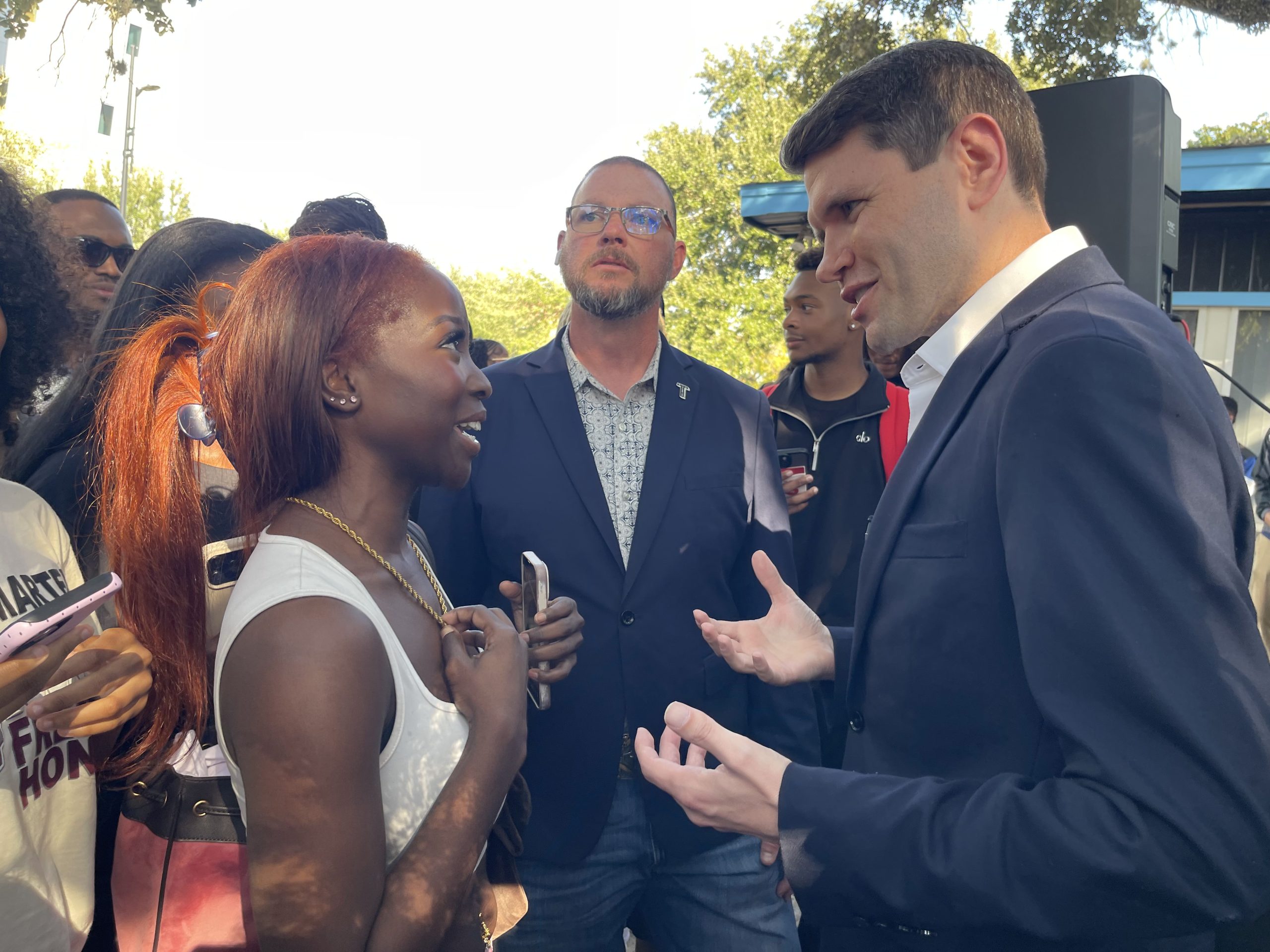
Last week, young voters at Texas Southern University turned out in force when Democratic U.S. Senate candidate James Talarico visited the Houston campus. Students gathered, marched to the polls, and demonstrated the kind of enthusiasm that political campaigns spend millions of dollars trying to generate. Some students were casting ballots for the first time.
Others were encouraging their classmates to participate. And judging by the energy on that campus, these young people were paying plenty of attention to what was happening politically.
What struck me about the turnout was how directly it challenged the tired narrative that young voters are sitting on the sidelines. These students were making time between classes, jobs, and everything else that comes with college life to participate in an election that will have consequences long after they’ve graduated.
And they weren’t alone.

Hundreds of students at North Carolina A&T State University recently marched through the streets of Greensboro to cast their ballots. Led by members of the university’s famed Blue and Gold Marching Machine, students walked roughly 45 minutes to an early voting location.
But here’s what makes their story particularly significant. Students weren’t simply participating in a campus voting celebration. They were responding to a decision that eliminated early voting locations on their campus and at nearby UNC Greensboro. Instead of having convenient access to the polls, students had to walk a long distance to the nearest early voting site. For those without transportation, that distance presented a genuine obstacle.
The students organized anyway.
Think about that for a moment. We have people who won’t drive five minutes to vote because they don’t want to deal with the line, yet these students walked through Greensboro to make sure their voices were heard. They organized their classmates, coordinated transportation, and turned what could have been a discouraging situation into a demonstration of civic engagement.
I wish more people who constantly criticize this generation would pay attention to moments like these. I hear older adults complain about young people all the time. They don’t respect anything. They don’t know their history. They don’t understand sacrifice. They don’t appreciate what previous generations fought for. Some of those criticisms come from genuine concern, but somewhere along the way, we’ve gotten so comfortable lecturing young people that we’ve stopped listening to them.
And when we do listen, we might discover that their concerns aren’t all that different from ours.

They’re worried about finding good jobs after graduation, especially since entry-level positions often require years of experience. They’re worried about student loans that could follow them well into adulthood. They’re concerned about reproductive rights, affordable housing, health care, education funding, and whether they’ll ever be able to purchase a home. They’re watching political leaders make decisions about their futures while wondering why so few people in power seem interested in hearing what they have to say.
At Texas Southern, students told the Defender they wanted elected officials to address financial aid, employment opportunities, and the challenges facing higher education. Those are serious concerns from young adults who understand that the decisions made in Washington, Austin, and their local communities will affect their lives.
Yet politicians continue to treat young voters as an audience they can visit a few weeks before Election Day, take a few pictures with, and then forget about until the next election cycle.
That approach needs to change. Young voters deserve the same attention, policy discussions, and accountability that candidates give older, more reliable voting blocs. If politicians want their support, they should be willing to discuss student debt, wages, housing costs, campus resources, and the issues that affect their daily lives. They should also recognize that young people can tell when they’re being taken seriously and when they’re simply being used to create an energetic campaign photo.
And for those of us who attended historically Black colleges and universities, the images coming out of TSU and North Carolina A&T should carry special meaning.
HBCU students have a long history of challenging injustice and demanding change. Today’s students face different circumstances, but the willingness to organize, challenge decisions, and demand representation remains part of that legacy. We should recognize it when we see it.
Now, I’m not suggesting that a few well-attended rallies and marches mean young voter turnout will suddenly break records across the country. Political enthusiasm doesn’t always translate into ballots cast, and young voters have historically participated at lower rates than older Americans. Those numbers matter, and we shouldn’t ignore them.
But we also shouldn’t use those statistics to write off an entire generation.
Instead of complaining that young people don’t vote, ask whether they’re registered. Help them understand what’s on the ballot. Talk to them about local elections and why county judges, school board members, and state legislators matter just as much as the names at the top of the ticket. Offer a ride if they need one. Encourage them to research candidates and make their own decisions, even when those decisions differ from yours.
Most importantly, stop treating their opinions as less valuable simply because they haven’t been around as long as we have. I’ve lived long enough to know that every generation believes the one coming behind it has somehow lost its way. Our parents worried about us, their parents worried about them, and now we’re doing the same thing to our children. Meanwhile, young people are navigating a world that is changing faster than many of us can keep up with, and they’re trying to figure out how to make their voices count.
We should be helping them do that.
As we approach Election Day, I hope more young people follow their example. I also hope the rest of us recognize that encouraging the next generation to participate in democracy is a responsibility we all share.
Because one thing is certain: The decisions being made in this election will shape their lives for decades to come.
And after watching those students march to the polls, I think it’s time we stopped asking whether young people care about their future. Maybe we should start paying attention to what they’re doing to protect it.