
Krip-Hop Nation and Walter Rodney: Toward a Krip-Hop Guerrilla Intellectualism of Black Disability Justice
Krip-Hop Nation and Walter Rodney: Toward a Krip-Hop Guerrilla Intellectualism of Black Disability Justice Walter Rodney’s concept of guerrilla intellectualism provides a powerful foundation for extending Krip-Hop Nation beyond a cultural movement into a revolutionary method of knowledge production. Rodney argued that intellectuals should not separate themselves from the people. Instead, they should work alongside […]
 Black News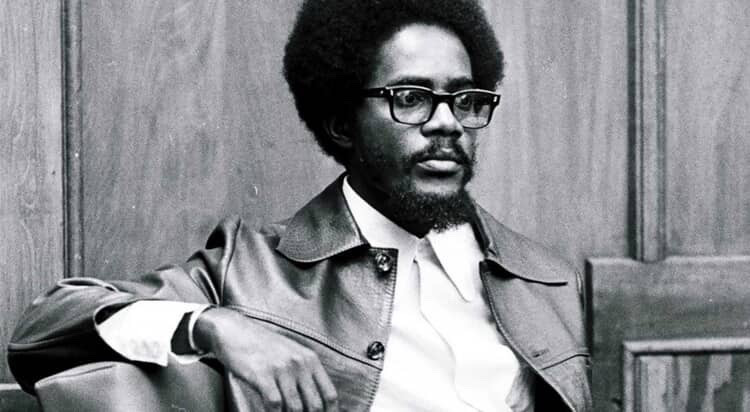

Krip-Hop Nation and Walter Rodney: Toward a Krip-Hop Guerrilla Intellectualism of Black Disability Justice
Walter Rodney’s concept of guerrilla intellectualism provides a powerful foundation for extending Krip-Hop Nation beyond a cultural movement into a revolutionary method of knowledge production. Rodney argued that intellectuals should not separate themselves from the people. Instead, they should work alongside communities, learning from them while contributing research, political education, and organizing. From this perspective, Black disabled people are not merely subjects of study but guerrilla intellectuals whose lived experiences generate theory, strategy, and liberation.
Although Rodney wrote during the 1960s and used terms such as “cripples” and “deformed persons” that reflect the language of his historical moment rather than contemporary disability politics, his work remains a productive site for critical engagement. Black disability scholars can both critique and extend his framework. Disability appears in The Groundings with My Brothers, where Rodney (1969) quotes a scholar describing Yoruba religious traditions:
“I admire Yoruba paganism first and foremost for its tolerance. It is a religion which provides satisfaction for many different kinds of human temperament… Here the cripples, albinos and other deformed persons have a special god to look after them. They occupy a special position at his shrine, and thus, people who elsewhere are laughed at, are here needed and respected” (Rodney, 1969, p. 66).
While the language is outdated and reflects colonial-era anthropological framing, the passage is significant because it gestures, however imperfectly, toward disability as socially situated rather than purely individual deficiency. Rodney’s broader political project enables a contemporary reinterpretation of such moments through a Black disability justice lens that moves beyond the limitations of his historical vocabulary.
Importantly, Rodney’s political practice in Jamaica also brought him into direct engagement with working-class communities that included disabled people, even when disability was not explicitly theorized in his writing. During his activism in Jamaica (1968–1969), Rodney worked closely with unemployed youth, street vendors, Rastafari communities, and urban poor populations in Kingston through the “Groundings” sessions. These were public political education gatherings held in yards, streets, and community spaces where people excluded from formal education systems could engage revolutionary ideas.
Within these spaces, disabled people participated as part of the broader working-class community, listening, contributing lived experiences of exclusion, and engaging in collective political discussion. Although Rodney did not develop a formal disability framework, his commitment to meeting people where they were created conditions in which disabled Jamaicans were not excluded from political education. The Groundings model itself, non-institutional, oral, accessible, and community-based, can be read today as an early form of what Krip-Hop theory names embodied sonic pedagogy: a mode of learning grounded in voice, rhythm, vibration, storytelling, and collective presence rather than institutional gatekeeping. In this sense, Krip-Hop theory recognizes sound, Hip-Hop performance, and disabled embodiment as legitimate sites of knowledge production.
Walter Rodney’s Guerrilla Intellectual
Rodney rejected the colonial model of the intellectual as someone who produces knowledge exclusively within elite institutions. Instead, he argued that revolutionary intellectuals must immerse themselves in the lives of working people, learning from them while contributing research that strengthens movements for liberation.
His own life reflected this commitment. Whether teaching in Tanzania, organizing in Jamaica, or challenging authoritarian rule in Guyana, Rodney consistently refused to separate scholarship from struggle.
For Rodney, knowledge was never politically neutral. It either reproduces domination or contributes to liberation.
Krip-Hop Theory and the Expansion of Guerrilla Intellectualism
Krip-Hop theory extends Rodney’s framework by centering Black disabled cultural production as a site of epistemology. Within Krip-Hop Nation, Hip-Hop is not only music or performance; it is a disability justice archive, a sonic resistance practice, and a theory-making space where Black disabled people articulate survival, critique ableism, and imagine liberation.
From a Krip-Hop perspective, guerrilla intellectualism is not limited to entering communities. It also requires recognizing that communities already produce theory through rhythm, lyricism, movement, and accessibility practices. A rapper with a speech difference, a Deaf signer performing Hip-Hop in ASL, or a disabled DJ remixing soundscapes are not simply artists; they are Krip-Hop theorists generating knowledge about embodiment, access, and power.
Krip-Hop theory further reframes disability not as absence but as a creative epistemic force. It insists that disability shapes how knowledge is felt, heard, and transmitted. This extends Rodney’s insistence that intellectual work must be grounded in lived experience while pushing it further by arguing that embodied difference itself is a method of theorizing.
Extending Rodney’s Vision Through Krip-Hop Disability Justice
Rodney’s framework becomes more expansive when read through Krip-Hop disability justice theory. Black disabled people have historically been treated as objects of charity, medical intervention, or academic study, and their voices have often been excluded even within radical movements.
Krip-Hop Nation challenges this by asserting that Black disabled people are producers of revolutionary knowledge:
DJ Quad, a disabled MC writing about police violence through breath and rhythm;
Wawa, Deaf poet and Hip-Hop artist create new political language through sign and movement;
Bartira Sene, a wheelchair user organizing mutual aid networks through digital music platforms.
Each contributes theory through lived experience.
Rodney democratized intellectual work. Krip-Hop theory deepens this democratization by recognizing disability, sound, and performance as central epistemologies rather than peripheral expressions.
From Guerrilla Intellectualism to Afro-Krip Guerrilla Disability Praxis
An expanded guerrilla intellectualism framework, grounded in Krip-Hop Nation, develops Rodney’s insights in several key ways.
First, it understands disability as a political location shaped by colonialism, racism, capitalism, and ableism.
Second, it rejects the separation between cultural production and theory. Krip-Hop theory insists that rap lyrics, spoken word, graffiti, dance, radio broadcasts, documentaries, podcasts, and community workshops function as theoretical texts in motion.
Third, it reframes accessibility as a foundational principle rather than an afterthought. In Krip-Hop practice, access captioning, ASL interpretation, vibration-based sound design, and remixed audio is not supplemental but central to theory-making.
Fourth, it emphasizes interdependence. Knowledge is produced through collective care networks, disability kinship, and collaborative artistic production rather than isolated intellectual authority.
The Community as Krip-Hop University
Rodney argued that communities educate intellectuals. Krip-Hop theory extends this claim by asserting that communities already function as Krip-Hop universities.
A Hip-Hop cypher becomes a seminar on survival and resistance.
A Krip-Hop performance becomes a lecture on disability embodiment.
A community radio station becomes a sonic archive of Black disabled life.
A wheelchair-accessible cypher becomes a site of embodied theory.
A prison recording booth becomes a classroom of sonic resistance.
Knowledge does not flow only from formal institutions to communities. It circulates through sound, vibration, movement, and storytelling, transforming both community and institution in the process.
Guerrilla Research as Krip-Hop Method
A Krip-Hop guerrilla intellectual approach to research rejects extractive methodologies and instead emphasizes co-theorizing through sound and embodiment.
Researchers become collaborators in sonic production.
Interviews become cyphers, jams, and call-and-response dialogues.
Participants become co-authors of theory through rhythm and narrative.
Archives become living sound libraries of Black disabled expression.
Scholarship becomes accountable to movement building, accessibility, and cultural survival.
This approach challenges academic hierarchies that privilege written text over sonic, visual, and embodied knowledge.
Building Krip-Hop Institutions
One of Rodney’s enduring lessons is that oppressed communities cannot rely entirely on dominant institutions to preserve their knowledge. Krip-Hop Nation extends this insight through the vision of Krip-Hop Institutes, independent spaces that archive Black disabled Hip-Hop history, train artists and organizers, support accessibility innovation, preserve oral and sonic histories, and produce research directed by Black disabled communities.
These institutions function simultaneously as archive and studio, classroom and cypher space, ensuring that Krip-Hop theory remains rooted in lived experience rather than academic extraction.
Internationalism in Krip-Hop Theory
Rodney understood liberation as international. Krip-Hop theory shares this commitment through its global network of Black disabled Hip-Hop artists and activists across the African diaspora and beyond, including the United States, South Africa, Zimbabwe, Brazil, Germany, the United Kingdom, and Canada.
These connections are not merely cultural exchanges. They are transnational Krip-Hop knowledge circuits in which disability justice, Hip-Hop culture, and anti-colonial struggle intersect to produce new theories of survival and resistance.
The Krip-Hop Guerrilla Intellectual
Within this framework, the guerrilla intellectual is redefined through Krip-Hop theory.
A Krip-Hop guerrilla intellectual may be a disabled MC crafting political theory through lyric and breath; a Deaf signer translating Hip-Hop into visual rhythm; a blind producer building sonic archives of resistance; a wheelchair dancer redefining movement and space; or a caregiver remixing sound and care into political pedagogy.
What unites them is not institutional recognition but accountability to community survival, accessibility, and liberation.
Conclusion
Walter Rodney taught that intellectuals should stand with the oppressed, producing knowledge that advances liberation rather than serving power. Although his language reflects the limitations of his historical moment, his political practice, particularly the Groundings in Jamaica, created spaces where working-class people, including disabled Jamaicans, could participate in political education outside elite institutions.
Krip-Hop theory extends Rodney’s guerrilla intellectualism by insisting that Black disabled communities are not merely recipients of revolutionary knowledge but central producers of it. Through Hip-Hop, sound, embodiment, and accessibility, Krip-Hop Nation transforms cultural expression into political education, disability into critical consciousness, and sonic experience into theory.
This expanded framework builds upon Rodney’s legacy while contributing a distinct intervention within the Black Radical Tradition: a Krip-Hop disability justice practice of revolutionary knowledge rooted in the cultural creativity, sonic innovation, and political leadership of Black disabled people across the African diaspora.
Through Krip-Hop guerrilla intellectualism, the goal is not only to study liberation but to sound it, perform it, and build it collectively, ensuring that the knowledge of Black disabled communities becomes an indispensable force in the ongoing struggle for justice, decolonization, and freedom.