Institutional Transition as UN Political Mission Ends in Somalia with No Agreed Replacement to Handle Election Dispute
Facebook

Twitter (X)

Instagram

Somali Magazine - People's Magazine
The UN political mission ends in Somalia with no agreed replacement to handle election dispute, concluding over thirty years of continuous political presence and direct diplomatic mediation in the Horn of Africa. Following formal requests from federal authorities in Mogadishu, the United Nations Transitional Assistance Mission […] The post Institutional Transition as UN Political Mission Ends in Somalia with No Agreed Replacement to Handle Election Dispute first appeared on Somali Magazine.
 Black News
Facebook Twitter (X) Instagram Somali Magazine - People's Magazine
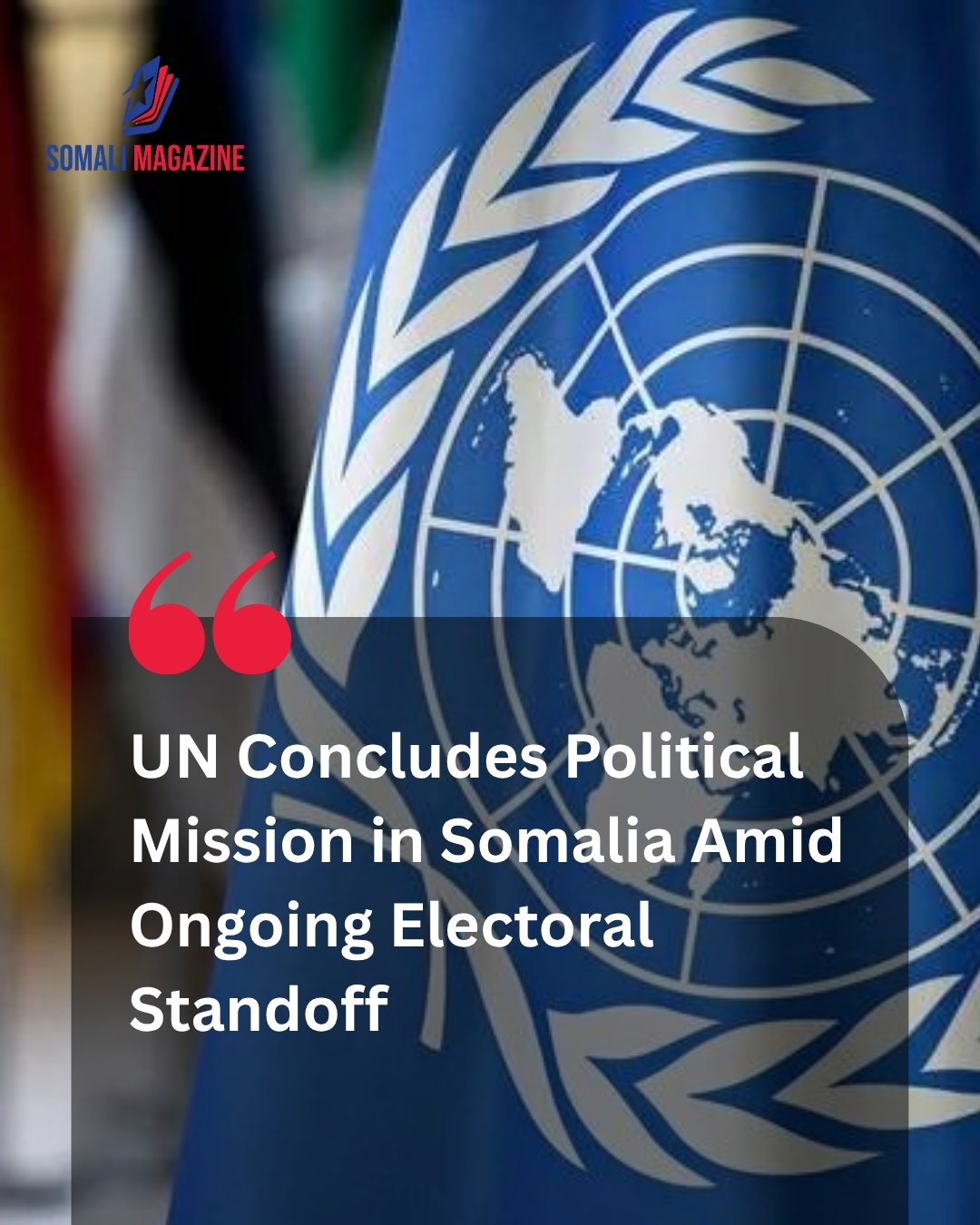
The UN political mission ends in Somalia with no agreed replacement to handle election dispute, concluding over thirty years of continuous political presence and direct diplomatic mediation in the Horn of Africa. Following formal requests from federal authorities in Mogadishu, the United Nations Transitional Assistance Mission in Somalia concluded its mandate, ending a long-standing framework designed to assist state-building, facilitate constitutional reform, and resolve electoral deadlocks among regional and national stakeholders. The departure marks a pivotal shift toward full national self-governance, transferring direct responsibility for state institutions, democratic administration, and political reconciliation entirely into the hands of Somali leadership.
The political mission’s departure comes at a crucial moment when federal leadership and opposition coalitions remain divided over the structure and timing of national elections. Executive invitations extended by President Hassan Sheikh Mohamud for multi-day consultative talks aimed at reaching political consensus on voting schedules have faced resistance from major opposition blocs, including the Somali Future Council. The dispute centers on whether upcoming polls will follow a direct universal suffrage model or a modified indirect framework, as well as disagreements regarding proposed constitutional amendments affecting executive terms.
Despite the formal closure of the political mission, essential international support networks will maintain operational continuity across the country. African Union peacekeeping forces will remain deployed to support national security units in counter-terrorism operations, while separate United Nations humanitarian agencies and logistical support offices continue supplying vital aid, infrastructure assistance, and tactical support. However, the absence of an independent, international political mediator leaves domestic stakeholders without a formal external mechanism to resolve contested electoral rules, leaving national leaders to establish local consensus mechanisms.
Civic organizations, regional watchdogs, and diplomatic partners have urged all political figures to prioritize national cohesion, exercise restraint, and engage constructively in national dialogue sessions. Analysts observe that navigating complex election governance without an established international mediator tests the maturity and resilience of sovereign institutions. As the UN political mission ends in Somalia with no agreed replacement to handle election dispute, political leaders across Mogadishu and federal member states face the immediate challenge of building mutual trust, protecting democratic integrity, and safeguarding regional stability through self-directed political dialogue.
The post Institutional Transition as UN Political Mission Ends in Somalia with No Agreed Replacement to Handle Election Dispute first appeared on Somali Magazine.