
What Do I Say When My Child Sees A Racist Halloween Costume?
This month, racist Halloween costumes returned to the headlines after white students at San Marcos High School in Santa Barbara, California, posted a TikTok recreating a meme of Black children with...
 Black News

By Janice Robinson-Celeste
This month, racist Halloween costumes returned to the headlines after white students at San Marcos High School in Santa Barbara, California, posted a TikTok recreating a meme of Black children with darkened skin and ninja emojis used as a slur substitute; students later walked out and demanded action at a school board meeting covered October 14.
Say plainly that racist Halloween costumes, including blackface, are harmful, even when someone calls them a joke. Reassure your child that their skin, features, and culture are not the problem, then help them decide whether to speak up, step away, or tell a trusted adult.
The district said consequences were imposed, though it did not share details publicly. In a separate incident this year, Target apologized and pulled a children’s clown costume after critics said it evoked blackface. These events are not connected, but both show why a costume can bring up serious questions for your child.
Key Takeaways
Keep the message simple when your child sees racist Halloween costumes: costumes should invite imagination without turning someone’s identity into a joke.
- Name The Harm: Explain that darkening skin to portray another race is blackface, a racist practice, not harmless dress-up.
- Separate Intent From Impact: Someone may say they meant to be funny, but that does not undo the harm.
- Give Your Child Words: Practice a short, safe response and identify a trusted adult they can tell.
- Protect Their Pride: Remind your child that their skin, hair, and culture are worthy of respect and celebration.
What Should You Say About Racist Halloween Costumes?
Use clear, age-appropriate words: “That costume is racist because it uses a person’s race as a joke.”
You do not need to give a long lecture in the moment. Start by asking what your child noticed and how they feel. Your child might say, “Why is that person’s face painted that way?” or “Why are people laughing?” You can answer, “Some people used to dress up by darkening their skin to make fun of Black people. That was wrong then, and it is still wrong now.”
Blackface has a long history in the United States. By the 1830s, white performers in minstrel shows used burnt cork to darken their faces and mock Black people through cruel stereotypes. The National Museum of African American History and Culture explains the history of blackface, including how these performances spread damaging ideas about Black people.
Your child may wonder why someone would do this if they say they are joking. You can say, “A joke can still hurt someone. We look at what it does, not only what the person says they meant.” That intent-versus-impact lesson is also part of guidance from UNICEF on talking with children about hate speech.
Why This Matters for Parents of Black Children
Your child deserves to move through Halloween knowing their identity is not a costume or a punchline.
A racist Halloween costume may be the first time your child sees someone publicly mock features they recognize in themselves, a sibling, or someone they love. A steady response from you helps them name what happened without absorbing the message that there is something wrong with them. You can say, “Your skin is beautiful. The problem is the choice someone made, not who you are.”
The debate is not new. In a 2019 Pew Research Center survey about blackface and Halloween, 34% of U.S. adults said it was always or sometimes acceptable for a white person to darken their skin to appear to be another race for a costume. That figure combined two responses, and the survey also found a racial gap: 39% of white adults and 19% of Black adults said it was acceptable at least sometimes. The numbers help explain why your child may encounter people who dismiss the harm.
For more support as your child builds pride and learns to talk about race, explore Successful Black Parenting Magazine’s Identity, Culture and Race guide.
Your child’s identity is not a costume, a punchline, or anyone else’s prop. Know a parent who needs this? Send it to them.
What Do You Say If Your Child Wants To Wear The Costume?
Be firm about the boundary while offering your child a chance to choose a different idea.
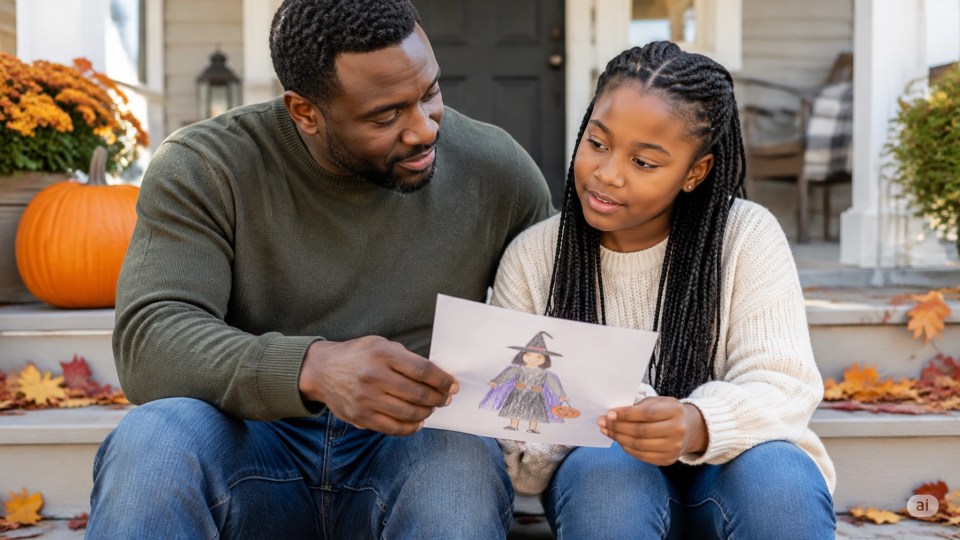
Try asking, “What do you like about this costume?” Listen first, then explain why darkening skin or using a racial stereotype can hurt people. You might say, “I know you want to be creative. We can keep the fun idea and change the parts that make fun of a group of people.”
The Southern Poverty Law Center’s guide to racist Halloween choices encourages children to think about the message a costume sends and who might be hurt by it. You can make the choice together: keep the superhero cape, for example, but skip makeup that changes skin color. Successful Black Parenting Magazine has more ideas in this roundup of empowering Halloween costumes.
How Should You Respond If Your Child Is Targeted?
Listen calmly, make sure your child knows you believe them, and decide together what support they need next.

You can start with: “I’m glad you told me. You are not in trouble, and I’m here to help.” Let your child explain in their own words. Ask what happened, how they feel, and what would help them feel supported now. Do not ask them to prove that it hurt.
If this happened at school, write down what your child shared, save any messages or photos, and contact the teacher or school leader. Ask what steps will protect your child and how the school will address the behavior. The School and Education Guide from Successful Black Parenting Magazine can help you prepare for conversations with school staff.
If your child sees racist Halloween costumes online, help them avoid sharing the post, save relevant evidence if needed, and use the platform’s reporting tools. UNICEF also recommends identifying trusted adults ahead of time. You might ask, “If something like this happens at school, which teacher, counselor, or family member would you feel comfortable telling?”
How Can You Make This Conversation Easier?
A short practice conversation now can help your child feel more prepared later.
Keep it simple and repeatable. If it feels safe, your child can say, “That’s hurtful and not okay.” They can also move away, support the person being targeted, or find a trusted adult. Make clear that your child is not responsible for fixing the situation or confronting someone alone.
You can also talk about how to spot racist Halloween costumes before heading to a party or school event. Ask, “Is this costume based on a real person, or does it rely on making a group look foolish?” That question helps your child think about impact while leaving plenty of room for creativity. You can find more age-based activities and free printables for your child to support conversations at home.
FAQs
These quick answers can help you feel more ready when your child brings up racist Halloween costumes or something they saw online.
What if my child says the costume was only a joke?
You can agree that the person may have intended humor while explaining that a joke can still harm someone. Help your child focus on the impact, not only the intention.
Should I explain the history of blackface to a young child?
Yes, in a few simple words that fit their age. You can say that people used dark makeup to mock Black people, and that it was hurtful and wrong.
What if my child is afraid to speak up?
Do not pressure them to confront anyone. Let them know they can move away, support the person targeted, and tell an adult they trust.
How can I help my child choose a different costume?
Keep the parts they enjoy, such as a character’s cape or special tools, and remove makeup or details that mock someone’s identity. You can brainstorm a new idea together so your child still feels excited about dressing up.
As you talk with your child, remember that one calm conversation can become a foundation for many more. What words have helped you talk with your child about costumes, race, or respect? Share your thoughts in the comments.
Follow and share Successful Black Parenting Magazine: Instagram, Facebook, YouTube, Pinterest, and TikTok.
Get our free Monday email for helpful articles, ideas, and free printables.
Photos and some content may be AI generated.