To replace charcoal, govt should promote gas cylinders of 1kg, 2kg
On a trip to northern Uganda some years ago, I asked the transport team to provide a sports utility vehicle (SUV). I prefer SUVs for long journeys as they are more comfortable and can handle the terrain. We were to spend a week traversing the breadth of northern Uganda. It didn’t take me long to […] The post To replace charcoal, govt should promote gas cylinders of 1kg, 2kg appeared first on The Observer Media Ltd.
 Black News


On a trip to northern Uganda some years ago, I asked the transport team to provide a sports utility vehicle (SUV).
I prefer SUVs for long journeys as they are more comfortable and can handle the terrain. We were to spend a week traversing the breadth of northern Uganda. It didn’t take me long to realize that some of the people I was traveling with were unhappy but I couldn’t put a finger to it.
I thought maybe they didn’t want to make the trip. Along the way, the driver pointed to a roadside makeshift market and said in Luganda, “laba emmaali,” loosely translated as look at money while pointing at sacks of charcoal that were packed beyond the rims with a fibre net holding the extra black pieces together.
That is when my colleagues said that I have made them miss returning to Kampala with charcoal. That I should have asked the transport team to provide a pickup truck.
“We are not ministers to travel in this kind of car,” another angrily quipped.
I was ably informed that a sack of charcoal cost a fraction of what the traders in Kampala charged. I understood their sentiments. I offered lunch and dinner for the weeklong trip, arguing that they can use that saving to buy charcoal when they returned to Kampala.
I ceased being a fan of buying stuff along our highways to return with to Kampala after realizing that prices quoted by traders depended entirely on the car you drive and how you looked, but that is another story.
Also, I have never been a fan of charcoal. I find it expensive, easily wastable by households, dirty and cumbersome to use. After that trip, I understood the place charcoal occupies in people’s hearts and households.
It wasn’t, therefore, surprising when panic engulfed Ugandans especially the urban dwellers last week when there was an announcement that charcoal had been banned in Uganda ostensibly to protect the environment. Social media went gaga.
Parliament swiftly stepped in and advised the government to give it a week by presenting its comprehensive plan. Charcoal is a byproduct of trees and many have been felled to make it. Truckloads of it used to dominate certain routes to urban areas.
Many roadside kiosk owners survived by vending charcoal. We have just experienced a severe drought in Uganda and I believe that many people won’t have food to eat in a few months. I perfectly understand why government wants to ban it.
As somebody who isn’t a fan of it, I have no tears to shed to be honest. But that would be selfish. The majority of households can’t afford the alternatives; electricity and gas. Beyond price, both forms of energy also have distribution limitations in Uganda.
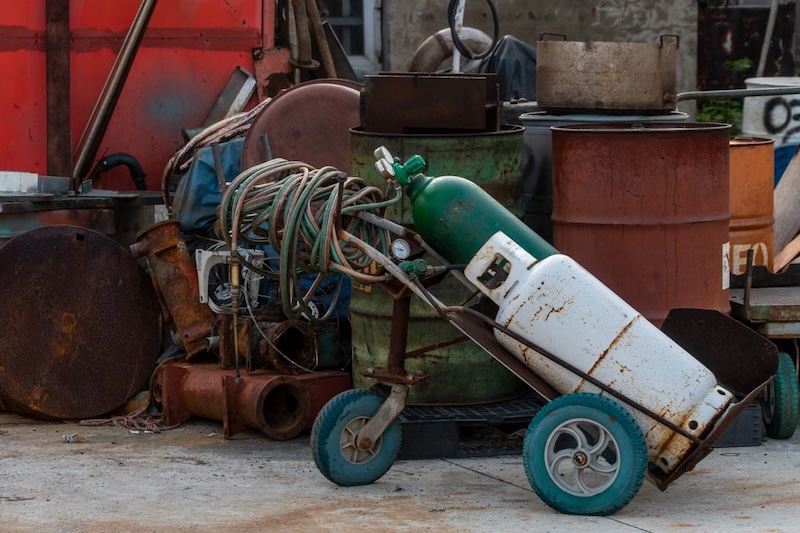
Liquefied petroleum gas in Uganda is largely sold in cylinders of 6kg and 12kg. If you don’t have a cylinder, the startup cost is approximately Shs 170,000 for 6kgs and Shs 266,000 for a 12kg.
The median monthly pay in Uganda is Shs 200,000! What makes charcoal the preferred choice by at least many urban households is because with Shs 1,000, one can get a palmful of it which they can use to cook something.
Many of our people don’t earn a predictable regular income. They wake up, go to work (if they find it) and are paid per a day or work done. Once they get that money, they can buy some charcoal of Shs 1,000 and some maize flour or a few fingers of Matooke and prepare the day’s meal.
They can’t afford to spend more than their monthly income on the gas equipment. There was a time government distributed some gas cylinders freely. I believe that at Shs 60,000 for a 6kg and Shs 112,000 for a 12kg for a refill respectively, the majority of our people can’t afford it.
Gas cylinders even distributed for free will most likely end up as decorative materials. What then can be done? Government must support the private sector to make gas cylinders of 1kg or 2kg which means that the majority of households can afford to refill at Shs 10,000 for a 1kg or Shs 20,000 for a 2kg or even lower.
That is why manufacturers of consumer goods like sugar or cooking oil don’t sell only 25kg or five litres respectively. They sell in small quantities that the majority can afford.
Our people buy sugar by spoonful, diapers by a piece, eat beans but ask the restaurant to add in meat soup (because they can’t afford meat). They can only afford gas by a kilo or a half not 6kg or 12kg.
djjuuko@gmail.com
The writer is a communication and visibility consultant.
The post To replace charcoal, govt should promote gas cylinders of 1kg, 2kg appeared first on The Observer Media Ltd.