The Palace Guard Against the Trenches : What the Mutiny in Niamey Revealed
The mutiny that broke out in air base 101 in Niamey in the night of 29 August 2026 failed. The real question now is to understand why it took place. Those who took up arms against General Abdourahamane Tiani were young soldiers from the front lines, those who fought the ‘jihadists.’ For all of the Sahel, it’s a much more worrying sign than any plot from the army high command. Until Saturday morning, fighting took place in the Nigerien capital near to Diori Hamani airport, the presidential palace, and the public television channel RTN. Loyalists retook control only with the […] The post The Palace Guard Against the Trenches : What the Mutiny in Niamey Revealed appeared first on African Arguments.
 Black News
The mutiny that broke out in air base 101 in Niamey in the night of 29 August 2026 failed. The real question now is to understand why it took place. Those who took up arms against General Abdourahamane Tiani were young soldiers from the front lines, those who fought the ‘jihadists.’ For all of the Sahel, it’s a much more worrying sign than any plot from the army high command.
Until Saturday morning, fighting took place in the Nigerien capital near to Diori Hamani airport, the presidential palace, and the public television channel RTN. Loyalists retook control only with the support of the Russian Africa Corps. The state television broadcast the live arrest of several tens of soldiers being arrested, most of them extremely young.
Three juntas, one promise
In Mali, in Burkina Faso, and in Niger, soldiers took power putting forward the same argument: civilian leaders had failed in front of the ‘jihadists,’ and the army would now do better. Assimi Goïta carried out two coups in Mali in 2020 and 2021. Ibrahim Traoré took control of Burkina Faso in September 2022 and overturned another putschist, Paul-Henri Damiba. Tiani deposed President Mohamed Bazoum in July 2023.
The French were asked to leave, and the Russians invited to come in. The three countries concerned founded the Alliance of Sahel States and withdrew from ECOWAS in January 2025. Each then solidified its grip on power through legislation. In Mali, political parties were banned in 2025, and the leadership was granted a five-year renewable term in office—without elections. Until 2030, Tiani will remain president of the transition. In Burkina Faso, all political parties were dissolved in January 2026, clearing the way for the regime to consolidate control.
The promised security, however, never materialised. This gap between promises and actions has fuelled anger—an anger that is now festering in the barracks.
Two armies in one
Niger effectively has two armies: the Presidential Guard, and everyone else. Tiani commanded the Guard for twelve years; since the coup, it has received the best equipment and the most secure and comfortable postings. Meanwhile, regular units stationed in the southwest and along the Nier’s borders are losing personnel in the fight against the Islamic State in the Sahel and the al-Qaeda-linked JNIM.
According to observers, it is these soldiers who have mutinied. US researcher Alex Thurston that most accounts align: regardless of infighting at the top, it is the anger of the rank-and-file that has driven the revolt. Paul Melly, of Chatham House, aptly summari the sentiment among young officers: three years ago, things seemed to be improving; today, the opposite is true.
When dealing with generals, a regime can either negotiate or simply swap out loyalists for other trusted figures. But for soldiers suffering from a lack of ammunition and reinforcements, a reshuffle within the high command changes nothing.
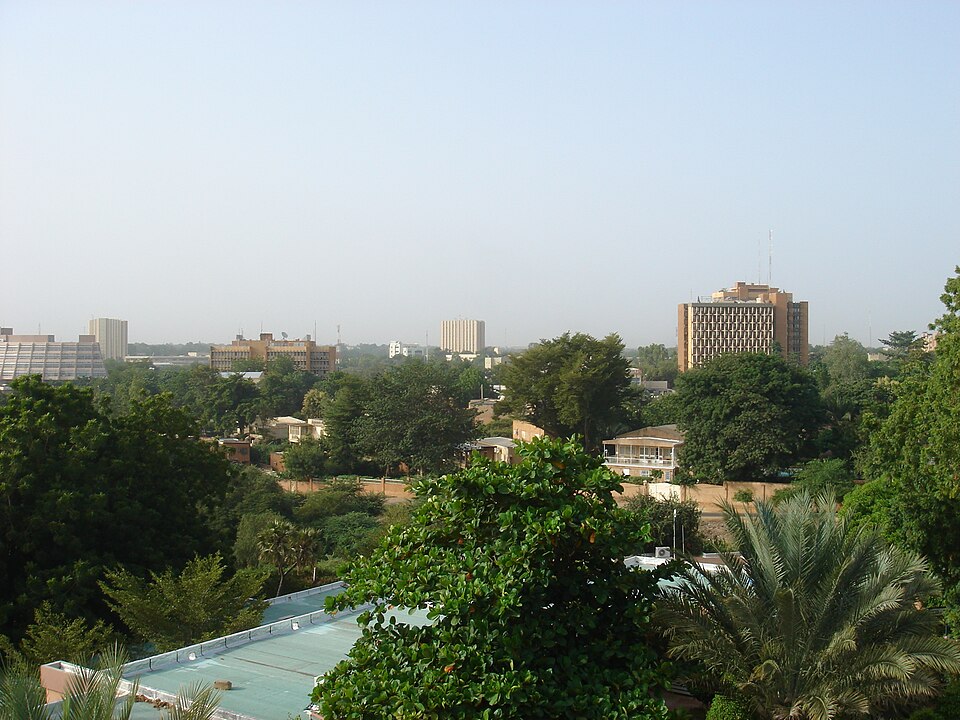
Niamey, Niger.
How the juntas protect themselves
The first pillar: the purges. In Mali, following a reported coup attempt in August 2025, two generals and more than fifty military personnel were arrested. At the end of December, a decree mandated the forced retirement of several high-ranking officers, including the former intelligence chief. In Burkina Faso, after a plot was uncovered in January 2026, Damiba—identified by Ouagadougou as one of the organizers—was extradited to Togo. Tiani has taken a more cautious approach: on 11 September, he replaced Chief of Staff Moussa Salaou Barmou with Mamane Sani Kiaou. Former Defense Minister Kalla Moutari has been arrested, and former RFI journalist Moussa Kaka has been shot. According to Thurston, this reaction suggests that Tiani does not wish to appear fearful.
The second pillar is the law. With political parties banned and terms of office extended, the opposition has no remaining legal path to power.
The third pillar is an external protector. Between 200 and 300 fighters from the Russian African Corps are stationed in Niger, with their headquarters located south of Base 101. Russian Ambassador Viktor Voropaev maintains that Niamey merely requested assistance. According to Thurston, the Algerian air force also provided support to the loyalists. For the first time, forces tasked with fighting jihadists have openly opened fire on soldiers from the very countries that employ them.
Does a failed coup strengthen a regime?
Many analysts, including the editorial team at , believe that every thwarted coup serves to consolidate the junta: the leadership eliminates its rivals and ties its security even more closely to Moscow. In the short term, this is true. Goïta, Traoré, and Tiani remain in power, and the failed attempts have resulted in reshuffles that worked to their advantage. However, a purge works against individual conspirators who can be named, but not against the collective anger of entire units—you cannot simply dismiss a battalion that is holding the front line. Furthermore, every instance of calling in foreign forces to suppress one’s own soldiers undermines the very foundation of the regime: the image of a sovereign army.
Moreover, the ‘protector’’ is not all-powerful. In April 2026, jihadists and Tuareg separatists drove the Russians out of Kidal, Mali; Defence Minister Sadio Camara was killed, and Goïta took over the ministry himself. A regime that relies on a single external backer becomes vulnerable when that support begins to falter.
Calm in the capital, fire on the periphery
While the juntas fortify their palaces, the war draws ever closer to the capitals. Niamey faced attacks in January and June 2026, including at the airport. Analyst Rida Lyammouri that armed groups are gathering along the borders with Benin and Nigeria. In Mali, the JNIM and Tuareg separatists struck near the Bamako airport in late April, and again in September at Diouri and Sévaré. On September 20, Goïta convened an emergency meeting.
It is a vicious cycle. With the best soldiers stationed in the palace gardens, the front line is left neglected. Casualties mount, and anger grows. By shielding their power from the army, the juntas end up weakening the army itself.
What will the autumn bring?
The crucial question is not whether Tiani can survive another night of gunfire, but whether he understands where the shots came from. The first real test concerns resources for the front: if equipment, pay, and troop rotations continue to be diverted to the presidential guard, it will be clear that the mutineers’ grievances have not been understood.
The post The Palace Guard Against the Trenches : What the Mutiny in Niamey Revealed appeared first on African Arguments.