Political Reform Debate Escalates as Former Somali Deputy Speaker Criticises 4.5 Power-Sharing System
Facebook

Twitter (X)

Instagram

Somali Magazine - People's Magazine
The Former Somali Deputy Speaker criticises 4.5 power-sharing system in a renewed national call for structural governance reform, characterizing the decades-old clan formula as an outdated barrier to democratic progress and merit-based leadership. Addressing civic forums and legislative stakeholders in Mogadishu, the former parliamentary leader argued […] The post Political Reform Debate Escalates as Former Somali Deputy Speaker Criticises 4.5 Power-Sharing System first appeared on Somali Magazine.
 Black News
Facebook Twitter (X) Instagram Somali Magazine - People's Magazine
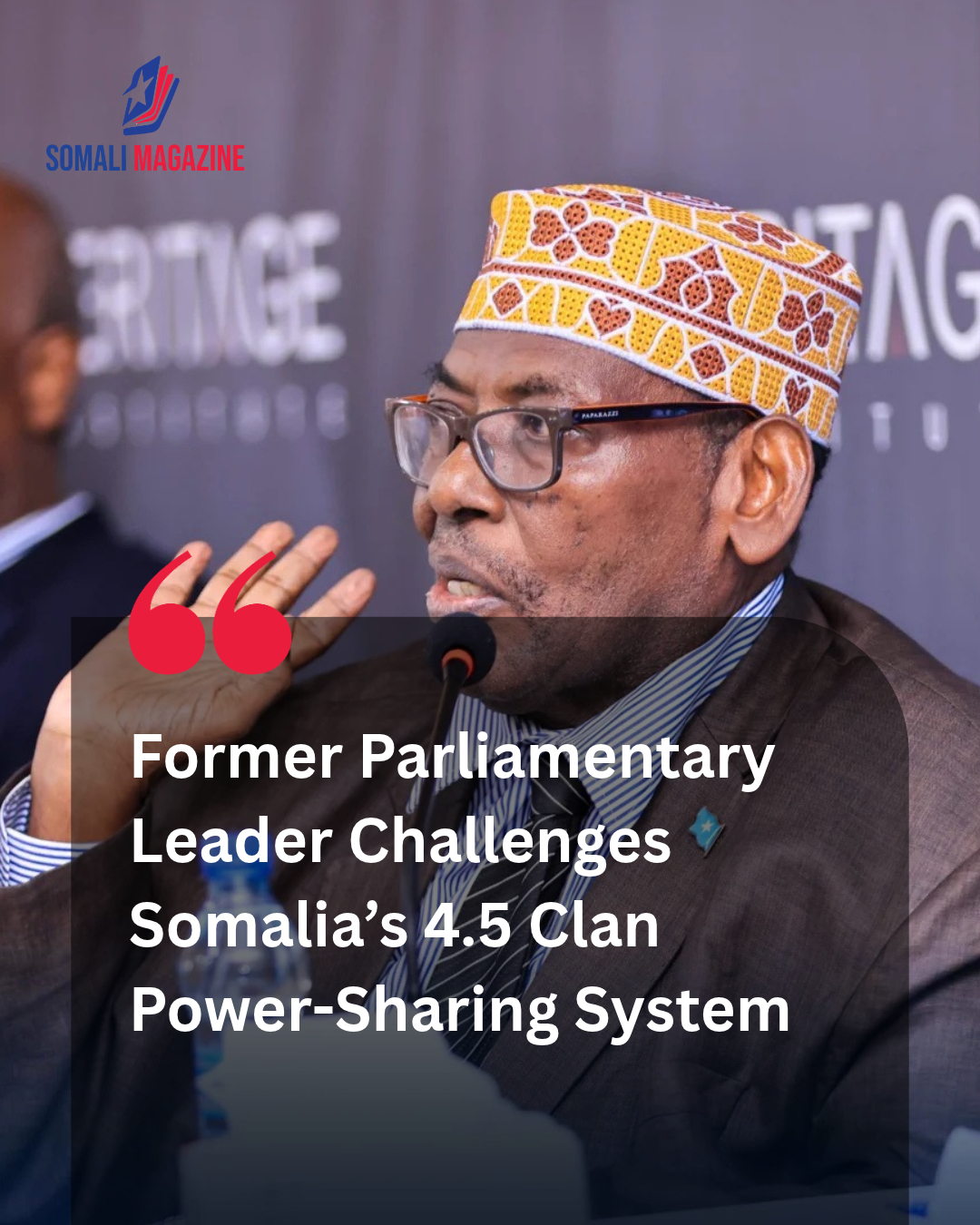
The Former Somali Deputy Speaker criticises 4.5 power-sharing system in a renewed national call for structural governance reform, characterizing the decades-old clan formula as an outdated barrier to democratic progress and merit-based leadership. Addressing civic forums and legislative stakeholders in Mogadishu, the former parliamentary leader argued that the transactional political model, which divides power among four major clan blocs and a coalition of minority groups, has institutionalized political division, restricted equal representation, and delayed the development of competitive political parties. The public critique highlights growing friction between advocates of direct democratic elections and supporters of established quota frameworks.
First adopted as a temporary transitional mechanism at the 2000 Arta Peace Conference in Djibouti, the 4.5 clan-based allocation system was designed to resolve civil conflict by distributing parliamentary seats, cabinet posts, and executive appointments proportionately among major social groups. However, senior legislative figures and legal experts observe that what was intended as an emergency power-sharing bridge has effectively anchored national governance for over two decades. Critics contend that the system marginalizes minority communities, limits youth and female participation, and prevents qualified professionals from competing for public office outside rigid tribal lineages.
The former deputy speaker’s intervention comes at a critical juncture as national authorities, electoral commissions, and federal member state leaders engage in intense debate over the country’s future voting framework. While federal leadership continues pushing for a transition to direct universal suffrage, several regional leaders and political alliances caution that dismantling the 4.5 system without full consensus could exacerbate regional instability. Parliamentary observers emphasize that replacing the established power-sharing formula requires comprehensive constitutional amendments, robust voter registration databases, and unified security guarantees across all administrative territories.
Civil society groups and independent policy analysts have welcomed the renewed national discourse, stressing that a gradual transition toward universal suffrage remains vital for building long-term political accountability. Community leaders continue to urge federal and state authorities to maintain inclusive dialogue, ensuring that any new electoral framework protects minority rights while advancing democratic norms. As the Former Somali Deputy Speaker criticises 4.5 power-sharing system, state institutions face the dual challenge of preserving fragile political consensus while paving a definitive path toward one-person, one-vote democratic elections.
The post Political Reform Debate Escalates as Former Somali Deputy Speaker Criticises 4.5 Power-Sharing System first appeared on Somali Magazine.