

Grainy, yearning memories of Europe’s ’90s free rave heyday
Never Alone — A new photobook from Cheyenne Clementi and Valentina Morandi presents pictures they made over seven years while touring the continent as part of the Tekno Mobil Squad soundsystem crew. It archives parties, people and a lifestyle largely consigned to the past.
 Black News
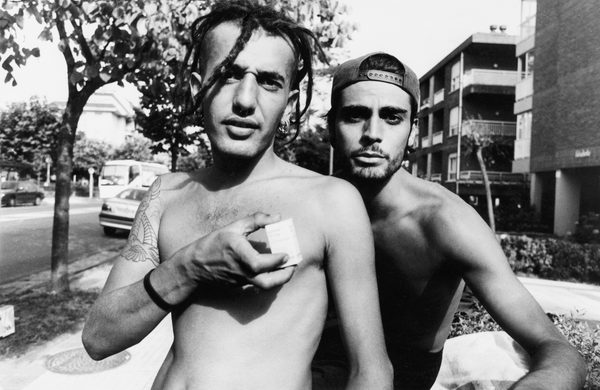
Never Alone — A new photobook from Cheyenne Clementi and Valentina Morandi presents pictures they made over seven years while touring the continent as part of the Tekno Mobil Squad soundsystem crew. It archives parties, people and a lifestyle largely consigned to the past.
In 1994, the British government led by John Major passed the Criminal Justice and Public Order Act. It criminalised unlicensed raves, making it illegal for 20 or more people to gather and listen to “sounds wholly or predominantly characterised by the emission of a succession of repetitive beats”.
At the time, UK free party culture had reached its zenith. Crews such as DiY, Spiral Tribe and Circus Warp were organising raves across common land and abandoned buildings around the country, culminating in the 1992 Castlemorton Common rave that attracted tens of thousands of people across the weekend.
Without charging money for entry, and consciously making use of public and dilapidated spaces, free party culture was idealistic and egalitarian. But now faced with the prospect of up to three months in prison for attending or organising raves, some felt that the UK no longer offered the opportunity for them to live the nomadic, free lifestyles that they dreamed of.
Crews such as Spiral Tribe and Bedlam followed in the footsteps of the Mutoid Waste Company in the late ’80s, setting off across Europe with no end goal, organising parties as they travelled eastwards through France, Germany, the Czech Republic, Italy and beyond. Inspired by the parties and culture, homegrown European crews began popping up and organising their own versions of raves, or “Teknivals” as they were often referred to.
In 1997, Italian photographers Cheyenne Clementi and Valentina Morandi stumbled across their first raves. Both were grew up around Milan and attended the same high school, with Clementi’s parents being involved in the post-hippie and punk movements of the late ’70s and ’80s. Her first rave was on the ex-Breda industrial lands – formerly a huge factory where trains were built. “I first encountered free parties and rave culture around 1997,” Clementi says. “From that moment on, I immediately felt that this was where I belonged.”
Morandi, meanwhile, attended her first in an abandoned factory in Bologna. “I experienced absolute freedom and immediately knew I had found something unique,” she remembers.
They both instantly got the bug, as people in the UK had at the beginning of the decade, and similarly-minded rebellious folks across Europe did too. That same year, they founded the Tekno Mobil Squad along with a group of friends, and for the best part of the next decade, Clementi and Morandi travelled Europe, moving beyond Italy’s borders while throwing raves and teknivals in “abandoned factories, former military sites, forests, beaches and open countryside”.
Their new photobook Never Alone: 1997-2004 Raving in Europe, documents the crew’s heyday between 1997 and 2004, filled with nostalgic, black-and-white shots of the time that are part-diaristic and part-documentation of a culture that existed largely hidden away on the fringes of mainstream society. Without their pictures, the time would likely have been consigned to memory.
Clementi and Morandi would take pictures often for no real reason beyond cherishing moments. “We loved photography,” they explain. “At the time, we weren’t consciously documenting history – we were just photographing our lives. Since photography was entirely analogue, very few people were doing it. There was no pressure to document every experience. Every frame mattered. Photographs were memories, not content for social media.”
There’s shots of raves in full flow, with huge soundsystems, packed crowds, and DJs spinning techno, acid, jungle, drum & bass and more to dancers, but it’s also the books quieter moments that shine the brightest. Intimate portraits of their friends and pets in their trucks are interspersed with moments relaxing in nature or lying on top of soundsystems.
The pictures showcase genuine community among the travelling troupe, who moved around Europe in search of nothing but parties, music, creativity and freedom. “We lived on four wheels. The trucks were our homes and carried the soundsystems,” Clementi and Morandi say. “Every weekend we searched for a new location, spreading the word through flyers and word of mouth.”
Run ins with police were also documented. Different countries and municipalities saw a wide range in responses to their parties. “[We had police encounters] many times,” they explain. “Sometimes they confiscated our trucks or shut down parties. Other times they escorted us to safer locations.”
As free party culture grew in popularity, and became commercialised into the global festival and nightclub circuit we know today, the images capture the lightning in a bottle moment of the ’90s, in the early, radical days of the movement, before authorities had time to properly organise and legislate to curb it.
The project then, serves as a reminder of a bygone era. “We realised we had a unique archive documenting one of Europe’s most significant underground movements and wanted to turn it into cultural memory,” Morandi and Clementi say. “It is visual memory, freedom, art and hope – a project that tells the story of many lives.”
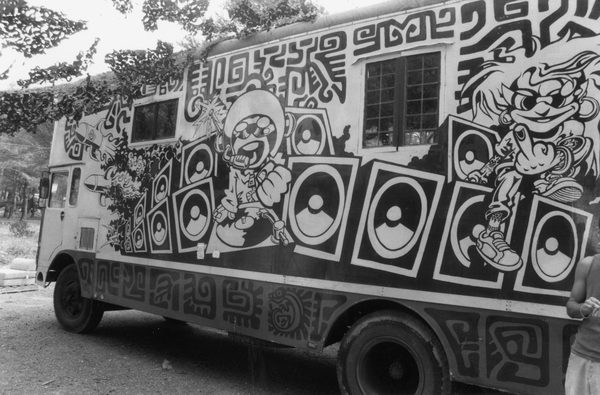
Never Alone: 1997-2004 Raving in Europe by Cheyenne Clementi and Valentina Morandi is published by Propaganda / Drago.
Isaac Muk is Huck’s digital editor. Follow him on Bluesky.
Buy your copy of Huck 83 here.
Enjoyed this article? Follow Huck on Instagram for more from the cutting edge of sport, music and counterculture.
Support stories like this by becoming a member of Club Huck.