
Inside Erin LeCount’s Abbey Road masterclass empowering the next generation of producers
From teaching herself production in her bedroom to leading a masterclass inside Abbey Road Studios, Erin LeCount is transforming the barriers she faced as an emerging producer into opportunities for the next generation of women and non-binary creatives. The post Inside Erin LeCount’s Abbey Road masterclass empowering the next generation of producers appeared first on BRICKS Magazine.
 Black News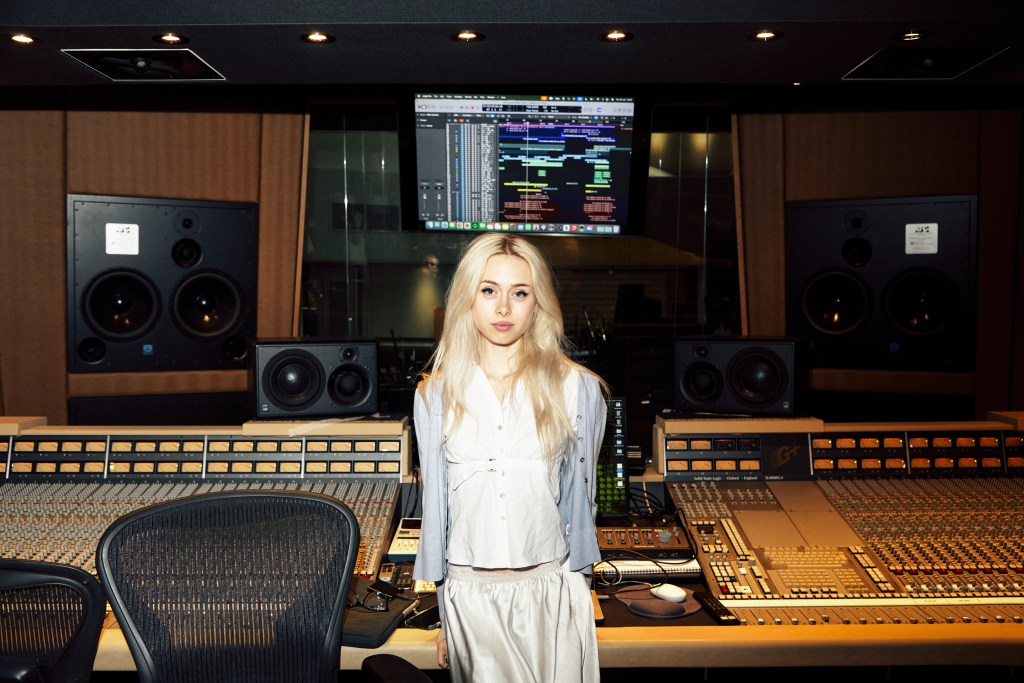
PHOTOGRAPHY Richie Barker
Just 4.4% of producers behind the Billboard Hot 100’s biggest songs in 2025 were women. More than 90% of the 1,400 chart hits analysed over the past eleven years didn’t credit a single female producer. These statistics paint a bleak picture of who gets recognised behind the desk, but Erin LeCount doesn’t believe it’s because women aren’t producing music.
“I don’t believe that we’re all that rare,” the 23-year-old artist, songwriter and self-producer tells BRICKS. “I believe that there are so many of us in bedrooms not calling ourselves producers, or not owning up to what we can do, and also not being put in the right rooms by labels, managers and people who are meant to facilitate that.”
It’s this belief that led her to bring 15 emerging women and non-binary writers, producers, and musicians to Abbey Road Studios last Thursday for a free day of production workshops, track breakdowns and insider advice from LeCount and the studio’s engineers.
Rather than simply hosting a workshop on recording or vocal production, the masterclass interrogated a much larger question: what happens when you remove the intimidation that keeps people from ever calling themselves producers in the first place?


The need for spaces like this extends far beyond one afternoon at Abbey Road. According to the UK’s Musicians’ Census, more than half of women working in music have experienced gender discrimination, while women remain significantly underrepresented in production and audio engineering roles. LeCount’s intention wasn’t just to open the doors to one of the world’s most iconic recording studios; it was to show attendees they belonged inside. “So many of my first experiences going into studios like this, as a bedroom producer and someone who taught themselves… I would walk in and instantly feel a sense of imposter syndrome,” she explains. “All it would take is someone to assume that I’m not the producer, or assume that I’m waiting for a male producer to arrive, for me to have my confidence knocked, or my sense of security and feeling like I know what I’m doing bruised.”
All it would take is someone to assume that I’m not the producer, or assume that I’m waiting for a male producer to arrive, for me to have my confidence knocked.
Earlier in the day, LeCount had spoken candidly about those early years of teaching herself production. She described making ambient tracks in GarageBand using a MIDI keyboard she’d dug out from the back of a drawer, recording vocals in her wardrobe, and gradually building towards Logic. She admitted that asking questions once made her feel naïve, and that whenever other people watched her create, “all that instinct that allowed me to write freely would block off. I would freeze up and feel like I couldn’t make anything.”
Rather than her confidence developing alongside her technical ability, she found herself battling performance anxiety, imposter syndrome and the fear that people would discover what she didn’t know. Looking back, LeCount believes much of that fear came from herself as much as anyone else. As she reflected during the workshop, “No one is judging you as hard as you are judging yourself.”


She used these experiences to shape her masterclass. Music students sat alongside singer-songwriters, DJs, producers and working musicians, creating everything from acoustic folk to metal. The group toured the iconic studios before a Q&A session with LeCount, where participants were encouraged to speak candidly about what excited them, what intimidated them, and what they wanted to learn. Later, groups rotated between the control room and the recording booth for vocal recordings and mixing sessions, before sharing their collaborative track and receiving invaluable feedback.
For LeCount, inviting emerging creatives into a space like Abbey Road was about far more than offering a behind-the-scenes glimpse inside one of music’s most famous studios. “I have thought about what it means for people to come into these spaces and to feel like they deserve to be in them, and to not feel stupid asking questions,” she says. “I wanted people to feel like this is a place for play rather than judgement, or being quizzed on their knowledge or lack of knowledge. I wanted to make something that felt creative and playful, which is what music is.”
That sense of belonging was particularly significant given LeCount’s own experience of navigating an industry where women behind the desk are still treated as an exception rather than the norm. Instead, she believes many aspiring producers simply never receive the encouragement, opportunities or confidence to own that identity. “For me, it was important to bring a group of people together at a similar stage of learning production and let them find each other, find a network of people and reinforce that they can be in these rooms.”

For me, it was important to bring a group of people together at a similar stage of learning production and let them find each other, find a network of people and reinforce that they can be in these rooms.
Throughout the workshop, LeCount repeatedly returned to the idea of demystifying production. Earlier in the day, she reflected on how some producers she’d encountered early in her career answered straightforward questions with unnecessarily long, technical explanations. The contrast inside Studio Three couldn’t have been more stark, as Erin answered questions, celebrated experimentation, and encouraged mistakes as part of the creative process.
She frequently referred to her own DIY set-up, which has largely remained unchanged since her rise, despite the countless invaluable equipment set-ups surrounding her, pointing to artists like PinkPantheress as proof that expensive software isn’t the prerequisite many aspiring producers believe it to be.
During a stem breakdown of her latest release, ‘THE CINEMA’, she jokingly recounted to the group how the track was recorded between legendary producer Jim-E Stack’s state-of-the-art home studio, and her own garden shed – which she admitted is not soundproofed, meaning she’d have to wait for her neighbours to finish mowing their grass before hitting record. But beneath the humour was a more personal story. LeCount described the track as the product of years spent overcoming imposter syndrome and learning to trust her instincts behind the desk, making it a fitting soundtrack to a day centred on creative confidence.


Importantly, she described what learning production ultimately gave her. “Getting into production gave me autonomy over music,” she asserted. “It was very freeing.” That autonomy has become central to the advice she now passes on. “I really hope people leave today with a bit more trust in their own taste and trust in their ability to bridge the gap between their ability and their taste,” she explained. “Production is something you’re never done learning, and I hope today makes that a more exciting task than an intimidating one.”
As the afternoon drew to a close, Studio Three shifted from a classroom into something closer to a community. Playing back the music they’d made together, swapping Instagram handles, and making plans to stay in touch, LeCount told me this is how she’d hope the day would end. “I’d love for people to find other people that are in a similar position to them, and learning, and a network and a community because we learn from each other,” she shared at the start of the day. “We should feel able to ask each other questions and look over each other’s shoulders to learn.”
Before everyone left, she reflected on the one thing she hoped people would take away from the day. “I want people to feel competent when they leave today.” Competence, to LeCount, means having the confidence to trust your taste, ask questions without embarrassment and recognise that countless other producers are learning alongside you. If her workshop proved anything, it’s that those producers already exist. Sometimes, all they need is someone to hold the door open.
Enjoyed this story? Help keep independent queer-led publishing alive and unlock the BRICKS Learner Platform, full of resources for emerging and aspiring creatives sent to you every week via newsletter. Start your 30-day free trial now.
The post Inside Erin LeCount’s Abbey Road masterclass empowering the next generation of producers appeared first on BRICKS Magazine.