
Malawi’s electoral integrity rises
Malawi has emerged among five countries globally that recorded the biggest improvements in electoral integrity, with its score rising from 59 percent to 69 percent in the 2026 Electoral Integrity Global (EIG) report. The report, published by the University of East Anglia, the Royal Military College of Canada and Queen’s University through the Electoral Integrity … The post Malawi’s electoral integrity rises appeared first on Nation Online.
 Black News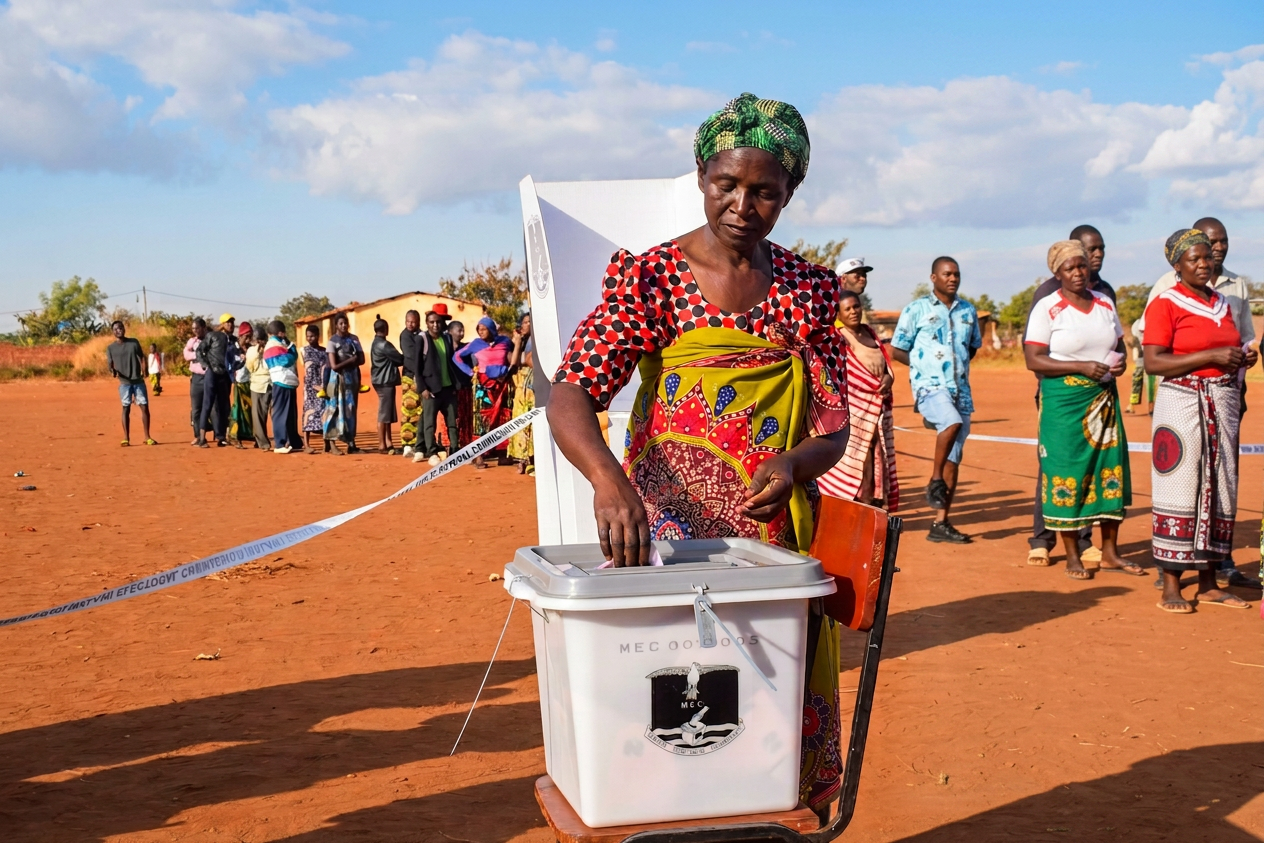
Malawi has emerged among five countries globally that recorded the biggest improvements in electoral integrity, with its score rising from 59 percent to 69 percent in the 2026 Electoral Integrity Global (EIG) report.
The report, published by the University of East Anglia, the Royal Military College of Canada and Queen’s University through the Electoral Integrity Project, draws on data from the Perceptions of Electoral Integrity dataset.
It assesses four key pillars of the electoral cycle—contestation, participation, deliberation and adjudication—covering the period before elections, campaigns, polling day and post-election processes.
Malawi scored 61 percent on contestation, 66 percent on participation, 62 percent on deliberation and 88 percent on adjudication.
The report identifies Malawi alongside the Philippines, Poland, Gabon and Egypt as countries that recorded the most notable improvements in overall electoral integrity in 2025 compared to their previous elections.
“Countries that have seen the most notable increases in overall electoral integrity in 2025, compared to their prior most recent election, were the Philippines, Poland, Gabon, Malawi and Egypt,” reads the report.
It notes that adjudication remains the strongest-performing pillar of electoral integrity globally, while equality in contestation and deliberation continue to pose the greatest challenges.
The Malawi Electoral Commission (MEC) welcomed the improvement but said electoral integrity remains an ongoing process requiring continuous reforms.
MEC director of media and public relations Sangwani Mwafulirwa said the score recognises the collective efforts of electoral stakeholders in strengthening Malawi’s democratic processes.
“The conduct of credible elections is a shared responsibility involving the MEC, political parties, candidates, civil society organisations, the media, security agencies, development partners, the Judiciary and the electorate,” he said.
Mwafulirwa said the commission remains committed to implementing recommendations from post-election reviews, strengthening institutional capacity, embracing innovation and maintaining transparency and professionalism in election management.
University of Malawi electoral and legislative politics expert Gift Sambo said the improvement would enhance the legitimacy of political leadership and democratic institutions.
He said all key stakeholders, including the electoral management body, political parties, civil society and the media, deserve recognition for contributing to the achievement.
However, Sambo urged political players to protect the independence and neutrality of electoral institutions.
“To maintain this progress, critical actors such as political parties should refrain from practices and tendencies that undermine the autonomy and neutrality of the electoral management body,” he said.
He also called for early reforms ahead of the 2030 elections.
“This is the right time to start brainstorming on how best to improve electoral governance. We should not wait until 2030,” he said.
Civil Society Elections Integrity Forum (Csief) chairperson Benedicto Kondowe said the improved score should be viewed as a milestone for continued reforms rather than a complete endorsement of Malawi’s electoral system.
He said the pillar scores provide a more nuanced picture, noting that while the 88 percent score in adjudication reflects confidence in electoral dispute resolution mechanisms, outstanding cases must still be resolved promptly and conclusively.
“The lower scores in contestation (61 percent), participation (66 percent) and deliberation (62 percent) highlight the need for continued attention beyond election-day administration.
“Electoral integrity requires a fair competitive environment, meaningful citizen participation, inclusive processes and informed public debate,” Kondowe said.
The report comes days after the MEC was selected to lead the Electoral Commissions Forum of Sadc countries (ECF-Sadc) Election Observer Mission to Zambia ahead of that country’s August 13 General Election.
The post Malawi’s electoral integrity rises appeared first on Nation Online.