Book Review | For Jews, a Jagged Line to Citizenship
Jews achieved rights of citizenship, then sometimes saw those rights withdrawn or limited, then sometimes saw them restored. The post Book Review | For Jews, a Jagged Line to Citizenship appeared first on Moment Magazine.
 Black News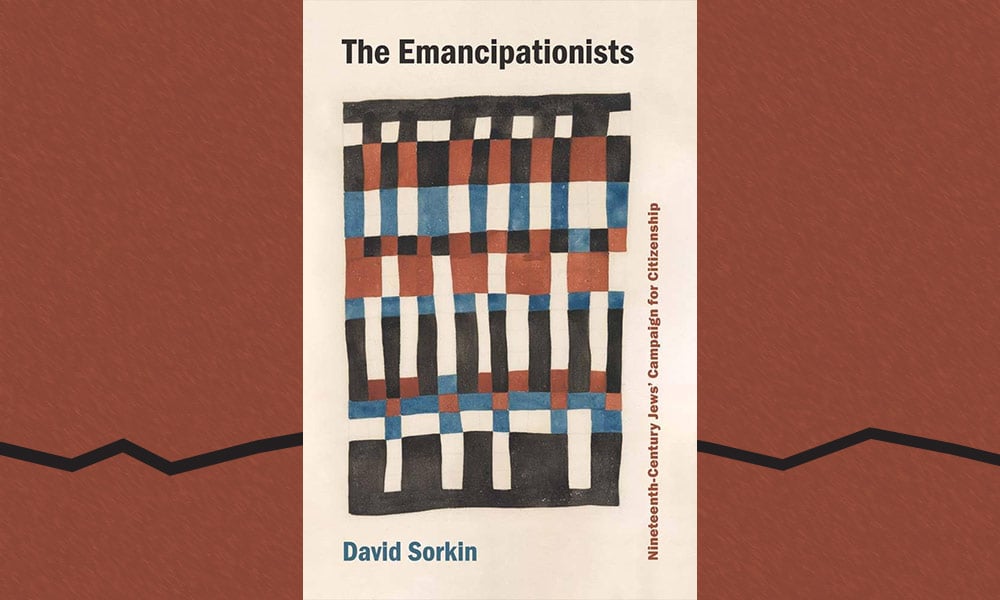

The Emancipationists: Nineteenth-Century Jews’ Campaign for Citizenship
By David Sorkin
Yale University Press, 360 pp.
In 2019, David Sorkin described his book Jewish Emancipation: A History Across Five Centuries as an effort to “re-direct the focus of modern Jewish history.” “Jewish emancipation” refers in this case to the Jews’ acquiring rights of citizenship, and more generally civil rights, in the countries where they had lived for centuries as resident strangers. By his own admission, Sorkin wrote about that process of change “from the side of the state.” His new book, The Emancipationists: Nineteenth-Century Jews’ Campaign for Citizenship, is his effort to complement his prior work with “the other side of that history, the Jews’ political mobilization.”
The Yale historian’s primary interest is the period from the late 18th century to the eve of World War I, a time during which European nations, and to a lesser degree the United States and North Africa, addressed and reformed the status of Jews in their midst. Gradually, and with many reversals, citizenship with its claims of individual rights came to replace what had long been the norm: government-recognized Jewish communities that were corporate mixed bags of restrictions and privileges, with leaders who interceded with the state on their communities’ behalf.
The project of redirecting Jewish historiography is, frankly, above my pay grade. But the story of the Jews’ political activities in pursuit of citizenship fills gaps in my less-than-scholarly grasp of modern Jewish history. I confess to having been raised with my father’s sour view of European Jews who mistook their civic and material advances for security, if not freedom. Sorkin persuades me that Jews who applied their learning to agitate for equality in the 19th century were not mere optimistic dupes but were the forerunners of civil rights organizations, Jewish and otherwise. Perhaps the combination of an antisemitic revival in America and an Israeli government that includes some truly odious undemocratic elements has led me, and some other American Jews, to reconsider how we relate to the societies where we live and how those relationships evolved.
Jews achieved rights of citizenship, then sometimes saw those rights withdrawn or limited, then sometimes saw them restored.
Sorkin acknowledges two reasons why Jewish emancipation has been disparaged as a subject of interest to historians of the Jews. Jewish nationalists, both Zionists and socialists, who foresaw no Jewish future in their diaspora homelands regarded their own movements, born in the late 19th century, as the beginning of modern Jewish politics and diplomacy. Also, many historians see Jewish emancipation as a kind of side effect of the general move by European lands toward becoming modern states; in that view, states sorting out the “Jewish Question” for their own purposes led only incidentally to benefits for the Jews. Sorkin quotes the historian Salo Baron (emancipation was “as much a historic necessity for the modern state as it was for the Jews”) and the scholar Yosef Hayim Yerushalmi (“citizenship and equality were a gift from above”) to demonstrate these ideas, which he opposes. He prefers to study Jews’ agency and activism in their own pursuit of civil rights.
There is a further obstacle to the historian trying to educate us about the campaigners for Jewish emancipation. We read about them with the knowledge that their struggles with pre-unification German kingdoms, with Hapsburg-controlled lands and with Russia would later be eclipsed by the embrace of antisemitism as national policy. France, which emancipated Jews starting under Napoleon, would succumb to German occupation and deport them. Of the countries Sorkin studies, only England and the United States stand out for remaining constitutional democracies through to the end of the 20th century. Historians evaluating the agency of 19th-century Jews may find it challenging to “watch the movie forward” and refrain from judging events of Napoleon’s Europe with the knowledge that Hitler’s was to come. For the lay reader, it is difficult to read about 19th-century European Jews without thinking ahead to the Holocaust and the creation of Israel. Did hard-won Jewish rights in Europe defend the Jews of Prague or Amsterdam?
I approached Sorkin’s new book eager to learn about a quintessential figure of Jewish agency in this process, a man I had learned about only recently from other reading: Adolphe Crémieux (1796-1880), twice the French minister of justice, author of the Crémieux Decree of 1870 that granted citizenship to the Jews of Algeria, and president of the Alliance Israélite Universelle that was founded in 1860 to advocate for Jewish rights. Crémieux is believed to have been the first Jewish government minister of a modern state and was a lifelong advocate for Jewish rights.
Sure enough, Sorkin’s introduction begins with a ceremony in 1817 in a courtroom in Crémieux’s hometown, Nîmes, at which he was to be admitted to the bar upon swearing a special oath required of Jews (such oaths often entailed some requisite Jewish self-denigration), which the young lawyer regarded as a denial of his equal rights:
When the president of the court requested that he swear the oath, he remonstrated, “Am I in a synagogue? No, I am in a courtroom. Am I in Jerusalem, in Palestine? No, I am in Nîmes, in France. Am I only a Jew? No, I am also a French citizen. Therefore, I take the oath of a Jewish French citizen!” Crémieux’s protest was a significant local act in the Jews’ national and international campaign for equal rights.
The court in Nîmes accepted Crémieux’s argument, but the oath for Jews was upheld by some French courts and rejected by others, remaining on the books in France until 1846. That is typical of the history Sorkin covers: It is not a straight line from medieval membership in segregated Jewish communities to citizenship with all its benefits. Jewish efforts to remove bars to education, employment, residence and the practice of Judaism advanced and stalled as the political pendulum swung left and right. Jews achieved rights of citizenship, then sometimes saw those rights withdrawn or limited, then sometimes saw them restored.
Making the line still more jagged was the longstanding Jewish principle drawn from the Talmud that “the law of the land is law”—that is, Jews in the diaspora acknowledge the authority of the country they live in, a sort of Jewish version of the Christian “render unto Caesar that which is Caesar’s.” Following the law of the land was complicated in an era when lands changed as much as laws did. Of the five European countries Sorkin writes about, 19th-century Germany was in the process of integrating, while the Hapsburg Empire and Tsarist Russia only just made it to WWI before disintegrating. France grew with its territorial acquisitions in North Africa, and England lost one empire and started another (and still held all of Ireland). The United States, which Sorkin also covers, first appeared on the map during this period and then multiplied in size. So Jews seeking citizenship and the rights it implied would have found the rules for attaining that status frequently in flux.
What Sorkin demonstrates is that for all this variety, similar Jewish organizations sprang up in different countries, led by similar men who arose from similar backgrounds and professions. The Jewish Enlightenment, the Haskalah, had exposed them both to a Jewish education and to non-Jewish ideas that were driving modern Europe. They became lawyers, journalists, activists.
The Prussian-born Isaac Leeser (18061868) was such a figure in the United States: a pillar of religious orthodoxy, chazzan of Philadelphia’s Congregation Mikveh Israel, and publisher of the monthly Occident and American Jewish Advocate, in which he did editorial battle with Christian missionaries and Reform Jewish modernizers. His models for the magazine were Jewish publications recently founded in German kingdoms and in Britain.
The names of Leeser, his fellow Americans Louis Marshall and Simon Wolf, the English Jew Francis Goldsmid and the German Jew Ludwig Philippson—editor of Berlin’s first Jewish newspaper—are not widely mentioned these days. But as with Crémieux, it seems wrong to ignore their work on behalf of Jewish rights in a political environment that was sometimes accepting and sometimes not.
In societies aspiring to be guided by law rather than royal decree, Jewish lawyers appealed for the tolerance of the day to be applied fully and literally to the Jews. One interesting example was Prussia, which, during the Napoleonic wars, issued a broad decree of emancipation. A few years later, King Frederick William III, seeing Jewish emancipation as lessening pressure on Jews to convert to Christianity, backslid, imposing a restrictive regime on Jews in newly acquired territories. Over the ensuing decades, conversion of the Jews became official state policy, and the Jewish campaign for equality lost ground. When the next king, Frederick William IV, proposed sparing the Jews from military conscription, thus undercutting their claims to citizenship, the Jewish community took action. Philippson’s newspaper launched a petition, describing conscription as “a central pillar of the contract of equal duties for equal rights.” Eighty-four Jewish communities signed on. Inspired by Philippson’s newspaper crusade, several communities submitted other petitions opposing the king’s plans to have the status of Jews revert to what it had been before the decree of emancipation. “The newspaper,” Sorkin writes, “acted as surrogate national organization.” The law that was ultimately approved in 1847 still accorded Christians rights that Jews were denied, but it also offered some benefits in education that Jews needed.


All this pro-emancipation activity entailed some support of the idea that Jews needed to recover from the desperate state to which the poorest among them had fallen (whether that recovery was a condition for citizenship or its hopedfor consequence was evidently a matter of some debate). It required an acknowledgement of the Talmudic declaration that the law of the land is the law—an acknowledgement that cost some Old World rabbis their authority—and a recognition that Judaism, in the modern state, was evolving from a unique civilization, public in its practices within set boundaries, to one “confession” among many. Indeed, the campaign for England’s Jews to gain citizenship came shortly after Catholics and non-Anglican Protestants received theirs. It was a step away from second-class Jewish nationalism toward first-class membership in a society based on law. For emancipationists, Sorkin writes, “one group’s inequality threatened every group’s equality.”
Does it all amount to the birth of a Jewish politics, before the rise of Jewish political socialism and Zionism? My doubts would mostly be a question of numbers—how much of the Jewish population became involved in this early struggle for rights?—and Sorkin doesn’t cite any. Of the countries he writes about, the one where reforms showed the least success was Russia, which, with its huge western provinces, was home to most Jews. While Russia did witness the cycle of reform and repression, it’s the latter for which the empire is remembered. Was emancipation essentially a West European movement, exported to America along with German Jewish immigrants, a population soon to be overwhelmed by new arrivals from the East? In that case, emancipation, still a good in itself, would have been more limited than Sorkin’s description of it.
In the end, Sorkin successfully makes the case that a significant number of Jewish maskilim, products of the Jewish Enlightenment, went above and beyond merely benefiting from the modernization that offered rights of citizenship—they actively advocated for it in the press, the courts and in political life. We cannot fault them for not seeing what the 20th century would do to their efforts. And especially now, when antisemitism is at troubling levels, we should honor the pursuit of equal rights for Jews and gentiles alike.
Robert Siegel is Moment’s special literary contributor.
The post Book Review | For Jews, a Jagged Line to Citizenship appeared first on Moment Magazine.