‘We were digging our own graves’: Survivor recounts Amin-era horror
For months, Prof Charles Kwesiga and fellow detainees at Mutukula were ordered to clear bushes, dig trenches and carry out other manual labour. They did not know the purpose of the work until the chilling realisation dawned on them: they could have been preparing their own graves. “We started to do manual labor. Clearing the […] The post ‘We were digging our own graves’: Survivor recounts Amin-era horror appeared first on Daily Star.
 Black News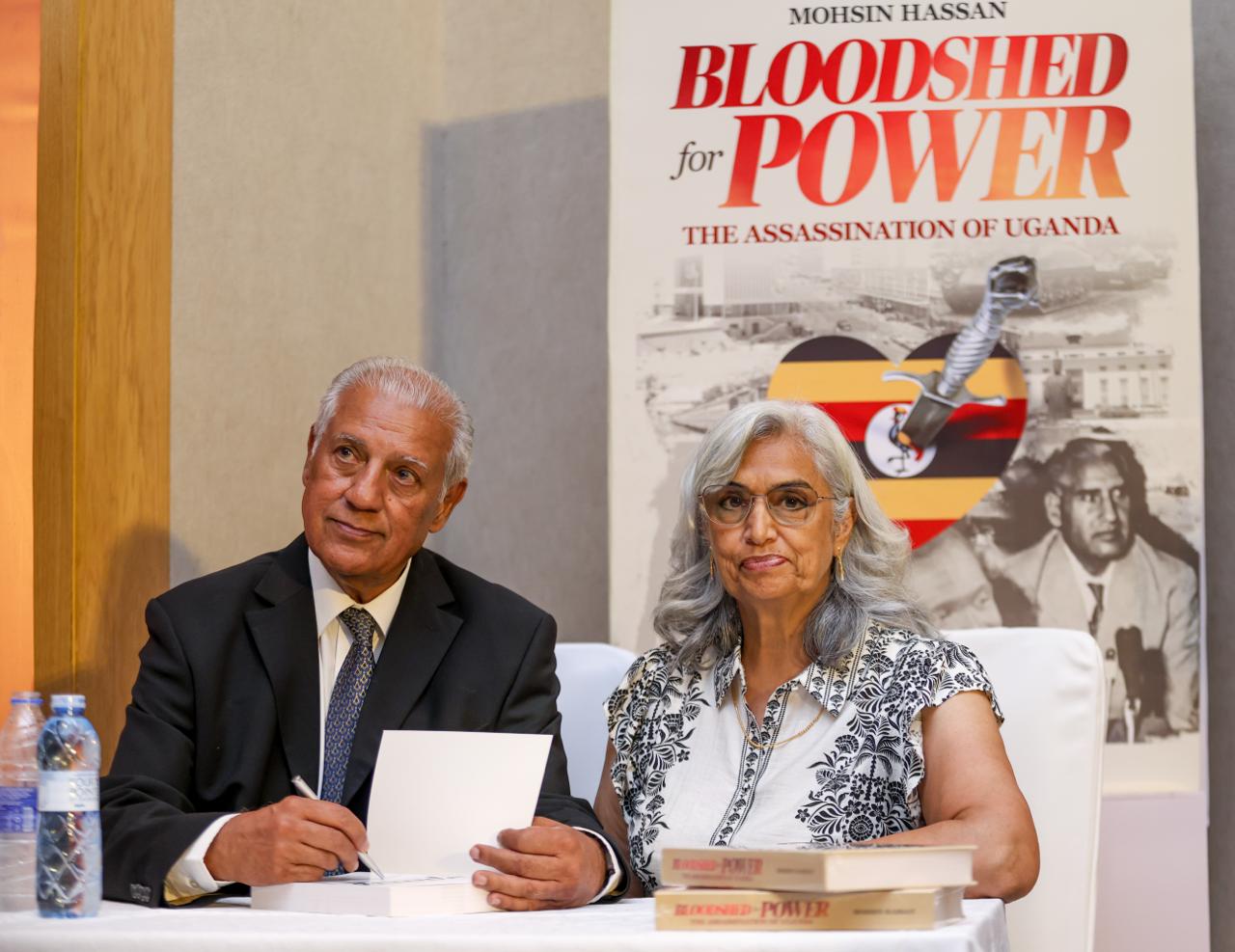
For months, Prof Charles Kwesiga and fellow detainees at Mutukula were ordered to clear bushes, dig trenches and carry out other manual labour. They did not know the purpose of the work until the chilling realisation dawned on them: they could have been preparing their own graves.
“We started to do manual labor. Clearing the bushes, digging trenches and ditches,” Kwesiga recalled. “I would later learn that we were digging our own graves!”
More than five decades later, his account of imprisonment, killings and the recovery of a murdered police chief’s body brought the horrors of Idi Amin’s regime into sharp focus at the launch of Bloodshed for Power: The Assassination of Uganda, a book by Mohsin Hassan.
Kwesiga, who was detained alongside Hassan’s father, Mohamed Hassan, recounted how prisoners were ordered to bury the former head of the Criminal Investigation Department (CID), only to later exhume his body for transportation to Kampala.
His testimony became the defining moment of the October 6 launch at Four Points by Sheraton Kampala, where guests gathered to revisit a dark chapter of Uganda’s political history.
Retired Gen Ivan Koreta attended as chief guest, while Gen Katumba Wamala, the Minister of Public Service, delivered the closing remarks.
For Mohsin Hassan, the launch was more than the unveiling of a book. It was an attempt to bring a family tragedy into the national conversation and preserve a historical record shaped by political violence, fear and unanswered questions.
“Ladies and gentlemen, I have spent many years silently carrying the story of my father. Tonight, I am placing that story in your hands — and with it, something larger: a piece of Uganda’s history,” Hassan said.
The book follows Mohamed Hassan’s rise through the Uganda Police Force to head the CID and his eventual imprisonment and killing under Amin’s government. It places his fate within the political rivalries and institutional breakdown that marked Uganda’s early post-independence years.
At the centre of the narrative is his investigation into the murders of Brigadier Pierino Okoya and his wife, Anna. Hassan described the investigation as a significant episode in the political developments preceding Amin’s seizure of power, while cautioning that evidence gathered by investigators should not be confused with allegations established in court.
“My father did not set out to change Uganda’s history. He was a policeman investigating a double murder and simply following the evidence, wherever it led,” he said.
Kwesiga’s account lent a human face to the history documented in the book. He recalled being arrested in February 1971, detained at Luzira Prison and later transferred to Mutukula, where prisoners faced the constant threat of execution.
He also described being forced to bury fellow detainees and later retrieve Mohamed Hassan’s body from a mass grave.
The account raised a painful question about the fate of those who disappeared during Uganda’s years of political repression, and the burden left to survivors who carry memories that official records may not fully capture.
Hassan said he had drawn on historical records, police and court documents, personal papers, recollections and eyewitness testimony, cross-checking sources wherever possible.
“The consequences of political violence do not end when the brutality stops. They pass from one generation to the next,” he said.
In his closing remarks, Katumba thanked Hassan for documenting his father’s story and Kwesiga for recounting the experiences he endured. He described the book as a work of history and urged young people to read it to better understand Uganda’s past.
The launch also generated online discussion, with organisers reporting that the event trended on X under the hashtags #BloodShedForPower and #BookLaunch.
Hassan challenged readers not merely to accept the book’s account, but to interrogate it, discuss its arguments and question its conclusions.
“I hope you will read this book with an open mind. I hope you will question it, discuss it with others, and where necessary, challenge it. History should not be afraid of questions — indeed, it becomes stronger when questions are asked.”
The post ‘We were digging our own graves’: Survivor recounts Amin-era horror appeared first on Daily Star.