Africa’s most visited country adds 70th airline aircraft as Morocco pursues 200-plane ambition
Royal Air Maroc has reached 70 aircraft, adding a Boeing 737 MAX 8 as Morocco expands the transport capacity supporting its tourism industry and ambitions as an international aviation hub.
 Black News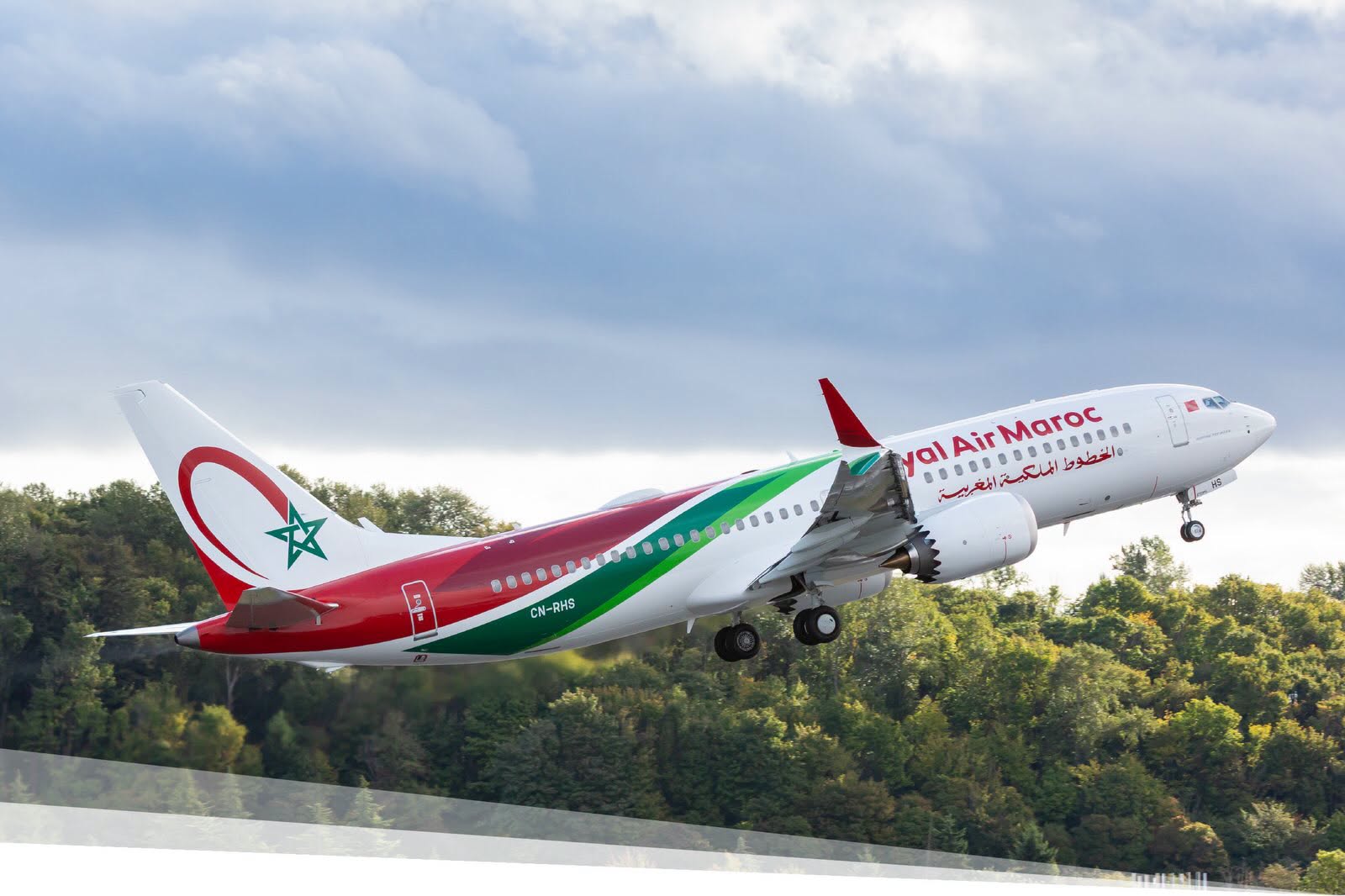
![Royal Air Maroc’s Boeing 737 MAX 8, registered CN-RHS, was celebrated as the airline’s 70th aircraft. [Royal Air Maroc]](https://ocdn.eu/pulscms/MDA_/aca32199bc85d8a6e070bd63ca2efa6c.jpg)
Royal Air Maroc has reached 70 aircraft, adding a Boeing 737 MAX 8 as Morocco expands the transport capacity supporting its tourism industry and ambitions as an international aviation hub.
- Royal Air Maroc celebrated its 70th aircraft, a Boeing 737 MAX 8.
- The milestone forms part of a longer-term ambition to reach 200 aircraft by 2037.
- Morocco received 19.8 million tourists in 2025, up 14% from the previous year.
- Fleet growth and airport expansion underpin its ambitions as an African international hub.
The airline celebrated the aircraft, registered CN-RHS, on its social channels on Monday, 28 September.
“Take a closer look at CN-RHS. Swipe to discover our 70th aircraft,” the airline said in a Facebook post.
The milestone is a step towards a much larger target. Royal Air Maroc’s institutional history sets out a government-backed 2023–2037 development programme aimed at a 200-aircraft fleet and 31.6 million passengers annually.
Tourism gives expansion a commercial purpose
Morocco welcomed 19.8 million tourists in 2025, a 14% increase from 2024, according to its tourism ministry. The country’s visitor target is 26 million by 2030, when it will co-host the football World Cup with Spain and Portugal, Reuters reported.
DON'T MISS THIS: Morocco to invest $1.5 billion in expanding its largest airport ahead of 2030 World Cup
The airline’s expansion therefore has a purpose beyond a fleet-size milestone: providing seats and connections to support a larger tourism economy.
Tourism directly accounted for 7.3% of Morocco’s GDP in 2024, according to the OECD’s 2026 country review. That economic weight makes reliable transport relevant to hotels, restaurants, tour operators and the wider service sector.
Airports must grow alongside aircraft
Morocco has announced plans to increase airport passenger capacity from 30 million to 80 million by 2030. The government’s account of the Airports 2030 strategy links investment in terminals and other infrastructure to World Cup preparations and Royal Air Maroc’s expansion.
It also identifies Casablanca’s Mohammed V Airport as central to the ambition of connecting four continents.
For African travellers, a stronger Casablanca hub could widen connecting options to destinations beyond Morocco. The benefit depends on the routes, frequencies and fares the airline offers; adding an aircraft does not itself establish a new service or reduce ticket prices.
DON'T MISS THIS: Morocco touts a $4.2 billion plan ahead of its World Cup duties
There is also a distinction between near-term fleet additions and the longer-term procurement programme. Reuters reported in November 2025 that deliveries under a major expansion tender were expected from 2028, with leased aircraft helping support capacity in the meantime.
The latest arrival should therefore be understood as part of a continuing build-up, rather than evidence that the entire long-term order programme has begun delivering.
Morocco’s challenge is to turn its larger fleet and expanded airports into a network that attracts both visitors and connecting passengers. Aircraft numbers measure capacity; profitable routes and dependable service will determine the commercial return.