
University of Houston launches health initiative to tackle care shortage
UH Health unites clinics and partnerships to expand affordable care in Houston’s underserved communities.
 Black News

While Houston’s population is booming, health care providers are in short supply, and hospitals are bearing the brunt of this strain. In response to the crisis, the University of Houston (UH) has launched UH Health, an umbrella structure that encompasses the university’s health care initiatives, from medical evaluations to community-centric clinics. It aims to bring health care to underserved populations through a coordinated vision to expand access across Houston.
The program integrates resources the university already has, including the Family Care Center, a federally qualified health care center run by the College of Medicine, a nursing clinic located in Downtown Houston, an optometry clinic network with sites across Texas, and community-centric wellness hubs.
“There are pockets of health in nearly every college and program across the university, either health-related research or community health initiatives, but many of them are separated from each other, and you don’t get the multiplying effect that you would if everybody was working together,” said Dr. Jonathan McCullers, vice president of health affairs and dean of the UH Tilman J. Fertitta Family College of Medicine.
The program will primarily prioritize the three neighborhoods of Third Ward, the East End, and South Houston. For the city’s Black communities, the need for health care access is urgent.
Black Houstonians live an average of 72.8 years, compared to 77.5 years for white residents. Black infants die at a rate twice that of white infants, Black women face the highest rates of pregnancy-related mortality, only a fraction of Black adults with a mental illness receive care, and 21% of Black children live with food insecurity.
Gaps in health care: A state-wide issue
University leaders have framed UH Health as a response to a broader crisis, with a growing health care workforce shortage, driven by population growth and hospital staffing shortfalls.
According to the Texas Hospital Association, 64% of the state’s hospitals have had to operate with fewer beds or reduced services due to staffing shortages.
UH President Renu Khator said the initiative is meant to bring “the full strength of our health enterprise” to bear on those challenges, leveraging the university’s proximity to the Texas Medical Center and its partnerships with institutions such as HCA Healthcare, Memorial Hermann, Baylor College of Medicine, and MD Anderson.
The reorganization brings together programs in medicine, nursing, pharmacy, optometry, psychology, social work, population health, research, the Humana Integrated Health Systems Science Institute, and many others under one program.
McCullers clarified that none of UH’s clinics would require health insurance. Patients without coverage will be treated on a sliding-scale, self-pay, or no-pay basis.
Wellness hubs will target underserved communities
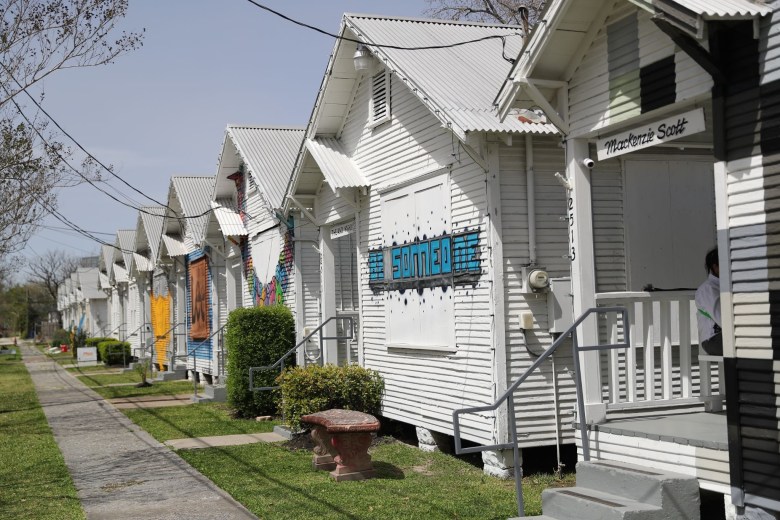
The unified program will work in coordination with “Places of Wellness,” or community wellness hubs. One such hub, located inside Project Row Houses in the Third Ward, Houston’s historically Black neighborhood, recently received funding from the Cullen Trust for Health Care to establish a community-driven space expanding access to primary and mental health services.
McCullers explained that the hub will offer health screenings and training on managing diabetes, among other classes.
“If somebody’s been in the hospital or trying to get into clinics, they can help them navigate the very complicated healthcare system we have,” he said. “There’s a referral feeder into not only our family care center, but into other safety net clinics or FQHCs (Federally Qualified Health Centers), or other medical offices around the areas that we serve.”
Cori Grant, the project’s principal investigator and a clinical assistant professor at the Fertitta College of Medicine, said the initiative shifts power to community members and health care workers. It will also include health screenings and support for chronic diseases.
“If somebody’s been in the hospital or trying to get into clinics, they can help them navigate the very complicated healthcare system we have.”
Dr. Jonathan McCullers, vice president of health affairs and dean of the UH Tilman J. Fertitta Family College of Medicine.
“The 3rd Ward Place of Wellness reflects what is possible when communities lead,” Grant said.
Geographically, UH Health’s outreach will prioritize the Third Ward and the East End first, given their proximity to UH.
The university also aims to expand UH Health to the Fifth Ward, another historically Black neighborhood, often described as “a hospital desert.”
The initiative is soon to reach the Rio Grande Valley, where UH broke ground on a new medical research and education center.
Beyond Houston, UH Health is expanding its reach through partnerships, including a collaboration with DHR Health in the Rio Grande Valley.