Trump’s Sabotage Of Friendly Relations With Canada Can Be Salvaged
By Lawrence S. Wittner Photos: Wikimedia Commons Canada and the United States have frequently maintained that they have a special relationship, characterized by the world’s longest undefended international border, peaceful interaction, common values, and a close defense partnership through NATO. Nevertheless, the two nations are currently locked in an increasingly destructive battle. In late 2024, shortly after his re-election as U.S. President, Donald Trump started provoking Canadians by referring to their country as the 51st American state. Over the following months, he continued alluding to Canada’s U.S. statehood, posted a map on his Truth Social media platform showing it as part of the United States, and taunted Canadian Prime Minister Justin Trudeau by calling him “Governor Trudeau.” Canadians could retain “O, Canada” as their anthem, Trump remarked, “but it’ll be for the state.” Mark Carney, having replaced Trudeau as leader of the Liberal Party as nationwide parliamentary elections loomed, responded bluntly: “America is not Canada, and Canada never, ever will be part of America in any way, shape, or form.” Canadians seemed to agree, for, in response to Trump’s incendiary remarks, they gave the new Liberal leader and his party―initially trailing by huge margins in polls on the forthcoming elections―a stunning election victory. Trump’s arrogant attitude toward Canada reflects not only his belief that the United States should dominate the Western Hemisphere, but his assumption that the U.S. government, with its vast economy, has the upper hand when it comes to its relationship with Canada. Because the United States purchases the bulk of Canadian exports while Canada purchases only a small fraction of America’s vast exports, “we don’t need Canada,” Trump explained, “they need us!” In these circumstances, it’s hardly surprising that Trump, a keen admirer of the tariff, has weaponized it to bring Canada to heel. This August, dissatisfied with the Canadian response to his trade demands, he slapped a 50 percent tariff on Canadian imports into the United States. Canada “wants the benefits of being a State, without being one,” he complained. Carney responded: “Last spring, I warned that America is trying to break us so that they can own us. And promised: ‘That will never, ever happen.’ We are keeping that promise.” Canadians overwhelming approved of Carney’s stance. Polling conducted shortly after U.S.-Canadian talks collapsed indicated that three-quarters of Canadians agreed with Carney. Even Doug Ford, the conservative Premier of Ontario, said Carney had his “full support” and that Trump could “kiss my ass.” Clearly, something has happened to the friendly relationship between the two nations. Actually, it was not always so friendly. During the War of 1812 between Britain and the United States, U.S. military forces invaded Canada in the hope of seizing portions of it and annexing them to the United States. But they were soundly defeated by British troops, Canadian militia, and their Native American allies. American enthusiasm for annexing portions of Canada flared up again during the 1840s, when British and American joint control of the Oregon Territory was opposed by those who, rallying behind the slogan “Fifty-four Forty or Fight,” demanded it all. Ultimately, though, the territory was divided at the 49th parallel, with the northern half becoming British Columbia and the southern half forming the states of Oregon and Washington. Cross-border violence, though, did flare up from 1866 to 1871, when armed bands of Irish-Americans conducted Fenian raids on British army forts, customs posts, and other Canadian border targets in an unsuccessful attempt to trade Canada for Irish independence. Beginning in the 1870s, however, Canadian-American relations improved considerably. Disputes over maritime rights and boundaries were settled amicably, while military alliances between the two governments during the two world wars and the Cold War helped foster good feelings between officials and the public of both nations. Friction did develop, at times, over trade policies, as well as over the Canadian government’s more peace-oriented foreign policy, which included closer cooperation with the League of Nations and the United Nations, plus stronger support for nuclear arms control and disarmament. Canadian public opinion was usually strongly pro-American―at least until the advent of Donald Trump, when such opinion dropped precipitously. Also, unlike Trump, 80 percent of Americans have a favorable view of Canada. Sadly, then, the many years of increasingly friendly relations between Canada and the United States have been sabotaged by Trump’s reckless, domineering behavior. Of course, the cordial relationship between the two North American nations could be restored by a variety of future developments, including a sharp repudiation of Trump in the November 2026 U.S. Congression
 Black News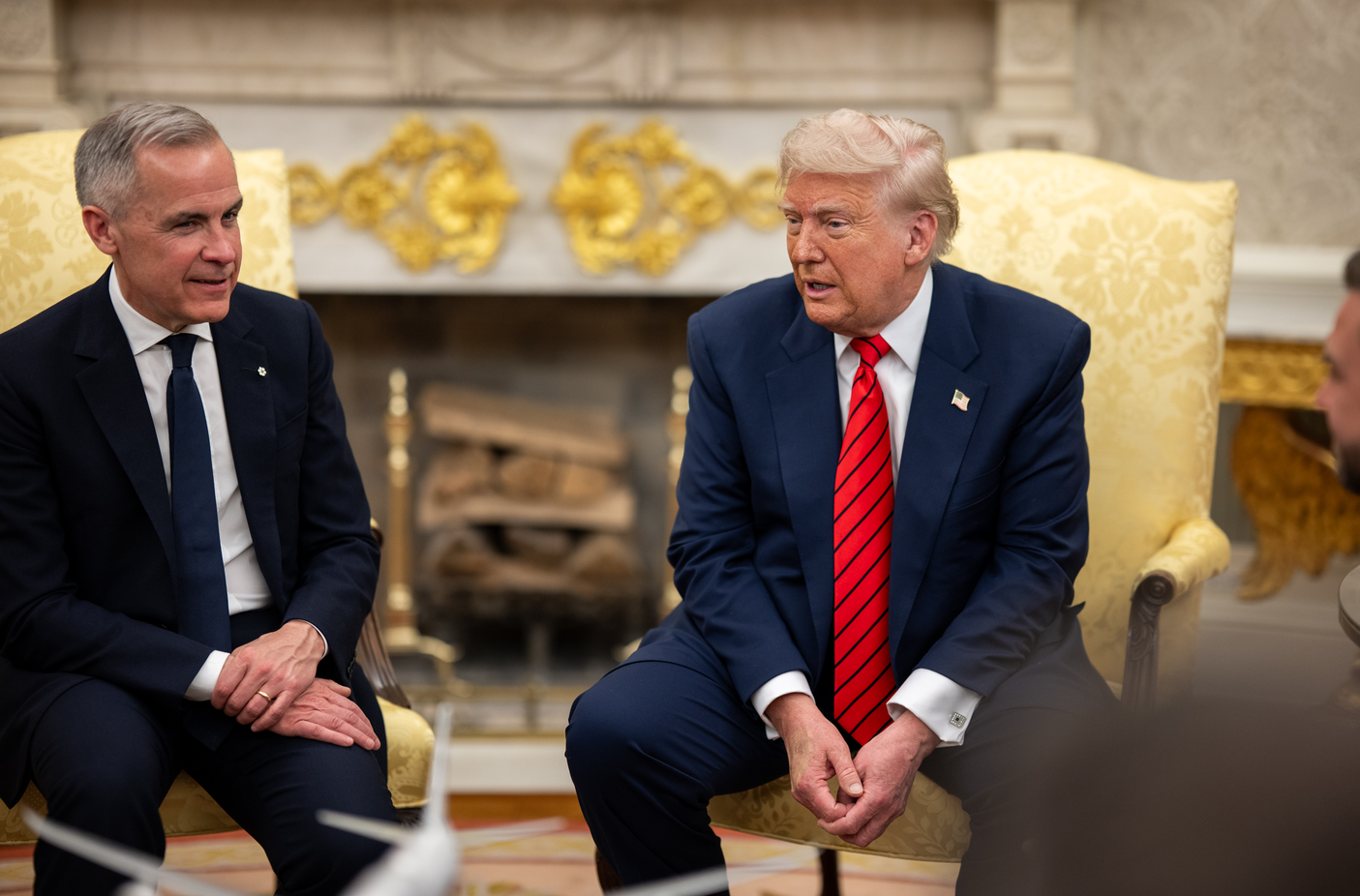

By Lawrence S. Wittner
Photos: Wikimedia Commons
Canada and the United States have frequently maintained that they have a special relationship, characterized by the world’s longest undefended international border, peaceful interaction, common values, and a close defense partnership through NATO.

Nevertheless, the two nations are currently locked in an increasingly destructive battle.
In late 2024, shortly after his re-election as U.S. President, Donald Trump started provoking Canadians by referring to their country as the 51st American state. Over the following months, he continued alluding to Canada’s U.S. statehood, posted a map on his Truth Social media platform showing it as part of the United States, and taunted Canadian Prime Minister Justin Trudeau by calling him “Governor Trudeau.” Canadians could retain “O, Canada” as their anthem, Trump remarked, “but it’ll be for the state.”
Mark Carney, having replaced Trudeau as leader of the Liberal Party as nationwide parliamentary elections loomed, responded bluntly: “America is not Canada, and Canada never, ever will be part of America in any way, shape, or form.” Canadians seemed to agree, for, in response to Trump’s incendiary remarks, they gave the new Liberal leader and his party―initially trailing by huge margins in polls on the forthcoming elections―a stunning election victory.
Trump’s arrogant attitude toward Canada reflects not only his belief that the United States should dominate the Western Hemisphere, but his assumption that the U.S. government, with its vast economy, has the upper hand when it comes to its relationship with Canada. Because the United States purchases the bulk of Canadian exports while Canada purchases only a small fraction of America’s vast exports, “we don’t need Canada,” Trump explained, “they need us!”
In these circumstances, it’s hardly surprising that Trump, a keen admirer of the tariff, has weaponized it to bring Canada to heel. This August, dissatisfied with the Canadian response to his trade demands, he slapped a 50 percent tariff on Canadian imports into the United States. Canada “wants the benefits of being a State, without being one,” he complained.
Carney responded: “Last spring, I warned that America is trying to break us so that they can own us. And promised: ‘That will never, ever happen.’ We are keeping that promise.”
Canadians overwhelming approved of Carney’s stance. Polling conducted shortly after U.S.-Canadian talks collapsed indicated that three-quarters of Canadians agreed with Carney. Even Doug Ford, the conservative Premier of Ontario, said Carney had his “full support” and that Trump could “kiss my ass.”
Clearly, something has happened to the friendly relationship between the two nations.

Actually, it was not always so friendly. During the War of 1812 between Britain and the United States, U.S. military forces invaded Canada in the hope of seizing portions of it and annexing them to the United States. But they were soundly defeated by British troops, Canadian militia, and their Native American allies. American enthusiasm for annexing portions of Canada flared up again during the 1840s, when British and American joint control of the Oregon Territory was opposed by those who, rallying behind the slogan “Fifty-four Forty or Fight,” demanded it all. Ultimately, though, the territory was divided at the 49th parallel, with the northern half becoming British Columbia and the southern half forming the states of Oregon and Washington. Cross-border violence, though, did flare up from 1866 to 1871, when armed bands of Irish-Americans conducted Fenian raids on British army forts, customs posts, and other Canadian border targets in an unsuccessful attempt to trade Canada for Irish independence.
Beginning in the 1870s, however, Canadian-American relations improved considerably. Disputes over maritime rights and boundaries were settled amicably, while military alliances between the two governments during the two world wars and the Cold War helped foster good feelings between officials and the public of both nations. Friction did develop, at times, over trade policies, as well as over the Canadian government’s more peace-oriented foreign policy, which included closer cooperation with the League of Nations and the United Nations, plus stronger support for nuclear arms control and disarmament. Canadian public opinion was usually strongly pro-American―at least until the advent of Donald Trump, when such opinion dropped precipitously. Also, unlike Trump, 80 percent of Americans have a favorable view of Canada.
Sadly, then, the many years of increasingly friendly relations between Canada and the United States have been sabotaged by Trump’s reckless, domineering behavior.
Of course, the cordial relationship between the two North American nations could be restored by a variety of future developments, including a sharp repudiation of Trump in the November 2026 U.S. Congressional elections, his departure from public office, or merely his sudden obsession with another issue.
Even so, the ease with which the Canadian-American relationship has been damaged illustrates the fragility of international relations and, more specifically, the fact that centuries of growing cooperation among nations can be upended by the sudden tantrums or crackpot nostrums of individuals. Indeed, the current situation is all too reminiscent of how deranged and power-mad national rulers wrecked the international order in the past.
Remedying this deeper problem of international fragility calls for a shift toward a world order more strongly grounded in international law. Following this law, developed by the global community, would provide a considerably more rational and effective way to handle international disputes and foster international cooperation.
Thanks to centuries of effort, there are currently international institutions―for example, the United Nations, the International Court of Justice, and the International Criminal Court―that create this international law and interpret it.
Admittedly, these international institutions remain relatively weak, largely because the rulers of powerful nations prefer to bypass them so that they can keep the reins of power in their own hands. Nevertheless, with public effort, these institutions can be strengthened so that they can more effectively perform their vital role of safeguarding the human community.
The current crisis in U.S.-Canadian relations is the latest indication that it’s time to get on with that job.

Dr. Lawrence Wittner, syndicated by PeaceVoice, is Professor of History emeritus at SUNY/Albany and the author of Confronting the Bomb (Stanford University Press).