Three days in St. Kitts and Nevis and countless stories
A St Lucia Times journalist Keryn Nelson explores St. Kitts and Nevis for the first time, discovering the stories woven into its landscapes. You can’t miss Mount Liamuiga while travelling the roads that wrap around St. Kitts. It stands ethereally at the core of the island’s southern landscape. The ride along St. Kitts’ southeastern coast […] The article Three days in St. Kitts and Nevis and countless stories is from St. Lucia Times.
 Black News

A St Lucia Times journalist Keryn Nelson explores St. Kitts and Nevis for the first time, discovering the stories woven into its landscapes.
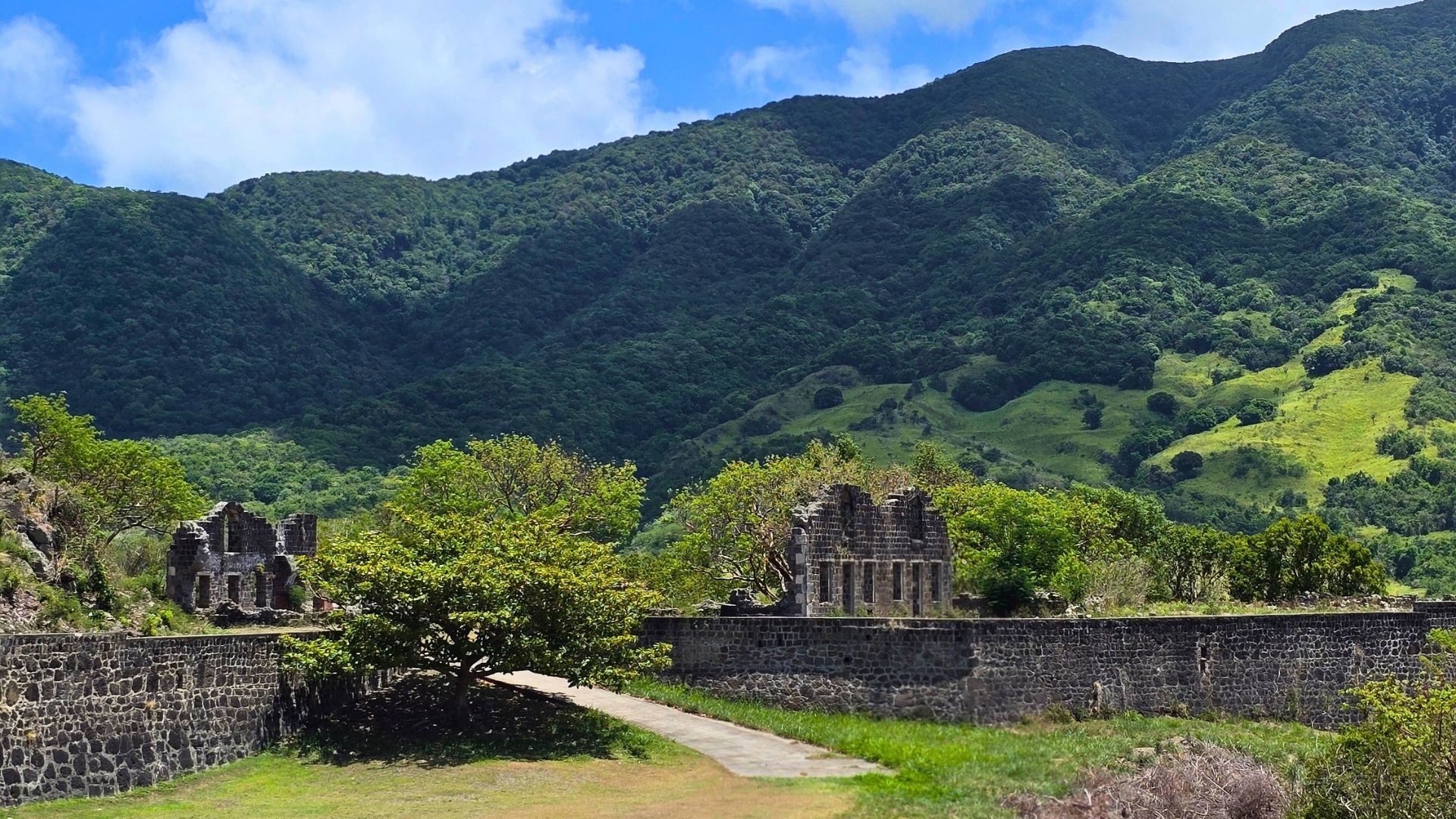
You can’t miss Mount Liamuiga while travelling the roads that wrap around St. Kitts. It stands ethereally at the core of the island’s southern landscape. The ride along St. Kitts’ southeastern coast offers views of the similarly sublime Nevis Peak. It’s a symbol of a promise made and kept by the country: that it offers a two-for-one experience once you hop on a boat that carries you through The Narrows, bound for the second island that makes it a ‘twin-island federation’: Nevis.
Both peaks are dormant volcanoes. On an August day, clouds drape them from above, lending a subtle reverence. Life goes on in the towns below. But as a first-time visitor, their enchantment, and that of the vastly untouched rolling hills around them, stirred my intrigue.
As a traveller from another island of hilly, tropical vistas and a person hardly seeking out beaches that remind me of home, St. Kitts captivated me in a way I had yet to experience in regional travel. It is a country rich with stories and history that are intentionally preserved and woven into the land. Those stories don’t take you back; instead, they echo and savour the voices of the past as reminders of what once was, all while holding you still in the present.
A Historical Trail
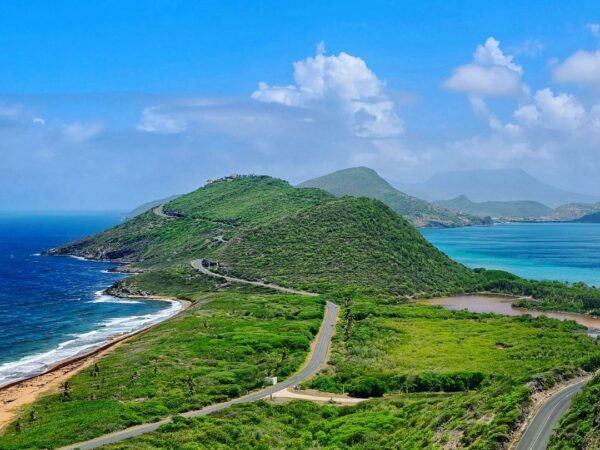
Three days of exploration began with a visit to Timothy Hill in Frigate Bay. The lookout spot provides a spectacular view of St. Kitts’ Southeast Peninsula, which is flanked by the Atlantic Ocean and the Caribbean Sea. Also in view is the Great Salt Pond, where for centuries, indigenous populations and later inhabitants used it to rake up naturally dried salt, though the practice has since ceased. It was an early afternoon stop, and with no cruise ships in the harbour, our group of four managed to enjoy the site alone.
Later, a drive through Basseterre, St. Kitts’ capital, gave glimpses of bricks that were mounted centuries ago but still hold some structures in place as life carries on in the quaint, clean and uncrowded Caribbean city. The site is a contrast to the landscape’s dark past, when Basseterre’s now-named Independence Square, built by British colonisers in the mid-1700s, was used as a central hub in the Transatlantic Slave Trade. The square’s grass patches and concrete pavements still form the shape of the British flag that it was built to replicate.
Our guide for the day, Ni’quan, points out a Georgian-style building nearby that once served as a holding cell. There, Africans were temporarily confined upon arrival on the island. Near the ground, window openings that are still cordoned off by iron bars can be seen. It’s a sobering reminder of what transpired on the land over the past centuries.
Outside Basseterre, we passed through Challengers, a fishing village that greets you with painted walls chronicling its history with renderings of Kalinago and European encounters.
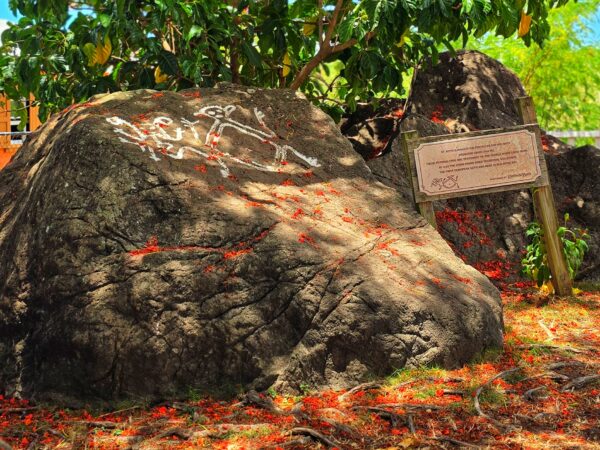
Old Road Town is also dotted with visual historical fixtures in the form of preserved Carib petroglyphs: ancient rock carvings etched into clusters of volcanic rock.
Still in Old Road Town, a quick stop at Wingfield Estate brought us to a trove of history, where the relics on display, including a rare water-powered sugar mill, had been pulled from the ground during archaeological excavation over the last five decades. The property’s expansive history traces ownership back to Carib Chief King Tegreman, and then Samuel Jefferson–an ancestor of Thomas Jefferson, America’s third president.
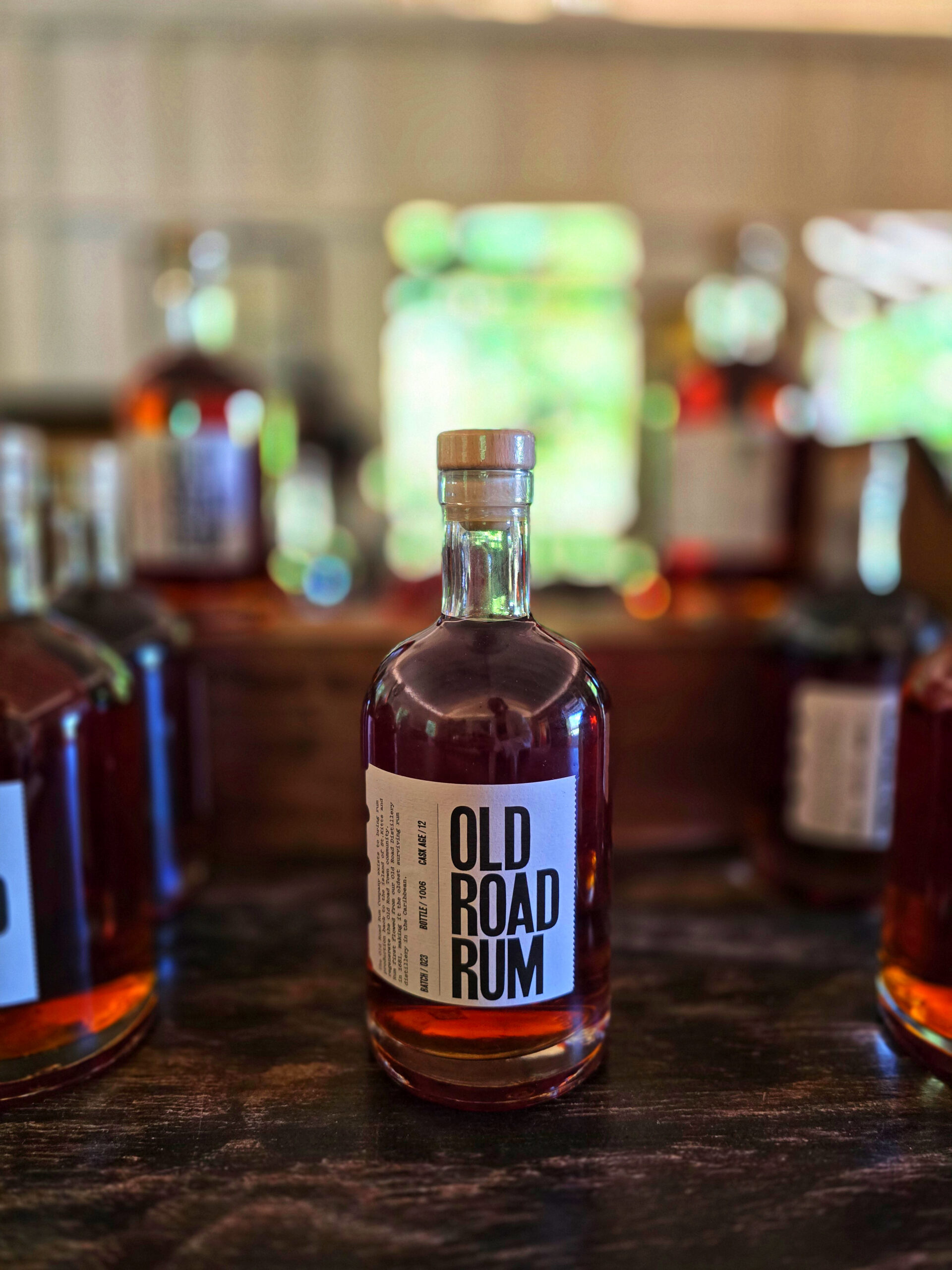
There are also fermenting tanks, copper stills and furnace structures said to have once been used as a rum distillery on the property in the 17th century, making it what is considered the oldest intact rum distillery in the Caribbean.
Just a 15-minute drive away, a winding road beneath tree canopies and preserved brick archways leads to Brimstone Hill Fortress. It is a former British military base built through forced African labour and is now a UNESCO World Heritage Site. Amidst its walls are preserved artefacts and historical accounts retold through text and physical relics. It is a stunning place to linger, backdropped by an unparalleled view of rolling mountain hills, Sandy Point Town, and neighbouring islands like Saba, Sint Eustatius, St. Barts, Sint Maarten, Nevis and Montserrat.
Just part of the view from Brimstone Hill Fortress. (Video: Keryn Nelson)
Over to ‘Oualie’, aka ‘Nevis’
Nevis shares that reverence for history, but its preservation is softened by the warmth of a place where people have embraced the peace of slow living.
Nevisian hospitality greets you with a wave, a smile, and several reminders that the Carib called the place Oualie, meaning the Land of Beautiful Waters.
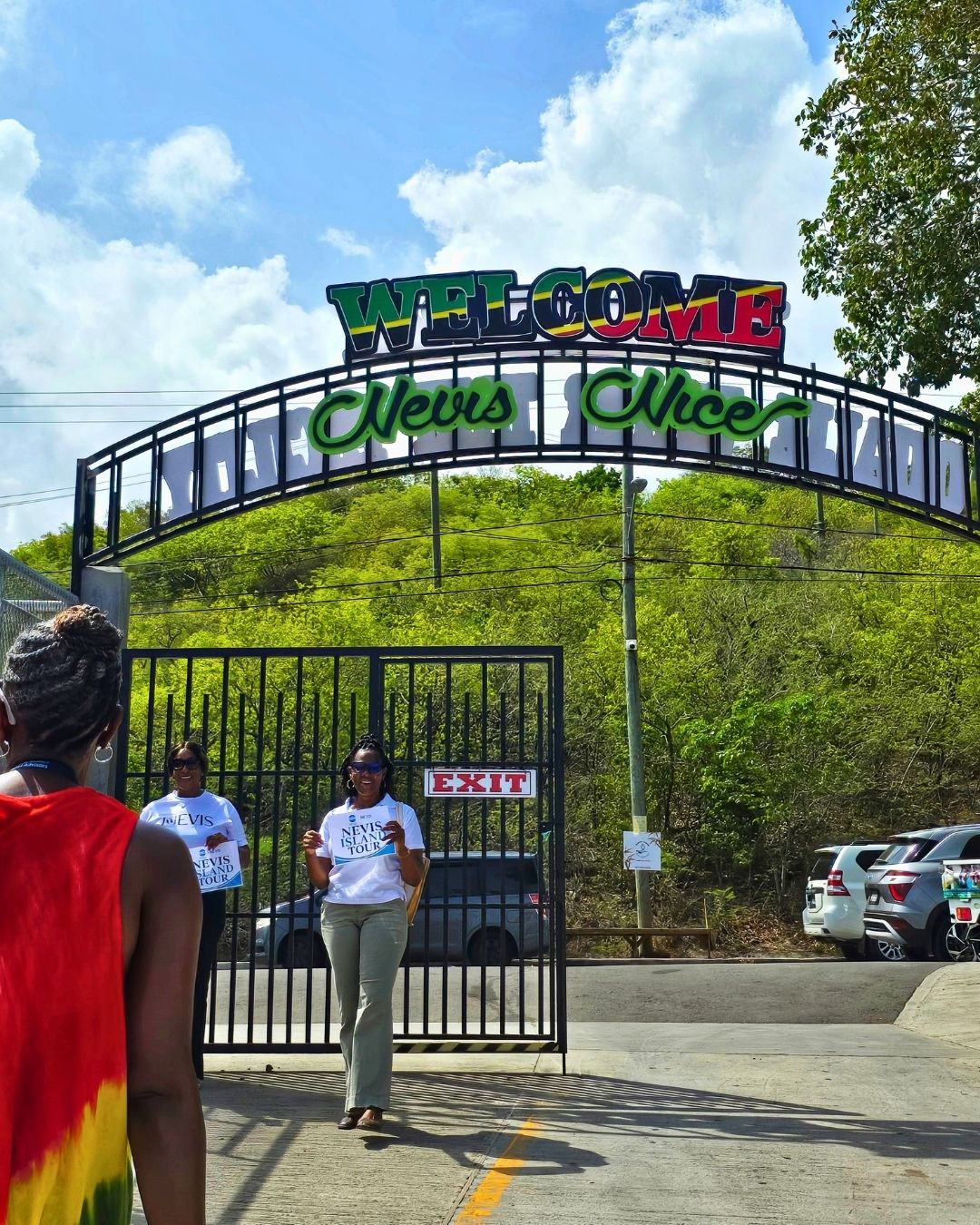
I spent a day on the island and was enraptured by its charm.
One of the best-known facts about Oualie is that it was the birthplace of Alexander Hamilton, a detail made popular by the Broadway musical Hamilton. But like Nevis Peak stretching tall into the clouds, the small island offers a lengthy string of tales waiting to be discovered.
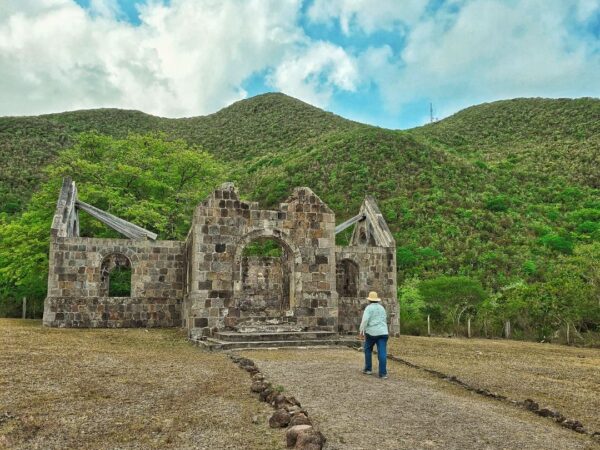
Perched on a hill and surrounded by greenery is what’s left of Cottle Church, the first church in the Caribbean where Africans and Europeans worshipped together. It was built by African forced labourers who lived on the Round Hill Estate and became the church’s initial members, ranging in age from four to 79. Their names are embossed on a plaque on the building, honouring their memory.
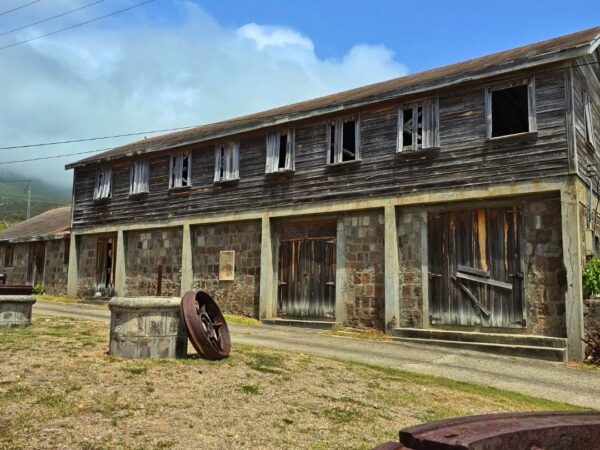
On the drive through Nevis’ parishes, decades-old churches whisk by. We came upon the New River Estate. On 267 acres of land, it was the last functioning sugar plantation on Nevis and now has several preserved artefacts in what functions as an open-air historical site.
The island also has preserved mineral-rich geothermal springs that flow from Nevis Peak’s volcanic base. In the 19th century, wealthy planter John Huggins constructed the Bath Hotel on a hill overlooking the springs, which is recognised as the very first resort hotel in the Caribbean.
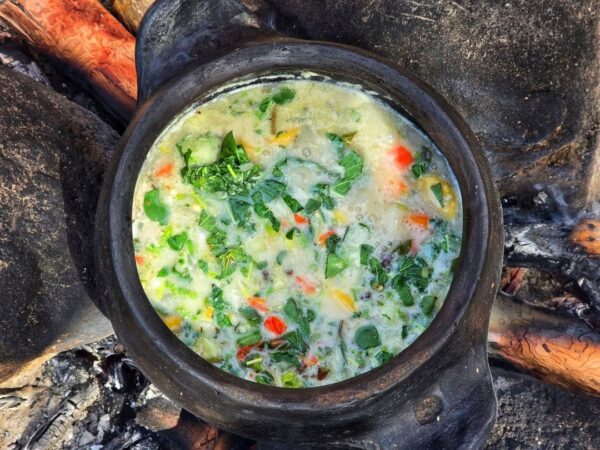
An open-air buggy took me to a farm in New Castle for an immersive cooking experience with Ras Iroy and another group of visitors. We were given a glimpse into the realities of living off the food and resources of the land. Ras Iroy’s charm elevated the experience, turning a cooking lesson into a welcome, slow-paced afternoon and the perfect segue into one more thing worth savouring: the food.
The food is good!
Ras Iroy’s Ital food experience is just one of many culinary highlights. Food in St. Kitts and Nevis is delicious.
Some favourites? Earlier in the trip, we enjoyed lunch at the 17-year-old Spice Mill Restaurant, where the menu spans savoury and sweet dishes, local favourites and more inventive creations, all served in generous portions. Our visit was capped with a cocktail-making class with Theresa and Carlos, who showed us the recipe for Spice Mill’s signature Hibiscus Rumtini Cocktail.
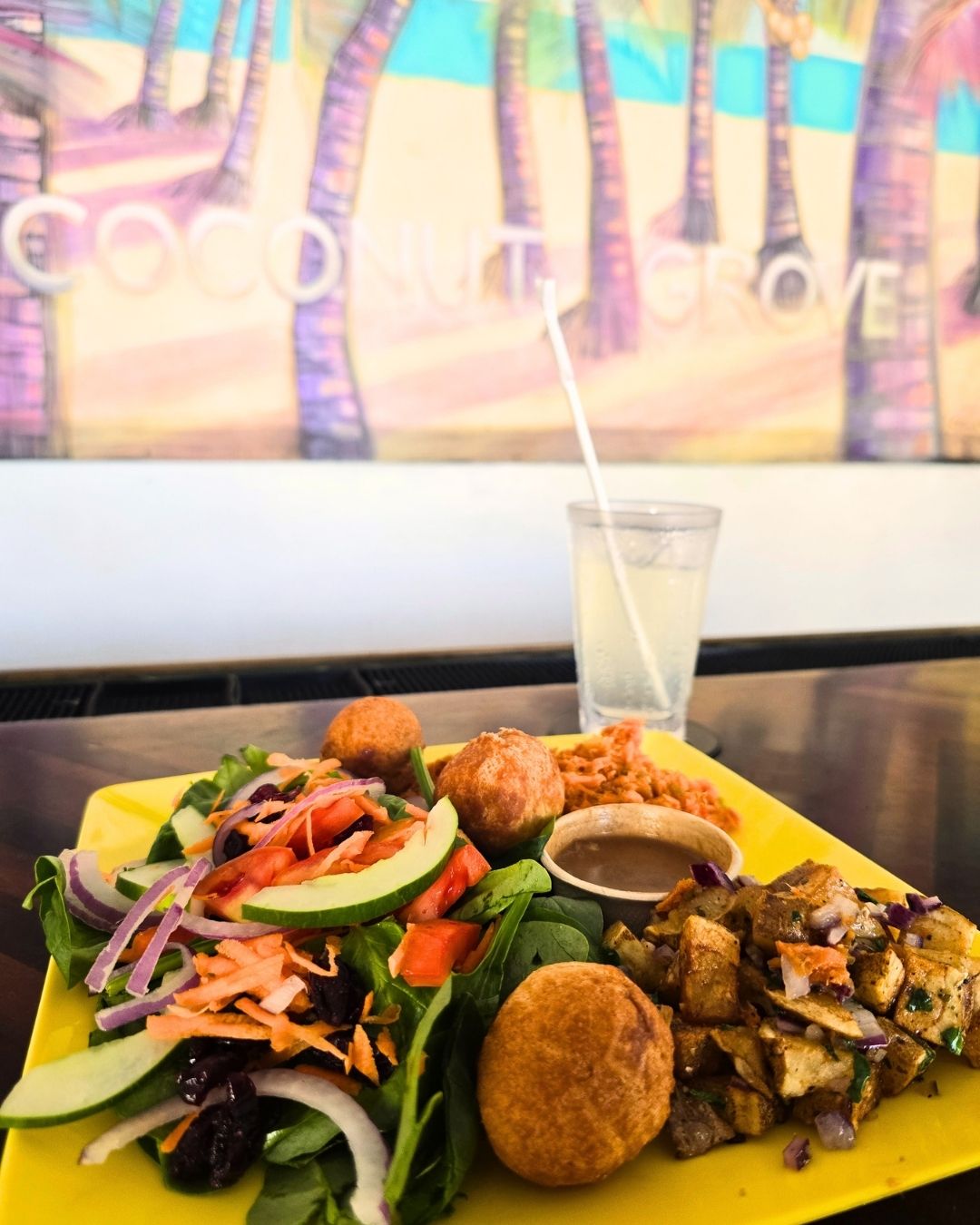
If you have breakfast at Coconut Grove, its Classic Caribbean Breakfast will fill you up with a medley of flavours.
In all, St. Kitts and Nevis’ distinct identity is woven into the fabric of its two islands. The country leaves a lasting impression. For the traveller willing to slow down and listen when island exploring eases their pace, they will leave yearning for more: more flavours, more Caribbean hospitality, more stories and more striking views.
The article Three days in St. Kitts and Nevis and countless stories is from St. Lucia Times.