
Questions Continue Over Par Funding Due Process, Defense Counsel, Privacy And $60.5 Million In Receivership Costs
By Milton Allimadi Photos: Wikimedia Commons|YouTube|Others Questions continue to mount over whether former Par Funding executives Joseph LaForte, Joseph Cole and Lisa McElhone received a fair opportunity to defend themselves after the Securities and Exchange Commission (SEC) brought its case against the company in 2020. The questions have become more significant as the SEC has recently backed away from its earlier allegations characterizing Par Funding as a “Ponzi” scheme. In a recent court filing, the SEC also said it would not seek further action against the co-defendants or seek restitution. Yet the court-appointed receivership continues, with receivership billings, payroll and other professional expenses now totaling approximately $60.5 million, according to figures reviewed by Black Star News. The receivership has never responded to Black Star News questions concerning the level of these fees and expenses. The amount is particularly significant because roughly $200 million has reportedly been repaid to investors. If the approximately $60.5 million in receivership costs and payroll is considered against those repayments, the expenses amount to roughly 30 percent of the money returned to investors. Some of the questions examined in this article arise from Black Star News’ continuing series of articles reviewing court documents posted on the receivership’s own website. Associates of LaForte, Cole and McElhone continue to argue that events at the beginning of the SEC case virtually eliminated their chances for due process and a fair trial. Among the issues they point to are the abrupt withdrawal of the defendants’ law firm after the company was placed into receivership, subsequent work performed by that same firm for the receivership, contempt findings against Cole and McElhone, and the use of Verizon records to investigate digital activity associated with McElhone’s private residence. LaForte’s associates say he wired approximately $1.5 million to Fox Rothschild, the law firm he had retained to lead the company’s legal defense. Brett Berman, a Fox Rothschild partner, was among the attorneys representing the defendants. The timeline surrounding the retainer and the defendants’ subsequent handling of company data is central to the dispute. A July 26, 2020 message from Berman states: “Is there anyway that Kevin or someone else can have a backup created today?” The following morning, July 27, Par Funding CFO Joe Cole reported that backups had been made of the cloud-server accounting files and local network servers. Cole explained that if the files ultimately had to be turned over to a receiver, it would make sense to provide those files rather than administrative access to the company’s third-party vendor. Cole also said that email servers would take several days to archive because of the volume of data and suggested establishing a separate domain to maintain communications if access to the company’s existing email system became unavailable. At approximately 7:13 a.m. that same day, another message to Cole from Fox Rothschild attorney Joseph A. DeMaria stated that if a receiver were appointed, “the receiver takes over your business.” The message instructed Cole to take his downloaded files away from the business so that he would have a personal copy. On August 13, 2020, Judge Rodolfo A. Ruiz II appointed Ryan K. Stumphauzer as receiver. The next day, Fox Rothschild filed a motion to withdraw. The motion was granted on August 15. In its motion, the firm cited the amended receivership order, stating that the order “terminates all attorneys of the Corporate Defendants.” The withdrawal came shortly after the defendants say they had been instructed by the firm to preserve and mirror company data. LaForte’s associates maintain that Fox Rothschild retained approximately $600,000 of the $1.5 million retainer and that the remaining approximately $900,000 was transferred to the receiver rather than returned to LaForte. They further point to subsequent work performed by Berman for the receivership. According to receivership billing records reviewed by Black Star News, Berman billed approximately 205.7 hours for “Case Administration” work, totaling approximately $81,251.50 over a period of more than a year. For LaForte’s associates, the issue is not simply the amount of money involved but the appearance created by the sequence of events: a law firm retained to defend the defendants withdrew shortly after the receiver was appointed and subsequently performed paid work for the receivership. Black Star News in an email message asked Berman to respond to questions concerning the $1.5 million retainer, the $600,000 retained by Fox Rothschild, the transfer of the remaining funds to the receiver, the subsequent billing to the receivership and whether the circumstances created a conflict of interest. Berman did not respond by Black Star News’ deadline. The handli
 Black News
By Milton Allimadi
Photos: Wikimedia Commons|YouTube|Others
Questions continue to mount over whether former Par Funding executives Joseph LaForte, Joseph Cole and Lisa McElhone received a fair opportunity to defend themselves after the Securities and Exchange Commission (SEC) brought its case against the company in 2020.

The questions have become more significant as the SEC has recently backed away from its earlier allegations characterizing Par Funding as a “Ponzi” scheme. In a recent court filing, the SEC also said it would not seek further action against the co-defendants or seek restitution.
Yet the court-appointed receivership continues, with receivership billings, payroll and other professional expenses now totaling approximately $60.5 million, according to figures reviewed by Black Star News. The receivership has never responded to Black Star News questions concerning the level of these fees and expenses.
The amount is particularly significant because roughly $200 million has reportedly been repaid to investors. If the approximately $60.5 million in receivership costs and payroll is considered against those repayments, the expenses amount to roughly 30 percent of the money returned to investors.
Some of the questions examined in this article arise from Black Star News’ continuing series of articles reviewing court documents posted on the receivership’s own website.
Associates of LaForte, Cole and McElhone continue to argue that events at the beginning of the SEC case virtually eliminated their chances for due process and a fair trial. Among the issues they point to are the abrupt withdrawal of the defendants’ law firm after the company was placed into receivership, subsequent work performed by that same firm for the receivership, contempt findings against Cole and McElhone, and the use of Verizon records to investigate digital activity associated with McElhone’s private residence.
LaForte’s associates say he wired approximately $1.5 million to Fox Rothschild, the law firm he had retained to lead the company’s legal defense. Brett Berman, a Fox Rothschild partner, was among the attorneys representing the defendants.
The timeline surrounding the retainer and the defendants’ subsequent handling of company data is central to the dispute. A July 26, 2020 message from Berman states: “Is there anyway that Kevin or someone else can have a backup created today?”
The following morning, July 27, Par Funding CFO Joe Cole reported that backups had been made of the cloud-server accounting files and local network servers. Cole explained that if the files ultimately had to be turned over to a receiver, it would make sense to provide those files rather than administrative access to the company’s third-party vendor.
Cole also said that email servers would take several days to archive because of the volume of data and suggested establishing a separate domain to maintain communications if access to the company’s existing email system became unavailable.
At approximately 7:13 a.m. that same day, another message to Cole from Fox Rothschild attorney Joseph A. DeMaria stated that if a receiver were appointed, “the receiver takes over your business.” The message instructed Cole to take his downloaded files away from the business so that he would have a personal copy.
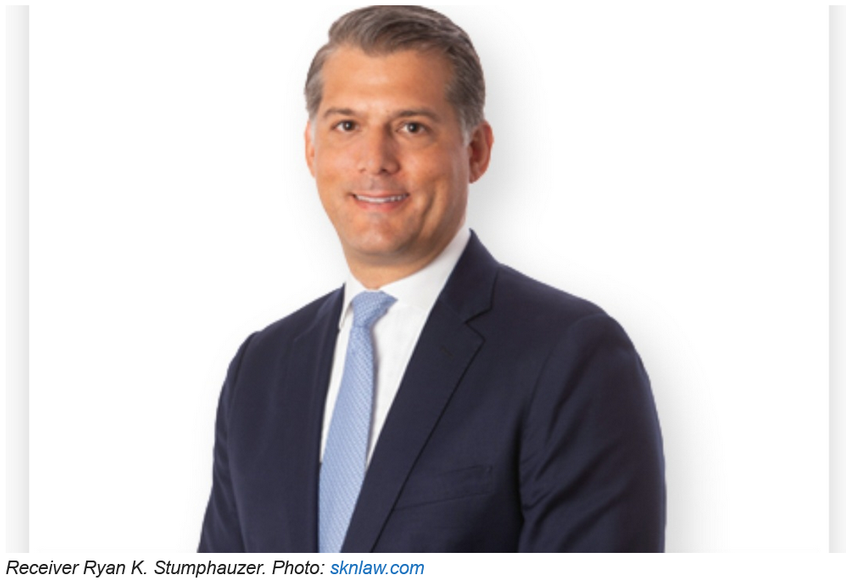
On August 13, 2020, Judge Rodolfo A. Ruiz II appointed Ryan K. Stumphauzer as receiver. The next day, Fox Rothschild filed a motion to withdraw. The motion was granted on August 15. In its motion, the firm cited the amended receivership order, stating that the order “terminates all attorneys of the Corporate Defendants.”

The withdrawal came shortly after the defendants say they had been instructed by the firm to preserve and mirror company data. LaForte’s associates maintain that Fox Rothschild retained approximately $600,000 of the $1.5 million retainer and that the remaining approximately $900,000 was transferred to the receiver rather than returned to LaForte.
They further point to subsequent work performed by Berman for the receivership. According to receivership billing records reviewed by Black Star News, Berman billed approximately 205.7 hours for “Case Administration” work, totaling approximately $81,251.50 over a period of more than a year.
For LaForte’s associates, the issue is not simply the amount of money involved but the appearance created by the sequence of events: a law firm retained to defend the defendants withdrew shortly after the receiver was appointed and subsequently performed paid work for the receivership.
Black Star News in an email message asked Berman to respond to questions concerning the $1.5 million retainer, the $600,000 retained by Fox Rothschild, the transfer of the remaining funds to the receiver, the subsequent billing to the receivership and whether the circumstances created a conflict of interest.
Berman did not respond by Black Star News’ deadline.
The handling of the mirrored data also became central to contempt proceedings against Cole and McElhone.
The former company officials and their associates maintain that the data was mirrored pursuant to advice from their attorneys for business-continuity purposes, rather than as an effort to improperly take company property.
Cole and McElhone were nevertheless found in contempt and ordered to pay $75,000 each out of pocket.
Their associates argue that the contempt findings had consequences extending beyond the financial sanctions. They contend that the findings influenced the court’s perception of the defendants, generated damaging media coverage and complicated their ability to obtain discovery and mount an effective defense.
A September 20, 2021 email from LaForte to members of his legal team reflects his view of the chronology. He argued that the timing of Fox Rothschild’s instructions to download the documents and the payment of the $1.5 million retainer were directly relevant to the contempt issue.

LaForte further argued that if the contempt findings had not occurred, the defendants would have obtained discovery sooner and potentially could have challenged allegations contained in the SEC’s temporary restraining order and subsequent expansion of the receivership.
The underlying emails concerning the instructions to preserve and mirror the data are part of the documentary record and raise a legitimate question: how much weight was given to the fact that the defendants had been acting pursuant to instructions from their retained counsel?
Another issue concerns the investigation into digital activity associated with McElhone.
Receivership billing records reviewed by Black Star News contain entries concerning subpoenas to Verizon, efforts to obtain information about IP addresses, and efforts to trace digital activity associated with unauthorized access to company systems.
A September 1, 2020 billing entry refers to communications with Verizon regarding subpoenas to obtain information concerning an IP address associated with alleged unauthorized access to the system.
A September 11 entry refers to reviewing Verizon’s response and techniques for investigating an IP address associated with alleged data theft, including “heat maps” linking the activity to McElhone’s home.
A separate forensic-analysis entry dated September 2, 2020 refers to reviewing a Verizon compliance letter and creating a timeline of events that allegedly logged and traced McElhone’s IP address.
The billing records therefore raise questions about the scope and purpose of the Verizon subpoena and precisely what information was obtained.
Black Star News in an email message asked Stumphauzer to explain the circumstances surrounding the subpoena, including the Verizon records used to trace digital activity associated with McElhone and activity connected to her private residence. Black Star News also asked about the forensic-analysis entry concerning the Verizon compliance letter, the creation of a timeline tracing McElhone’s IP address, and any limitations imposed by the court on the investigation.
Stumphauzer did not respond by the deadline.
When an investigation involves digital activity associated with a defendant’s private residence during active litigation, the scope of the investigation and the legal authority under which it was conducted are important questions.
The SEC has now backed away from the “Ponzi” characterization that was central to the early narrative surrounding Par Funding. LaForte’s associates argue that this development warrants a review of the entire case and of the assumptions that guided the receivership from its beginning.
The SEC has also recently told the court that it would not seek further action against the co-defendants or seek restitution.
Nevertheless, the receivership continues. And the financial costs continue to accumulate.
Black Star News has repeatedly sought answers regarding the receivership’s professional fees, payroll and other expenses. To date, the receivership has not responded to questions concerning why the costs have reached approximately $60.5 million.
The question is whether the enormous costs associated with administering the receivership are proportionate, necessary and sufficiently transparent—particularly when they represent such a substantial percentage of the money ultimately returned to investors.
If the case was handled properly, the documentary record and those responsible for administering it should be able to demonstrate that.
And if serious mistakes were made at the outset—particularly mistakes that affected the defendants’ ability to obtain counsel, discovery and a fair opportunity to defend themselves—then those issues deserve to be examined rather than left buried in millions of pages of court filings and receivership invoices.
With the SEC no longer pursuing additional action against the co-defendants, and with the receivership continuing to consume substantial resources, a broader review of the case may now be warranted.