
AGRO Studio turned antique glass into armour for SS27
‘Glass Body’ sees designers George Oxby and Angus Cockram bring transparency, distortion and shifting proportions to their maximalist world, while pushing the brand further into ready-to-wear. The post AGRO Studio turned antique glass into armour for SS27 appeared first on BRICKS Magazine.
 Black News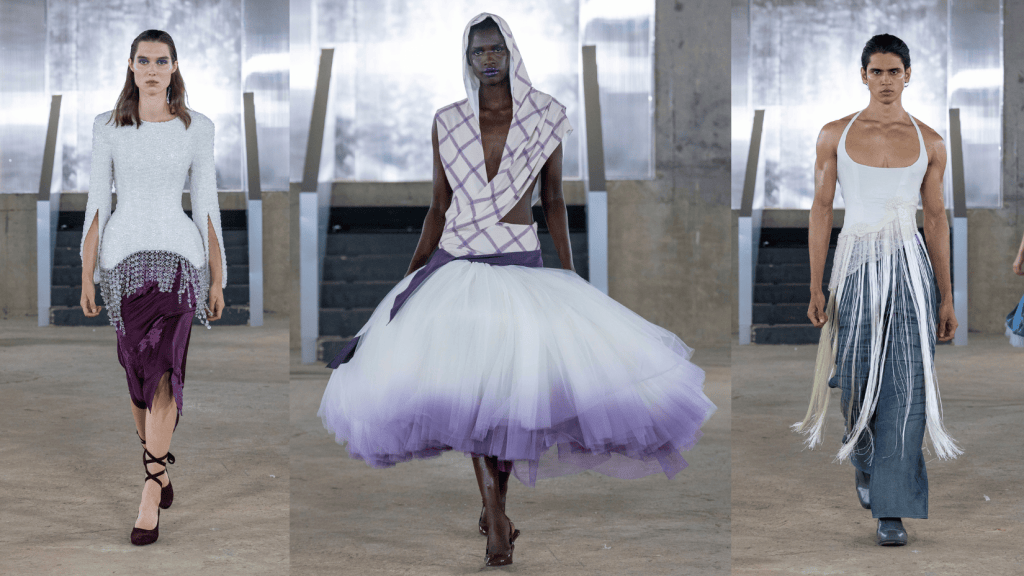
PHOTOGRAPHY Chris Yates
Fashion month has just about started when George Oxby and Angus Cockram pop up on my laptop screen, and instantly the three of us acknowledge our shared acute stress that comes with pre-fashion week preparations. Despite a day of countless meetings and last-minute calls, this phone call was by far my most anticipated, especially after being utterly blown away by the pair’s AW26 show ‘The Wanderer’ last season (their trompe-l’oeil 6-pack ‘Tattoo Dressx’ with Mongolian fur trimmings is still scorched into my mind).
Founded by the couple, AGRO Studio has been known to drop jaws – including pop’s finest, with Lady Gaga, Zara Larsson, JADE, and Madonna all sporting looks this summer – with waist-shrinking corsets, bedazzled bikinis, and their signature touch of irreverence. Behind the glitter and the glam, though, the core of Oxby and Cockram’s work has always been texture, materiality, and the achievement of a perfect fit. It’s a perspective that could only be derived from their beginnings in bespoke customs and celebrity dressing.
Even as they find themselves dabbling with commercial projects to finance the ready-to-wear side of the business, including partnering with Pizza Express, Love Island, and eBay, the pair have never abandoned their hands-on atelier-style approach, maintaining their strong visual language with flair and demonstrating that emerging brands don’t have to rely solely on traditional business and wholesale models.
For their third London Fashion Week offering, the studio continues to preserve the ingenuity, craftsmanship and meticulous detail of couture, while pushing those ideas further into the realm of ready-to-wear. ‘Glass Body’ plays with transparency, distortion, and movement, bringing together references that are steeped in nostalgia and unexpectedly glamorous.
The collection was steeped in shades of purple;
There is a sense, too, that the brand is beginning to exist beyond the stage and red carpet – not by losing the irreverence and theatricality that made its name, but by translating that same world-building into clothes designed to be lived in. With their SS27 collection marking the first time AGRO’s ready-to-wear will be available to purchase, it feels like a significant moment for the studio: one that asks how much of the fantasy of a custom AGRO creation can be retained when that fantasy is made accessible.
Ahead of the duo’s SS27 runway show, I spoke to Oxby and Cockram about the making of ‘Glass Body’, their evolving approach to ready-to-wear, and the ideas, references and obsessions that brought this collection to life.


How are you feeling pre-Fashion Week?
George Oxby: I have to say, I’ve been the most excited. It’s one of the most exciting things to me that we’ve ever done because it’s a genuine, distinct, and – I hope – maturing moment for us. Previous collections have been really fun, and an explosion of different ideas, but this one feels much more focused.
Angus Cockram: I am also very excited. I feel incredibly lucky to have not only our strong team around us, but other creatives wanting to join and be part of it as well.
George: It’s funny because we’re trying to put out a big brand image, I suppose, but we have a very small brand mentality, and we can’t even believe anybody cares. Now it’s about trying to move beyond a place where some people have heard of us now, and we feel more established than we were a year and a half ago, so it feels different this time around.
This is your third LFW show; how do you think you’ve both evolved since the last one, and what has changed in your approach?
Angus: It’s definitely evolving, and we went into the mindset of learning from the last ones and trying to do better while sticking to budgets… but then we get very excited about new ideas, and that all goes out the window. It starts evolving into something new, and you can’t beat yourself up over that. You just have to lean into that creative process, and we’re definitely learning more and more along the way.
George: One hundred per cent. It’s very all in, isn’t it? We have an incredible family of people who work alongside us – our amazing Ace and Will – who work on our creative direction for the show, and they’re super invested in terms of the visual and phonic experience you’re going to get when you’re at the show. We really created a world last season. That was one of the most successful elements of the show, so it’s been fun to create a contrasting world to AW26 in this incredible space, Collins Music Hall, which is just divine. The space and the collection clash beautifully, with the building being concrete and brutalist, and the collection opposing that entirely.
I see the juxtaposition you’re talking about here, and how it’s a study of light, fragility and transparency. Can you talk me through the starting point for this collection? Was there an object, piece of art, or experience that inspired you?
George: Because there are two of us, themes always evolve, and then we forget who came up with the idea or where it came from.
Angus: The name ‘Glass Body’ sets things into motion, because the last couple of collections have taken inspiration from tarot card titles and characters. Since showing on the official schedule, we’ve created our own tarot cards. Last season was ‘The Wanderer’, which had an element of feeling lost and finding your place. With ‘Glass Body’, I think it reflects a little bit of where we are at the moment, maturing into our design, stripping it back, but also highlighting the craftsmanship and showing it through the layers and the transparency of the construction. Also, at the very start of the summer, we went to the Pub On The Park…
George: I just want to say – we’re not pub girls.
Angus: We wish we were. But there they have all these raw materials, and we talked about song titles such as ‘Heart of Glass’, and expanded from there.
George: It was also part of a process. We were working with a crew for an editorial, and they were talking to us about using unconventional materials. In this case, it was paper, so we started sketching all of our last collection on paper. We found the transparency element so cool, and we started thinking about the sound that the material makes, and all the different ways you can look at transparency. Then Angus had this genius idea of sourcing discarded glass. That became one of the most important things for the collection, since we curated around 30,000 antique glass buttons from the ‘30s to the ‘80s, and they are all being hand-stitched. We’ve got corsets with 10,000 buttons stitched on them.
Angus: No lead or plutonium in there; we checked!


You’re saying all my favourite words right now. Can you tell me about sourcing the buttons?
George: It was initially lots of Etsy and Vinted sellers, and trolling through Facebook Marketplace and eBay.
Angus: We have to give our props to Rosie Brain, who does our in-house embroidery. In the end, while we had these mixed buttons from all these disparate sellers, we found one person who happened to have 1000s of antique glass buttons in these beautiful paper bags from their old factory with the stamp still on them, and it was cheaper than buying new ones.
George: Almost all of the fabric in this collection is also sustainably sourced, or end of roll. Virtually everything is sustainably created, down to the zippers.
We love to hear that. I’d like to know more about how you work together. What does a typical day at AGRO Studio look like?
Angus: Literally every day is different. We can’t even describe it. I don’t think we’ve had a repeat day because we’re both a bit mental; we dance around and argue.
George: I don’t want to speak for our colleagues, but I would say that a day never gets old, and very few days involve repetitive work. We have the most amazing crew of people who are like family, so we’re incredibly lucky. On the day-to-day, in terms of the work breakdown, we both manage design, so sketching comes from both of us, and then we tend to take on certain elements that will become our own, and work together in the fitting. We start together, separate, and then always come back together at the end.
Seems quite balanced!
George: If you had asked me this question the same time yesterday, I would have dramatically said: “I’m leaving!” You have days where it’s really tough and stressful. The biggest thing for any designer is money, cash flow – we are doing this for the love of the craft. Neither of us had parents who invested. That’s no shade to people who are in that position, but we are truly doing this alone, or better – with the help of some of our amazing contacts in the industry who we’ve built over the last few years.
Every season, making these collections is a genuine risk, so if it doesn’t work, that could be it. As much as it’s incredible, the reality for designers in 2026 is that you are really risking everything, and you’re making collections instead of getting a mortgage. It’s a romanticised privilege that you should never move away from your goalposts for your creative vision, and that is a beautiful idea, but it is a privileged concept that doesn’t really exist in a space where you have to fight to pay rent.
‘Glass Body’ brings together historical dressing, ballet, equestrianism, y2k clubwear and 1980s sportswear. What connects those references for you?
George: Colour. In the past, we’ve always been the playful, colourful brand, but this collection is so singular. We have two basic colours, and then ivory and black. So yes, thematically it’s quite broad, but I think the presentation is actually really tailored.
Angus: You said it; the underlying thread is colour. Also, making sure there are recurring details, functions and technical aspects that are carried through all these elements.
George: While there are still historical references and corsetry, it’s never going to be presented in a way that feels historical. It’s contrasted with athleticwear and equestrian-wear.
Angus: We want to aim for wearability as well. As we mature, and we’re not trying to make such a big splash on the scene to establish who we are, we definitely want to hone in on wearability products that can be released and people can buy. Because we started with customs and a celebrity base, we are still slowly building our cult following with the public, so that’s the aim.


If ‘Glass Body’ had a personality, what would they be like at a party?
Angus: It’s Princess Diana post-breakup. She’s either on the dance floor or having a cigarette.
George: It’s Diana in her single mum era.
Are we to expect a revenge dress tribute?
Angus: We should do a revenge dress!
George: In purple maybe?
Please. You also seem to draw a lot from nostalgia. What’s a piece of clothing from your teenage years that you still think about and perhaps made its way into the collection?
Angus: I would say a classic hoodie that you had as a kid. It’s fun, and quite hard to find in that style nowadays. It’s neither too flamboyant nor too boring.
George: ’90s normcore. My brother is five years older than me, which obviously in my ’90s universe was the coolest thing in the world, because he had really cool music taste, and he would wear FUBU jeans with a Deftones T-shirt. Not that we’re doing that particularly, but I always refer back to that era specifically because I think it was a growth period for me visually. That sort of Gen X soft club, black coffee, All Saints visual references, and amazing music videos.
What’s something you’ve learned about each other through making clothes that you wouldn’t have otherwise?
George: That you’re crazy, Angus. Actually, I’m kidding; I am crazy.
Angus: I feel like I know George inside and out, but he still surprises me every day in good and bad ways.
George: I do think that over the last five years we have gone through thick and thin and very stressful times, and we also live together. We’re a partnership, so those stressful periods stay with us, and it’s about having resilience. I’ve learned that Angus is an incredibly resilient and amazing person, and he always proves that right.
You’re my new favourite couple. As you mentioned, you started as a bespoke, highly hands-on atelier practice. How important was it for this collection to retain that sense of craft as you move further into ready-to-wear?
George: Absolutely every single piece in this collection is made within these four walls. We are a total in-house operation, and our pattern cutters used to work for Lee McQueen. While we don’t touch every single garment, we have the most incredible team who ensures the process is super bespoke. We’re trying to be something that will be comparable to the Parisian houses, with a real consideration for construction and quality that we’re not necessarily known for yet, but we hope to become known for.


Here at BRICKS we love alternative education and hate gatekeeping. What’s the best piece of career advice you both received?
George: For me, this touches on what we’ve already spoken about, which is that you shouldn’t be ashamed to branch out, and you shouldn’t be ashamed to take on jobs that don’t necessarily completely fit your story or your narrative. When you’re in your early twenties, you feel like everything you’re doing at that moment will last for a lifetime. But actually, gaining experience and meeting people are far more important than trying to stay within very strict parameters. You will have time. If you can make a bit of money doing things that may be a bit more commercial, you can then develop your creative practice, and you’ll have time to make your money. I only got any real success after 30, and so my advice is to take your time and just do things in a way that is financially viable for you.
Angus: You won Collection of the Year at LCF…
I thought I remembered some accolades!
George: I mean, I did well, but then I couldn’t keep the momentum going after graduating because, in my head, I thought my path was going to be very simple: go to university, then to a fashion house, become a junior designer, then a senior designer. I had no idea that you could take it a different route; it was only thanks to an injury that I dropped out of a junior design position. I started tailoring on set, then met stylists, then they asked me for a custom piece, and now we’re here. The route that you’re taught at university is not necessarily the only one.
Angus: It’s very true. My advice is that there are many types of schools, and there are many ways of applying logic to method, and trying one way and not succeeding is okay. Try lots of different ways and just repeat it. Take the ego out of it and have fun.
Enjoyed this story? Help keep independent queer-led publishing alive and unlock the BRICKS Learner Platform, our alternative education platform for emerging and aspiring creatives, hosted via Substack.
The post AGRO Studio turned antique glass into armour for SS27 appeared first on BRICKS Magazine.