After the Clancy Mistrial, Postpartum Issues Get A Fresh Look
The murder case of Duxbury, Massachusetts, mother Lindsay Clancy, which ended in a mistrial, has ensured the issue of postpartum mental illness continues to have a painful spot in the national conversation. It has also renewed an uncomfortable question for Black mothers, whose rates of postpartum depression are climbing fastest and who are the least […] The post After the Clancy Mistrial, Postpartum Issues Get A Fresh Look appeared first on Word In Black.
 Black News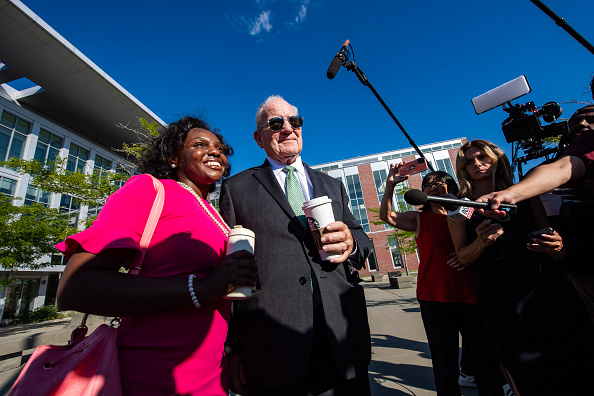

The murder case of Duxbury, Massachusetts, mother Lindsay Clancy, which ended in a mistrial, has ensured the issue of postpartum mental illness continues to have a painful spot in the national conversation. It has also renewed an uncomfortable question for Black mothers, whose rates of postpartum depression are climbing fastest and who are the least likely to be screened or treated.
Clancy, a former labor and delivery nurse, was charged with killing her three children in January 2023. Her defense argued she was suffering from postpartum psychosis while prosecutors said she was criminally responsible. A mistrial was declared Sept. 4 when the jury couldn’t agree unanimously to find Clancy not guilty by reason of insanity.
RELATED: Two Moms Killed Their Kids. Did Race Play a Role in Their Cases?
A Trial That Sparked a Movement
During the trial, hundreds of women gathered almost daily outside Plymouth Superior Court to show support for Clancy and for others who live with postpartum mood and anxiety disorders, according to local news reports. Many wore pink shirts printed with phrases such as “Believe” and “She Needed Help.”
“Women are being dismissed, neglected and ignored when we speak up,” one of Clancy’s supporters told the Associated Press. “We’re scared because nobody takes us seriously.”
The case also drew sharp criticism online. “The feminist left is entirely predicated on the idea that women cannot be held accountable for anything,” said conservative political commentator Steven Crowder in one of many YouTube videos debating the trial.
For maternal mental health advocates and experts in Massachusetts, the case is a wake-up call about where resources for new mothers fall short, and a possible turning point in how the state treats women’s mental health after childbirth.
The Numbers Behind the Problem
A new Harris Poll released Sept. 10 points to a broad sense among women that post-pregnancy care ends too soon. The survey, conducted in March, had just over 4,100 adult participants, of whom 2,327 are women. A total of 1,516 were pregnant or had been pregnant. A vast majority of the survey’s female participants (88%) say more must be done to make childbirth safer in the United States. This was up from 83% in 2024.
In addition, 56% of women who are or have been pregnant reported experiencing postpartum mental health issues. More than half of those women said they either received subpar support for their postpartum issues or no support at all.
Healthcare providers’ silence over the issue is particularly jarring, with 68% of the women responding that “it feels like mothers are forgotten when the baby is born.” As a result, 86% of respondents believe increased postpartum follow-up should become standard care and more than two-thirds of women who had been pregnant saying they want providers to raise postpartum depression during prenatal visits. Almost half said they’d received little or no information on postpartum issues when they were pregnant.
“Maternal health is no longer a niche issue,” said Christina Lojek, senior research manager at the Harris Poll. “Our research shows that millions of women are navigating pregnancy, childbirth and postpartum recovery while facing gaps in care, support and information. If we want better outcomes for mothers and babies, we need to stop treating maternal care as something that ends at delivery and start building a system that supports women — physically, emotionally, and practically — before, during and long after childbirth.”
For Black Women, Treatment is Less Available
Despite increased risk, separate studies show Black mothers are 46% less likely to be screened for postpartum depression.. Fewer than 37% of Black women received treatment for maternal mental health disorders, such as postpartum depression, compared with 67% of white women, according to a Columbia University survey.
Postpartum depression is less severe than postpartum psychosis, which is cited in the murder trials of Clancy and Massachusetts mother Latarsha Sanders, who was convicted in 2022 of fatally stabbing her two children. While less severe, postpartum depression has been linked to emotional detachment between the mother and child, including difficulty starting or continuing breast-feeding and stunted infant growth.
Massachusetts Responds
On Sept.15, Massachusetts Gov. Maura Healey announced she is proposing $2 million be appropriated to give families statewide access to the Welcome Family home visiting program. She also wants an additional $250,000 to strengthen a mental health program for mothers. The Massachusetts Department of Public Health also will strengthen its programs that screen for perinatal mood and anxiety disorders and help providers identify concerns earlier.
“Becoming a mother is a profound life change, and every parent deserves support — not just during pregnancy, but in the months that follow,” Healey said in a prepared statement. “Postpartum depression, anxiety and other maternal mental health conditions are real medical conditions, and no mother should feel ashamed to ask for help or feel like she has to navigate this journey alone. We’re working to expand postpartum care, identify concerns earlier and connect families to the mental health support they need, because taking care of moms means taking care of the whole family.”
The Welcome Family program is free, voluntary and last year served parents of roughly 3,000 births. Nurses visit homes to screen for mental health concerns, help with breastfeeding and newborn care, and connect families with community resources. Follow-up calls also are made two to three weeks later. Estimates are the additional funds would open the program to all parents and caregivers statewide.
Clancy’s case is still pending as prosecutors decide if they will retry her. A status hearing is set for Sept. 29.
RELATED: Saving Black Mothers Starts Outside the Hospital
The post After the Clancy Mistrial, Postpartum Issues Get A Fresh Look appeared first on Word In Black.