Uganda’s public debt rises to Shs 137 trillion as BoU warns over reckless borrowing
Uganda’s public debt has risen to Shs 137.4 trillion, prompting the Bank of Uganda (BoU) to raise concerns over growing fiscal pressures, increasing domestic borrowing and the risk of crowding out private sector credit. Figures from the ministry of Finance show that by December 2025, total public debt had reached $34.86 billion (about Shs 137.42 […] The post Uganda’s public debt rises to Shs 137 trillion as BoU warns over reckless borrowing appeared first on The Observer Media Ltd.
 Black News

Uganda’s public debt has risen to Shs 137.4 trillion, prompting the Bank of Uganda (BoU) to raise concerns over growing fiscal pressures, increasing domestic borrowing and the risk of crowding out private sector credit.
Figures from the ministry of Finance show that by December 2025, total public debt had reached $34.86 billion (about Shs 137.42 trillion), equivalent to 52.7 per cent of GDP. Domestic debt stood at $19.02 billion (Shs 68.86 trillion), while external debt amounted to $15.84 billion.
The figures indicate a sharp increase in borrowing between June and December 2025, particularly in domestic debt, which rose from Shs 60.34 trillion to Shs 68.86 trillion.
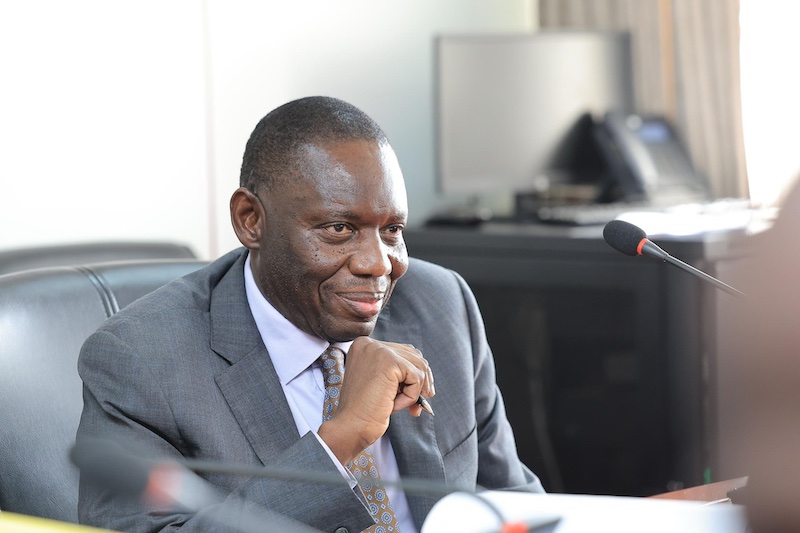
Appearing before parliament’s committee on budget, BoU governor Dr Michael Atingi-Ego cautioned against excessive domestic borrowing, warning that it could increase interest rates and reduce access to credit for businesses.
“The domestic market can absorb the planned Shs 12.7 trillion borrowing, but exceeding that projected level would risk tightening credit conditions for businesses,” Atingi-Ego said.
His concerns come as Uganda enters a new five-year fiscal cycle amid widening gaps between government fiscal targets and mounting financing pressures.
In its response to the proposed Charter for Fiscal Responsibility for FY2026/27–FY2030/31, the central bank called for stronger parliamentary oversight of public borrowing, expenditure and compliance with fiscal rules.
Atingi-Ego urged government to reassess its debt path, particularly for FY2026/27, arguing that some of the Charter’s projections may become difficult to achieve if they are not aligned with the current debt position.
He proposed annual assessments of debt sustainability and regular reporting on government’s domestic financing strategy and its impact on private sector credit.
The ministry of Finance has acknowledged that several targets under the outgoing Charter for Fiscal Responsibility are unlikely to have been met, citing weaker-than-expected revenue mobilisation, higher expenditure, delayed oil production and increased borrowing.
Private sector credit grew by 16.1 per cent in the year to June 2026, a performance the central bank says should not be undermined by increased government demand for domestic financing.
Shadow Finance minister Gyaviira Lubowa Ssebina, Nyendo-Mukungwe MP, told the committee that Uganda faces the difficult task of consolidating public finances while financing ambitious investment and growth programmes.
The second Charter for Fiscal Responsibility (FY2021/22–FY2025/26) sought to maintain public debt below 50 per cent of GDP, reduce domestic debt interest payments to 12.5 per cent of revenue excluding grants, keep publicly guaranteed debt below 5 per cent of GDP and progressively lower the fiscal deficit to 3 per cent of non-oil GDP.
It also aimed to increase non-oil revenue by at least 0.5 percentage points of GDP annually and limit growth in recurrent expenditure to the pace of non-oil revenue growth.
According to fiscal reports, Uganda recorded a deficit of 5.8 per cent of GDP in FY2024/25 against a Charter target of 4.2 per cent.
Finance minister Henry Musasizi attributed the larger deficit to increased expenditure, including supplementary budgets for climate-related interventions, the Umeme buyout and other emerging priorities.
Interest payments reached 5 per cent of GDP, with domestic debt accounting for 4.4 percentage points. The weighted average interest rate on total public debt rose to 9.5 per cent, while domestic debt carried a higher average rate of 15.5 per cent.
The International Monetary Fund (IMF) projects that interest payments will absorb nearly one-third of domestic revenue in FY2025/26, while total debt servicing is expected to rise to about 10 per cent of GDP, up from about 6–7 per cent before the Covid-19 pandemic.
Government projections show interest payments rising from Shs 13 trillion in FY2026/27 to Shs 15.2 trillion by FY2029/30. Domestic interest payments alone are projected to increase from Shs 10.9 trillion to Shs 13 trillion over the same period.
A significant portion of domestic debt is also maturing in the short term. By December 2025, about 19.3 per cent of domestic debt was due within one year, compared to 5.9 per cent of external debt, requiring government to refinance a substantial share of its obligations.
On the revenue side, tax collections showed some improvement. Total tax revenue reached Shs 29.87 trillion in FY2024/25, exceeding the target by Shs 505 billion, while the tax-to-GDP ratio rose from 12.7 per cent to 13.1 per cent.
However, total government revenue, including grants, remained below target, with non-tax revenue and grants underperforming.
Musasizi said the new fiscal framework projects public debt peaking at 55.1 per cent of non-oil GDP in FY2027/28 before declining to 50 per cent by FY2030/31.
The framework also anticipates stronger economic growth, projected at 7 per cent in FY2025/26 and 10.4 per cent in FY2026/27 when commercial oil production begins.
Domestic revenue is expected to increase from Shs 37.23 trillion to Shs 46.56 trillion over the same period, while oil revenue is projected at Shs 3.68 trillion in the first year of production.
The IMF has cautioned that Uganda’s debt vulnerabilities have increased and recommended stronger revenue mobilisation and expenditure reforms to place debt on a sustainable path.
Gabriel Okumu, the MP for Okoro County in Zombo district, urged parliament’s budget and national economy committees to intensify scrutiny of public borrowing to safeguard fiscal sustainability.
The post Uganda’s public debt rises to Shs 137 trillion as BoU warns over reckless borrowing appeared first on The Observer Media Ltd.