17 years after Africa became a nuclear weapon-free zone, Nigeria tells the UN it has never pursued nuclear arms
Seventeen years after Africa formally became a nuclear-weapons-free zone, Nigeria has reaffirmed that it has never possessed or pursued nuclear weapons, placing the country firmly on the continent’s long-standing side of the global nuclear disarmament debate.
 Black News

Seventeen years after Africa formally became a nuclear-weapons-free zone, Nigeria has reaffirmed that it has never possessed or pursued nuclear weapons, placing the country firmly on the continent’s long-standing side of the global nuclear disarmament debate.
- Nigeria reaffirmed at the UN that it has never possessed or pursued nuclear weapons, aligning with Africa's stance on disarmament.
- Africa has been a nuclear-weapons-free zone since the Treaty of Pelindaba came into force in 2009.
- Nigeria is also a signatory to the Treaty on the Prohibition of Nuclear Weapons and remains committed to preventing the spread of weapons of mass destruction.
- The announcement coincided with the UN International Day Against Nuclear Tests, amid growing concerns about renewed nuclear testing worldwide.
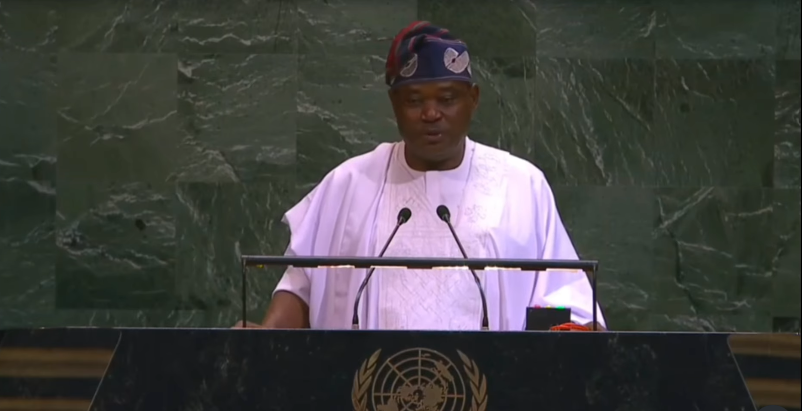
Nigeria’s Permanent Representative to the United Nations, Jimoh Ibrahim, made the declaration during the UN General Assembly’s 108th plenary meeting in New York, saying Nigeria “neither possesses nuclear weapons nor has ever pursued a nuclear weapons programme.”
DON'T MISS THIS: Africa’s priority is fighting poverty, not testing nuclear weapons - Shettima
Speaking on behalf of President Bola Tinubu, Ibrahim reaffirmed Nigeria’s commitment to international efforts to eliminate nuclear-weapon testing and strengthen cooperation aimed at preventing the spread of weapons of mass destruction.
Why Africa has no nuclear weapons
Nigeria’s declaration comes within a broader legal framework that has kept nuclear weapons off the African continent for nearly two decades.
The Treaty of Pelindaba, formally known as the African Nuclear-Weapon-Free Zone Treaty, entered into force on July 15, 2009, establishing Africa as a nuclear-weapons-free zone.
DON'T MISS THIS: Africa’s nuclear readiness 2026: who is ready, who is almost ready, and who is still far off?
The treaty prohibits African states from researching, developing, manufacturing, acquiring, possessing or stockpiling nuclear explosive devices. It also prohibits the stationing of nuclear explosive devices on the territory of member states.
Nigeria has reaffirmed its commitment to the treaty previously, with the country's defence ministry stating in 2024 that Nigeria and the wider continent would remain committed to the Pelindaba framework.
The country's nuclear commitments also extend beyond Africa's regional treaty.
Nigeria has signed and ratified the Treaty on the Prohibition of Nuclear Weapons, which entered into force in 2021 and prohibits its parties from developing, possessing or acquiring nuclear weapons.
Why Nigeria is making the statement now
The timing of Ibrahim's declaration is significant because it comes amid renewed international concern over nuclear testing and the future of global arms control.
DON'T MISS THIS: Africa's only nuclear power sets off a global race for next-generation reactors as Russia's Rosatom faces Western rivals
The UN was marking the International Day Against Nuclear Tests, with UN officials warning that a resumption of nuclear testing could undermine decades of restraint and trigger a new arms race.
The United States, China and several other nuclear-armed states have yet to ratify the Comprehensive Nuclear-Test-Ban Treaty, while Russia revoked its ratification in 2023.
Ibrahim also called for international action against countries that conduct nuclear-weapon tests or possess weapons of mass destruction, arguing that the principle of non-intervention should not shield such activities from international scrutiny.
DON'T MISS THIS: List of African countries with a nuclear cooperation agreement with Russia
Nigeria's position does not mean it rejects nuclear technology altogether. The Pelindaba Treaty permits the peaceful use of nuclear science and technology, allowing African countries to pursue applications in areas such as energy, medicine, agriculture and research while prohibiting nuclear explosive devices.
For Nigeria, which maintains the Nigeria Atomic Energy Commission as part of its nuclear regulatory and institutional framework, the distinction is important: the country can pursue civilian nuclear technology without entering the nuclear-arms race.
As global powers debate nuclear deterrence, testing and disarmament, Nigeria's message at the UN therefore reinforces a position Africa adopted 17 years ago: the continent can develop peaceful nuclear capabilities, but nuclear weapons have no place in Africa.