TIMA 2026: The Asian Music Industry Builds its Own Global Stage
The second TMElive International Music Awards has ended with an increasingly clear proposition: Asian music does not need to remain a regional story. Held over two days at Hong Kong’s 50,000-capacity Kai Tak Stadium, the 2026 awards brought together 34 Chinese and international acts spanning Chinese-language pop, European and American music, and the Japanese, Korean […] The post TIMA 2026: The Asian Music Industry Builds its Own Global Stage appeared first on Music Press Asia.
 Black News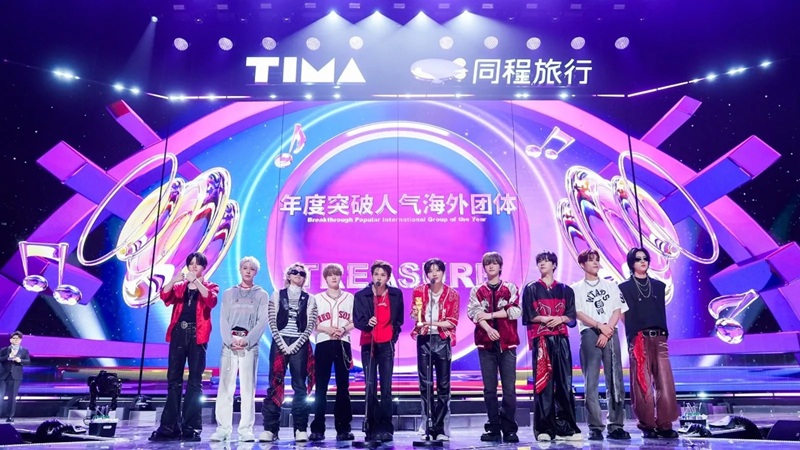

The second TMElive International Music Awards has ended with an increasingly clear proposition: Asian music does not need to remain a regional story.
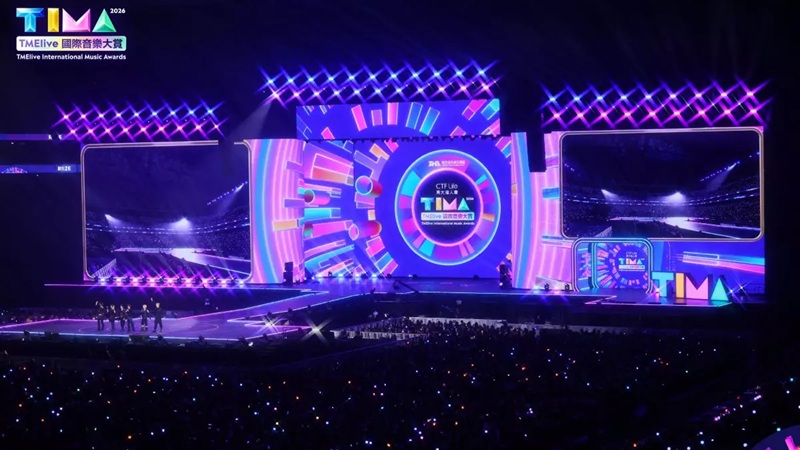
Held over two days at Hong Kong’s 50,000-capacity Kai Tak Stadium, the 2026 awards brought together 34 Chinese and international acts spanning Chinese-language pop, European and American music, and the Japanese, Korean and Thai scenes. Produced by Tencent Music Entertainment Group, TIMA is emerging as a platform through which Asian artists can be presented to a wider international audience on their own terms.
That ambition matters. For decades, much of the global conversation around popular music has been shaped by institutions, media and industry professionals based in the West. Asian artists have often entered that conversation through individual breakthroughs, collaborations or appearances on Western platforms. TIMA suggests another model: build an international stage in Asia, bring artists from different markets onto it, and allow the scale and diversity of the region’s music industries to make their own argument.

The second edition was considerably larger than its inaugural outing. Moving into Kai Tak Stadium, a major new venue for sport and entertainment in Hong Kong, TIMA paired its expanded line-up with a large-scale production designed for a stadium audience.
The programme unfolded across three chapters, Sparkle, Starlight and Aurora, bringing together artists from across the region alongside international names including Charlie Puth and Daniel Seavey. The Asian contingent ranged from K-pop acts such as Stray Kids, aespa, TOMORROW X TOGETHER, SUPER JUNIOR, IVE, NMIXX and BABYMONSTER to artists representing Chinese-language, Japanese and Thai music.
The result was less a conventional national awards ceremony than a snapshot of the increasingly interconnected Asian music market.

That international ambition was reflected in the honours presented during the ceremony. Stray Kids received International Group of the Year, while Charlie Puth was named International Artist of the Year. SUPER JUNIOR received The Most Influential International Group of the Year, and G-DRAGON’s Übermensch was recognised as The International Digital Album of the Year.
The awards also placed particular emphasis on Asian artists crossing cultural and linguistic boundaries. William Chan received The Asian Crossover Artist of the Year, while MC Michael Cheung Tin Fu was named The Recommended Asian Artist of the Year.
These categories are perhaps among TIMA’s more interesting signals. “Crossover” has long been a familiar ambition in Western music, where artists moving between markets, languages and genres are often treated as evidence of international reach. In Asia, however, such movement is increasingly becoming part of the region’s own musical identity.
K-pop has already demonstrated how a music industry can develop an infrastructure capable of turning local artists into global cultural exports. The growth of Chinese, Japanese and Southeast Asian music industries points towards a broader possibility: that the next stage of Asian music’s international development may not be dominated by a single country or genre, but by a network of markets learning to connect with one another.
For Western music professionals, this is where events such as TIMA become worth watching. The question is no longer simply whether Asian artists can achieve recognition in Europe or North America. It is whether the global music industry is prepared to recognise Asia as a major centre of music-making, investment, audiences and cultural influence in its own right.
TIMA is still a young awards platform, having reached only its second edition. But its decision to expand into a 50,000-capacity stadium, bring together artists from multiple Asian markets and place international acts alongside them points towards a larger ambition.

The significance may ultimately lie less in the trophies than in the infrastructure around them.
A genuinely international music industry requires stages, media, audiences, promoters, labels, awards and professional networks that allow artists to move between markets. Asia is increasingly building those connections for itself.
The second TIMA has therefore arrived at an interesting moment. As Asian music continues to travel beyond its traditional borders, the region’s most important cultural question may no longer be how to enter the Western music world, but how to help redefine what the global music world looks like.
TIMA’s next chapter will be worth watching.
The post TIMA 2026: The Asian Music Industry Builds its Own Global Stage appeared first on Music Press Asia.