

The world's top cobalt producer in Africa is rewriting its mining rules, risking investor confidence
The Democratic Republic of Congo(DRC) is making changes to its mining sector to consolidate greater control over its resources, a move that could raise eyebrows among investors.
 Black News
The Democratic Republic of Congo(DRC) is making changes to its mining sector to consolidate greater control over its resources, a move that could raise eyebrows among investors.
- The Democratic Republic of Congo is revising its mining code to strengthen state control and improve regulatory oversight of its mineral resources.
- These changes have led to concerns among investors, with confidence waning and fears of being sidelined from the decision-making process.
- The proposed amendments target more than 40 articles of the existing 2018 mining code, addressing strategic minerals, community development, and enforcement gaps.
- An emergency session by the Chamber of Mines is scheduled to discuss a unified industry response to the rapid policy changes.
According to the DRC's main mining industry body, investor confidence could wane as the country makes alterations to its mining sector.
The Central African country, which boasts resources such as cobalt, gold, and tantalum, amongst others, as well as housing mining giants such as China's CMOC, Huayou Cobalt and Zijin, Switzerland-based Glencore and Canada's Barrick, is following in the footsteps of several African countries looking to gain more control over its resources and their value chain.
DON’T MISS THIS: Congo set to take advantage of critical mineral boom with its first-ever stock exchange
As a result, the country has opted to revise its mining code by strengthening regulatory and anti-fraud monitoring through specialized mining sector organizations, permitting the establishment of strategic stockpiles, and increasing state control over strategic and reserved minerals.
A policy introduced by one of the country’s MPs, Serge Chembo N'Konde, and submitted to the government for comment in June proposes amendments to more than 40 articles of the 2018 mining code.
Reuters reviewed the text recently, which additionally encompasses regulations regarding strategic minerals, local content, community development, and enforcement.
The policy claims that elements of the 2018 legislation are out of date and that more state monitoring is required because the regulations were last updated eight years ago.
According to an internal document, the Chamber of Mines has scheduled an emergency session for July 15–17 in order to establish a shared industry stance and determine if further amendment to the mining code is necessary.
"The speed with which the revision process appears to be unfolding raises fears that mining operators may not be sufficiently involved," the chamber said, warning that further changes could fuel regulatory uncertainty and institutional tensions.
Another recent mining prohibition in the DRC
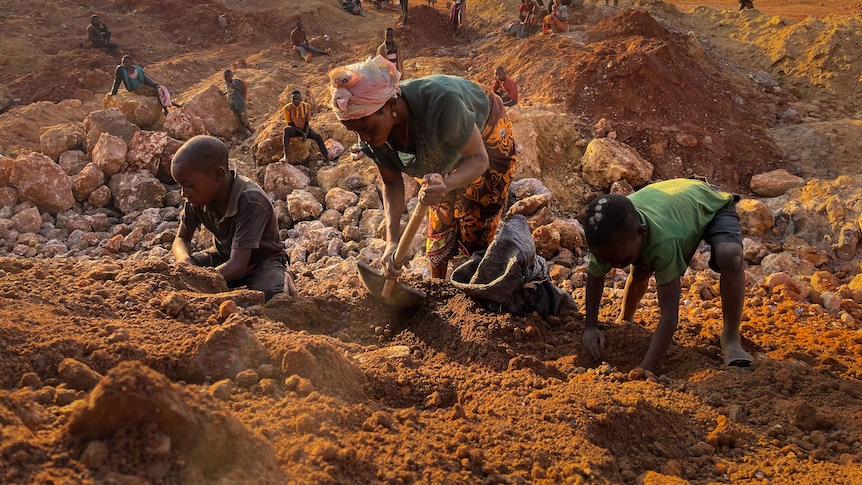
In May, the country imposed a three-month suspension of mining activities in parts of South Kivu province, targeting operations in two key territories, also to help tighten control over the country’s strategic mineral supply chain.
The regulation, issued by the Ministry of Mines on May 22, 2026 and signed by Minister Louis Kabamba Watum, applies to industrial, semi-industrial, and artisanal mining operations in the eastern region's gold and coltan corridors.
The suspension especially affects the Mwenga and Shabunda regions in South Kivu province, two of the eastern Democratic Republic of Congo's most important artisanal and semi-industrial mining zones.
Both sites lie within the country’s wider gold and coltan belt and are noted for extensive networks of industrial operators, cooperatives and informal miners feeding into regional mineral trading chains.
By focusing on these territories, the government effectively tightens oversight in areas long associated with regulatory gaps, illegal extraction, and fragmented enforcement, making the suspension a significant intervention in one of the DRC's most strategically important but difficult mining corridors.