Senegal’s AFCON Title Appeal Gets October 8 CAS Date
Senegal’s AFCON title appeal will be heard behind closed doors at the Court of Arbitration for Sport (CAS) in Lausanne on October 8, more than six months after the Confederation of African Football stripped the country of the Cup of Nations trophy it won on the pitch and handed it to host nation Morocco instead. [...]
 Black News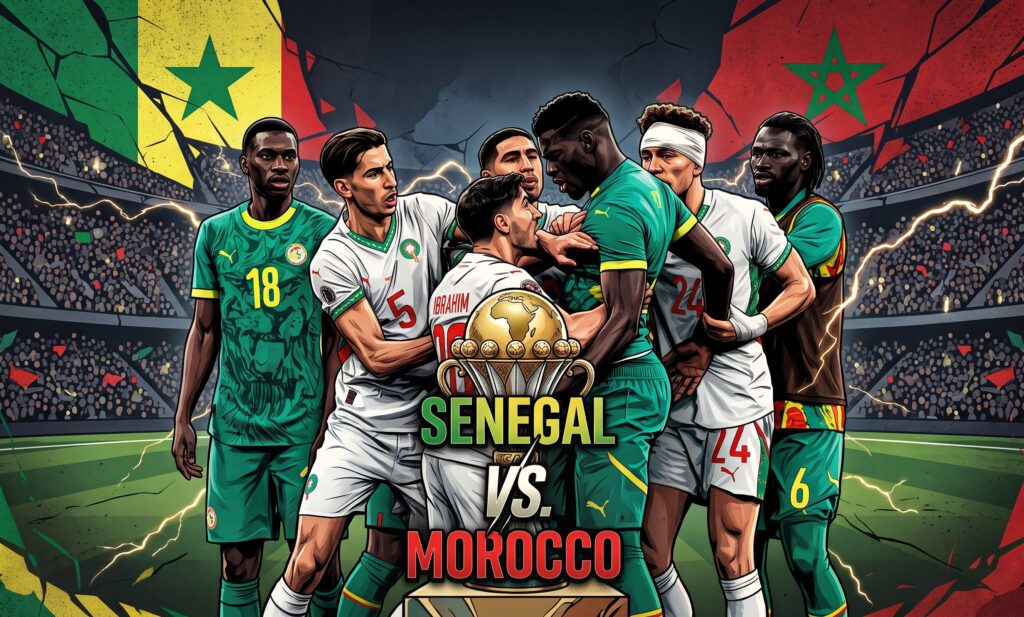
Senegal’s AFCON title appeal will be heard behind closed doors at the Court of Arbitration for Sport (CAS) in Lausanne on October 8, more than six months after the Confederation of African Football stripped the country of the Cup of Nations trophy it won on the pitch and handed it to host nation Morocco instead. CAS has not set a date for a ruling.
The case traces back to a chaotic final in Rabat on January 18. Senegal led 1-0 deep into stoppage time when referees awarded Morocco a penalty. Senegalese players, led off by coach Pape Thiaw, walked off the field in protest and delayed the match by roughly 15 minutes. When play resumed, Brahim Diaz’s penalty was saved, and Pape Gueye scored the winner in extra time, giving Senegal a 1-0 victory and what looked like its second continental title.

ALSO READ: Cameroon WAFCON 2026: Historic 3-0 Win Over Malawi
How a Senegalese Win Became a Moroccan Title
That result stood for nearly two months. Then, on March 17, CAF’s Appeal Board ruled that Senegal’s walkout had breached Article 82 of the Africa Cup of Nations regulations, which bars a team from leaving the field or refusing to play without the referee’s authorization. Under the linked Article 84, that breach carries an automatic consequence: forfeiture of the match. The board applied it retroactively, converting the scoreline from a 1-0 Senegalese win into a 3-0 defeat and making Morocco champions of Africa for the first time since 1976.
CAF framed the ruling as a mechanical application of its own disciplinary code, not a judgment on which team played better on the day. Morocco’s federation backed the decision as one that “upholds rights and integrity” of the competition. Senegal’s federation called it “an unfair, unprecedented and unacceptable decision” and vowed to fight it.
Senegal captain Kalidou Koulibaly said he first heard about the ruling from Morocco goalkeeper Yassine Bounou, who told him he was “no longer African champion” — a remark Koulibaly initially assumed was a joke, before CAF’s statement confirmed it. He later posted his response publicly: “Respect the champions, it’s not given, it’s earned. They can watch; I’ll keep it. The trophy is here… and it’s not going anywhere.” Senegal’s squad went ahead with a victory parade regardless, and the federation added a second star above its crest — the traditional marker of a second continental title — despite CAF’s ruling on paper.
Senegal’s AFCON Title Appeal Reaches Lausanne
Senegal filed its appeal with CAS in late March, asking the court to set aside CAF’s decision and reinstate the federation as champions. CAS confirmed on July 24 that it had registered the case and scheduled the hearing for October 8, with proceedings closed to the public and no timeline given for when judges will rule, according to Al Jazeera’s reporting on the court date. CAS’s own media release confirming the appeal lists the Senegalese Football Federation as the appellant and CAF as the respondent, with Morocco’s federation joined to the case.
The gap between the January final and an October hearing means the dispute will have run for the better part of a year before CAS even convenes — a timeline that has drawn criticism of CAF’s appeal process independent of how the case is ultimately decided. Sports law specialists who have reviewed the ruling are split: some argue Articles 82 and 84 leave the appeal board no discretion once a walkout is established, regardless of how the match ended; others contend that applying an automatic forfeiture rule retroactively, after a result was already accepted on the pitch, is precisely the kind of procedural overreach CAS exists to check.
What’s Riding on the Ruling
A reversal would restore Senegal’s second AFCON title and erase Morocco’s claim to a first championship since 1976; CAF’s ruling stands until CAS says otherwise. Beyond the trophy, the case has become a test of how much authority a federation’s own appeal board should have to overturn a result already decided on the field — the kind of procedural dispute that shapes whether players and fans trust the body running the continent’s biggest football competition. That question matters well past this one final: a precedent that lets a disciplinary panel reverse a match result months later, without a clear limiting principle, invites the same fight after any future contested final.
The ruling has played out against the backdrop of a much smoother CAF tournament in the same country this year: Cameroon winning its first Women’s Africa Cup of Nations title in Rabat in August, without any of the fallout dogging the men’s competition. For now, both men’s AFCON trophies exist in parallel: Morocco holds the title CAF recognizes, and Senegal wears a second star its federation says the record books will eventually confirm. Neither side will have a final answer before the Lausanne hearing, and CAS has given no indication of how long deliberations will take once it does.