
Red Tide Warning Issued for Galveston and Bolivar Beaches
Moderate-to-high concentrations of red tide have been confirmed near Galveston Island, Crystal Beach and the Bolivar Peninsula, creating respiratory risks for beachgoers. The post Red Tide Warning Issued for Galveston and Bolivar Beaches appeared first on African American News and Issues.
 Black News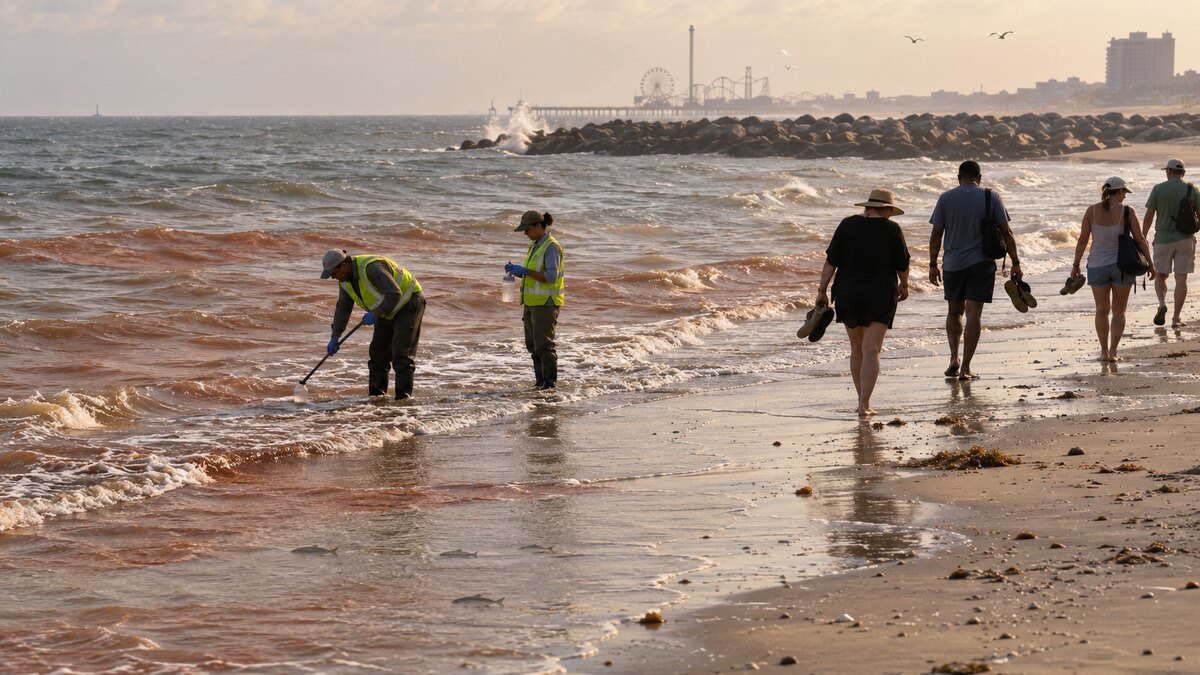
GALVESTON, Texas — State and federal officials are warning beachgoers about a confirmed red tide bloom along parts of Galveston Island and the Bolivar Peninsula after water samples showed concentrations capable of causing breathing problems.
The Texas Parks and Wildlife Department said samples collected from Sept. 7 through Sept. 11 around Crystal Beach, the Bolivar Peninsula and Galveston Island contained moderate-to-high concentrations of Karenia brevis, the microscopic algae responsible for Texas red tide. Fish kills and respiratory symptoms were also reported in those areas.
Federal satellite monitoring and water samples found the bloom along the Galveston County coast at levels that pose a respiratory-irritation risk, according to the National Oceanic and Atmospheric Administration’s National Centers for Coastal Ocean Science. Conditions can change quickly with wind, currents and tides, meaning one section of beach may be affected while another nearby area remains clear.
Red tide produces brevetoxins that can become airborne in sea spray. Exposure may cause coughing, sneezing, watery eyes and irritation of the nose or throat. People with asthma, chronic lung disease or other respiratory conditions can experience stronger symptoms and should be especially cautious.
Anyone who begins coughing or has trouble breathing at the beach should leave the affected area and move indoors or farther from the water. Visitors should avoid swimming near discolored water or dead fish and should not handle or eat fish found dead or dying along the shoreline.
Texas Parks and Wildlife also advises against eating oysters or other shellfish collected from waters affected by red tide because toxins can accumulate in shellfish. Fish, shrimp and crabs that are caught alive and appear healthy are generally considered safe when properly cleaned and cooked, although consumers should follow any active state seafood restrictions.
The bloom is an important public-health issue for Houston-area families who regularly visit Galveston and Bolivar beaches. It may also affect coastal tourism, fishing and businesses if the bloom persists or expands. Texas red tides most often occur between August and February, but they are not normally present in state coastal waters.
Red tide is a naturally occurring phenomenon and is not the same as ordinary pollution or the fecal-bacteria readings reported through the Texas Beach Watch program. State biologists continue to monitor water samples, fish deaths and reports from the public.
Beachgoers should check the latest state status report before traveling because bloom locations can shift. Suspected red tide or fish kills can be reported to Texas Parks and Wildlife at 512-389-4848. Information about shellfish-harvesting closures is available from the Texas Department of State Health Services at 800-685-0361.
Sources: Texas Parks and Wildlife Department, Sept. 7–11, 2026 update; NOAA National Centers for Coastal Ocean Science, Sept. 9, 2026; Texas Parks and Wildlife red tide guidance.
The post Red Tide Warning Issued for Galveston and Bolivar Beaches appeared first on African American News and Issues.