Ready for the next move? How UK business leaders can build resilience and cut through the noise
Arti Halai and leaders from Sage, Dell Technologies, de Novo Solutions and Polpeo share practical ways to free up capacity, adopt AI wisely and protect cash flow The post Ready for the next move? How UK business leaders can build resilience and cut through the noise appeared first on Elite Business Magazine.
 Black News
Running a growing business has never felt more relentless. Between persistent economic uncertainty, evolving customer expectations, rapid technological shifts and the perpetual demand to do more with less, business leaders are operating under immense pressure. Success is no longer measured solely by breakneck expansion; it is defined by resilience, productivity and the agility to adapt to whatever lies ahead.
Yet, despite an endless stream of advice urging leaders to adopt AI, hire top talent and scale immediately, many simply do not have the breathing space to work out what actually moves the needle. A recent Ipsos study for the Department for Business and Trade highlighted that one in five UK small and medium-sized enterprises (SMEs) lack the time or capacity even to explore the technology options available to them.
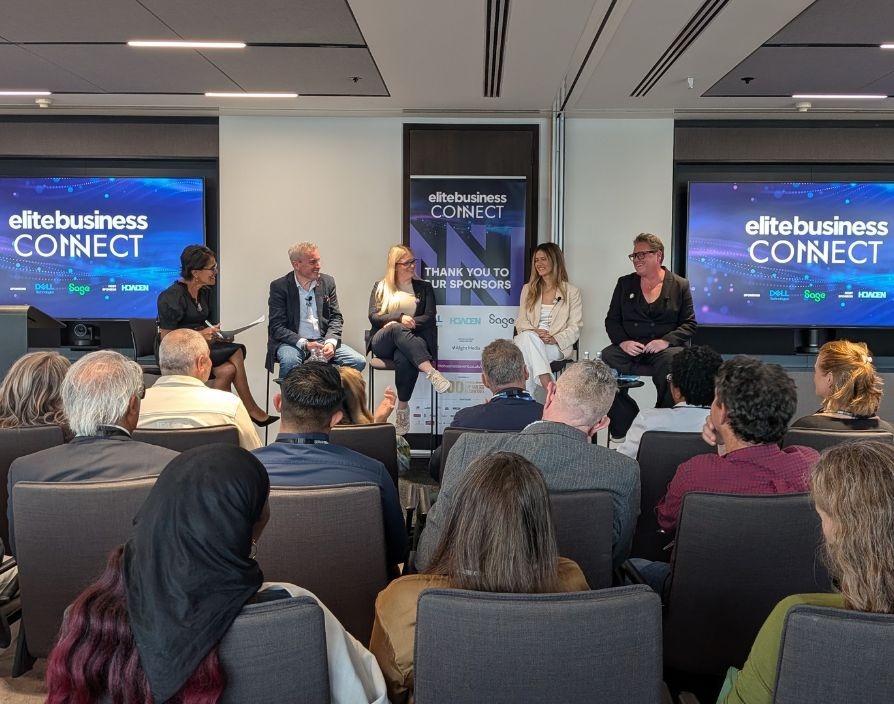
At the recent edition of Elite Business CoNNect, host and former ITV and BBC broadcaster Arti Halai sat down with four industry leaders to cut through the rhetoric and explore the practical decisions that will shape business performance over the next 12 months:
- Sarah Sahyoun, Senior Director of Global Product Marketing at Sage
- Isabel Phillips, UK AI Community Lead at Dell Technologies
- Mark Sweeny, Founder and Executive Chairman of de Novo Solutions
- Tamara Littleton, Co-Founder of Polpeo and Founder of The Social Element
Here are the key takeaways from their candid discussion on overcoming operational bottlenecks, making capital count, adopting AI effectively and keeping human connection at the centre of growth.
You don’t have a growth problem, you have a capacity problem
When businesses hit a wall, leaders often assume they need more sales or fresh marketing campaigns. However, Sarah Sahyoun argued that the root cause is almost always capacity.
“Speaking to small businesses constantly, it’s actually not a growth problem, it’s a capacity problem,” Sahyoun explained. “Where is the time? Business owners are working weekends, working nights. It’s all a bit relentless. A lot of the time we hear, ‘I didn’t start my business knowing I was going to end up doing invoicing, chasing payments, figuring out month-end, or filing a year-end tax return.’ It’s all the grunt work that people didn’t sign up for.”
When founders and key staff are bogged down in repetitive administrative tasks, strategic thinking stalls. Unlocking capacity requires ruthlessly identifying the low-value workflows that consume valuable hours and handing them over to automation.
Sahyoun shared the example of a fast-growing social media agency that found itself in a severe cash crunch simply because invoices were not being chased. By introducing an automated AI copilot to manage payment reminders, the business eliminated the social awkwardness of debt collection and shortened payment cycles by five to seven days, protecting payroll and cash flow.
In another case, a British veterinary practice integrated its HR, payroll and accounting workflows into a unified system, saving a full day of administrative work each week and between £50,000 and £80,000 annually.
Block out the enterprise hype and start small with AI
With tech giants and multinational enterprises pouring millions into generative AI, it is easy for SME owners to feel overwhelmed or left behind. Yet, as Isabel Phillips pointed out, big budgets do not automatically guarantee tangible returns.
“We work with lots of enterprise organisations who have big budgets, but they’re not actually seeing massive results yet,” Phillips noted, citing a major British bank where disparate department heads were buying different tools from separate budgets with no coordinated direction. “As a small business, it’s really important to block out all of this noise in the news. Instead, look at the numbers first, see where you can add immediate value, start with small pilots, and scale from there.”
Phillips pointed to a family-run plumbing company in West London operating across three branches. The business was missing 10 to 15 customer calls a day while engineers were out on jobs, leaking valuable revenue. By introducing a focused AI tool to answer incoming enquiries, capture customer details and triage emergencies, the business converted lost calls into scheduled work without increasing headcount.
When evaluating any technology investment, Phillips recommended measuring against three straightforward criteria:
- Does it save your business time?
- Does it save your business money?
- Does it make your business more money?
If a proposed tool does not clearly achieve at least one of these, it is a distraction.
Protect your cash flow and build your momentum flywheel
When capital is tight, deciding where to invest the next pound is a critical leadership challenge. For Mark Sweeny, the decision-making framework is simple and uncompromising: cash velocity.
“It’s a cliché, but cash is king,” Sweeny said. “My decision-making is driven by what gets me to cash as quickly as possible. When my product development managers want to spend money, the first question they must answer is: how quickly am I going to get that cash back into the bank account? You need to know how long you have to fund an initiative and take the pain before the return starts flowing.”
Beyond immediate cash recovery, sustainable growth requires operational clarity. Tamara Littleton highlighted the power of the ‘flywheel concept’ (popularised by Jim Collins in Good to Great), which she used to build and scale global social agency The Social Element over 23 years before exiting to private equity.
“For us, it was about investing in great talent, delivering fantastic work that won industry awards, attracting high-profile clients, generating revenue, and reinvesting that revenue back into top talent,” Littleton explained. “Getting everyone aligned behind that flywheel meant that every decision we made was evaluated against a single test: is this going to keep turning the wheel?”
Get creative with low-cost, high-impact marketing
Scaling a business does not always require seven-figure marketing budgets. Both Sweeny and Littleton demonstrated that unconventional, relationship-led approaches often outperform expensive digital campaigns.
Littleton revealed that for her crisis-simulation business, Polpeo, face-to-face client lunches and niche content have proven far more effective than generic corporate advertising:
- The power of client lunches: Bringing senior communications and executive leaders together for Chatham House-style discussions creates deep rapport and trust that remote selling cannot replicate.
- Niche podcasting: Hosting a specialist podcast analysing real-world corporate reputational crises opened up international opportunities, including an unexpected, highly engaged market in Kenya.
- Immersive brand experiences: Hosting interactive, escape-room-style crisis simulations for prospective clients proved far more memorable than traditional pitch decks.
Sweeny shared two foundational marketing lessons from scaling de Novo Solutions into a £14.5 million, 140-person enterprise recognised on the Sunday Times 100:
- Unlocking untapped talent: In the early bootstrapping days of his previous venture, Certas, Sweeny placed a handwritten notice on a local school board seeking qualified professionals wanting part-time hours between 9:00 am and 3:00 pm. The resulting team of experienced accountants, lawyers and administrators delivered high-calibre work without full-time overheads.
- The commercial power of business awards: After entering the Elite Business 100 (EB100) and securing seventh place in its second year, de Novo was invited to enter the Sunday Times 100. Sweeny licensed the badge for £2,000, which directly caught the attention of an enterprise IT director facing a major operational headache. That single award listing converted into a £2 million contract.
Technology is commoditised, human trust is your true differentiator
As AI tools become widely accessible, products and software interfaces are quickly commoditised. The panel agreed that genuine competitive advantage lies in human empathy, deep client relationships and service delivery.
“We are a technology company, but we are also a services company,” Littleton emphasised. “I once had this grand plan of moving to a pure SaaS model where clients could self-serve their crisis simulations. I quickly realised that was a mistake. Technology can be replicated or replaced; what cannot be replaced is the trusted advisory relationship we have when sitting in a boardroom navigating their worst day.”
Sahyoun reinforced this from an enterprise perspective: “The number one thing we hear time and time again from customers is that our key differentiator is our support. People want to pick up the phone and speak to someone. In a noisy market where everyone is talking about tech, people want to see the human faces behind the brand.”
Phillips added that this shift is equally apparent among investors: “Venture capitalists are moving away from evaluating technology in isolation. They are scrutinising the founders, the leadership team and their integrity, because dozens of companies can build similar tools. What matters is the unique vision and execution capability of the people involved.”
Clean your data house before chasing new tools
Many small businesses struggle with AI adoption because their core systems are fragmented. Sahyoun noted that research shows the average small business uses as many as 56 separate software applications, creating disconnected data silos that cause AI models to hallucinate or deliver inaccurate insights.
“AI is only as strong as what you put into it,” said Sahyoun. “Small businesses actually have an advantage over 40-year-old corporates because you don’t have decades of legacy systems to untangle. Move away from chasing individual apps. Focus on getting a single platform or system of record that unifies your finances, operations and customer data. Get the data hygiene right first, and then train your team on a clear, consistent set of tools.”
Phillips agreed, adding that leadership must focus on upskilling employees to become internal champions: “It’s not Microsoft Copilot or any single software that makes the difference; it’s the people prompting it and applying it creatively to their day-to-day challenges. Bring your team along on the journey so they see AI as a way to augment their capabilities, not threaten their roles.”
Four practical actions to take before the year ends
To conclude the session, Arti Halai asked each panellist for one concrete action business owners should take before the close of the year:
- Deploy one focused financial pilot (Isabel Phillips): Identify one clear operational bottleneck tied directly to saving time, saving money or driving revenue. Run a contained, measurable trial, prove the ROI, and build momentum from there.
- Automate your most frustrating workflow (Sarah Sahyoun): Map out the single end-to-end administrative process you and your team dread the most, whether that is payment collection, month-end reporting or invoicing and implement software to take it off your plate.
- Conduct a pre-mortem and plan succession (Tamara Littleton): Step back and assess operational resilience. Map out how your business would manage if key leaders were unavailable, put contingency plans in place, and protect personal capacity to avoid burnout.
- Stress-test your numbers across three scenarios (Mark Sweeny): Dedicate an uninterrupted day to reviewing your financial realities. Model three distinct scenarios for the next 12 months: downside protection, status-quo stability, and accelerated growth and use analytical tools to test your assumptions before taking decisive action.
Building a resilient business during turbulent times does not require chasing every new trend. By mastering the fundamentals, safeguarding cash, eliminating administrative drag, empowering your team and doubling down on human relationships, business leaders can navigate uncertainty with confidence and build sustainable competitive advantage for the year ahead.
Key Takeaways
- Businesses face immense pressure due to economic uncertainty and evolving customer needs, highlighting the importance of resilience and capacity.
- Many SMEs lack the time to explore technology, yet practical decision-making can improve business performance over the next year.
- AI should be adopted cautiously; small pilots can yield better results than following enterprise trends blindly.
- Building strong relationships and trust is essential as technology becomes commoditized; human connection differentiates businesses.
- Before investing in new tools, ensure your data systems are clean and unified to maximize the effectiveness of AI adoption.
The post Ready for the next move? How UK business leaders can build resilience and cut through the noise appeared first on Elite Business Magazine.