Putin backs mineral processing in Africa to boost industrialisation
Russian President Vladimir Putin has called for increased investment in mineral extraction and processing in Africa to boost government revenues and help African countries gain greater control over their natural resources. Speaking at the Russia-Africa Summit in Moscow recently, Putin said Russian companies were already involved in mineral extraction and processing across the continent, adding that further investment […] The post Putin backs mineral processing in Africa to boost industrialisation appeared first on The Observer Media Ltd.
 Black News
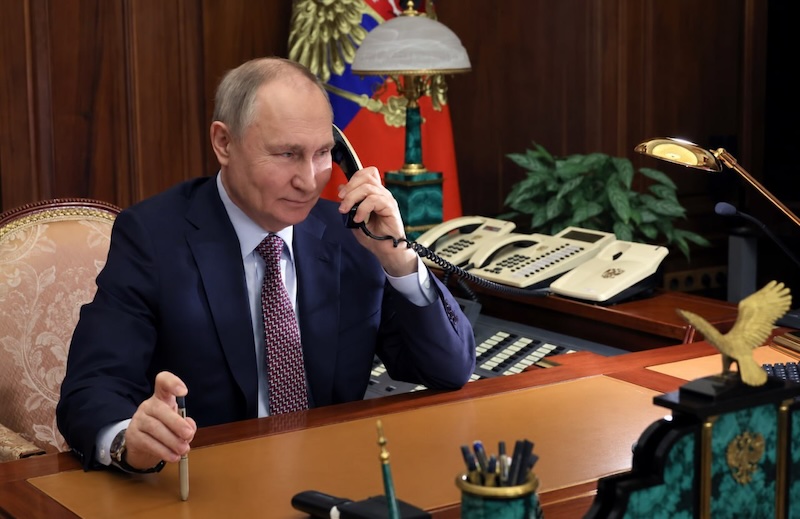

Russian President Vladimir Putin has called for increased investment in mineral extraction and processing in Africa to boost government revenues and help African countries gain greater control over their natural resources.
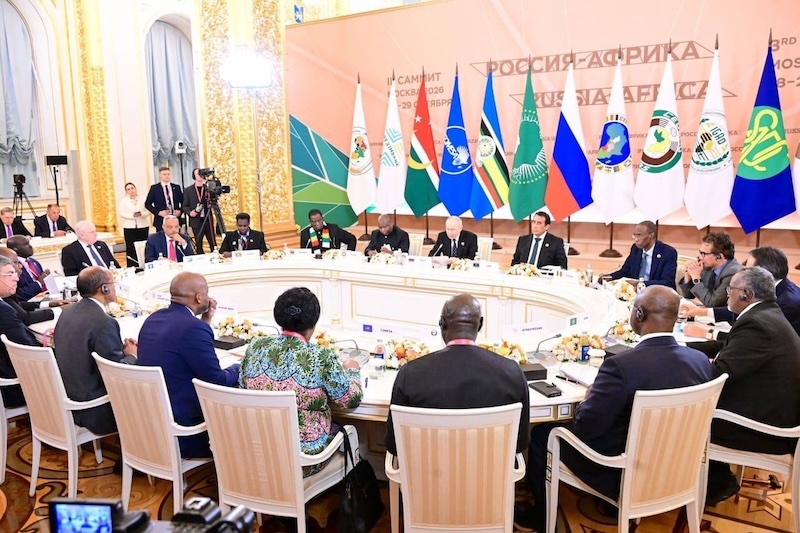
Speaking at the Russia-Africa Summit in Moscow recently, Putin said Russian companies were already involved in mineral extraction and processing across the continent, adding that further investment could strengthen local industries and support Africa’s industrialisation.
Putin urged African countries to pursue economic and technological sovereignty, arguing that they needed greater control over their resources and development priorities to strengthen their position in the global economy.
Putin said at a time when African leaders are pushing for a shift from exporting raw materials to processing minerals and manufacturing finished products locally, allowing the continent to retain more value from its natural wealth.
On April 7, 2025, President Yoweri Museveni banned the export of raw Materials to promote value addition and creation of jobs.
“I have banned the export of unprocessed raw materials from here. Over my dead body,” Museveni said.
The Chairperson of the African Union, Burundi President Évariste Ndayishimiye, called on Russia to increase investment in African industries, agriculture, energy and infrastructure, saying the continent wanted to move beyond supplying raw materials to international markets.
“Our resources are not just the deposits that have to be exploited, but these resources should be the key to the prosperity of our peoples. What we want is to be part of the whole added value chain,” Ndayishimiye said.
Russia offers economic support
Putin said Russia is ready to support Africa’s industrialisation through investment in infrastructure, agriculture, energy and technology and scoffed at western sanctions, economic pressure and debt arrangements, arguing that some powerful countries continued to exploit Africa through unfair financial agreements.
Recalling former Burkina Faso president Thomas Sankara’s criticism of foreign debt, Putin said African countries needed to strengthen their financial independence and determine their own development priorities.
He also called for reforms in international financial institutions, including the World Bank and the International Monetary Fund, to give developing countries greater influence over decisions affecting their economies.
Africa accounted for less than two per cent of global manufacturing value added, while intra-African trade represented only 15 percent of the continent’s total trade, estimated at $1.5 trillion.
He said the emergence of a multipolar world, represented by organisations such as BRICS, offered developing countries an opportunity to increase their influence in global decision-making.
Trade targets
Putin said trade between Russia and Africa had grown despite international restrictions, reaching more than $27 billion last year, compared with $18 billion in 2022. The bilateral trade could more than double to exceed $50 billion.
Russia is willing to expand agricultural cooperation through grain supplies, technology sharing and investment in food processing, transportation and agricultural infrastructure.
Energy cooperation was another priority, with Russia offering expertise in hydropower, irrigation, water management and electricity generation. Putin said African countries had the potential not only to meet their domestic energy needs but also to become energy exporters.
He proposed cooperation in digital technology, artificial intelligence, financial systems and online public services, saying technological independence was essential to national sovereignty.
Putin said Russia was prepared to share its technological expertise and support the development of digital infrastructure, healthcare and pharmaceutical production, as well as efforts to combat infectious diseases.
Africa’s growing influence
Putin described Africa as the continent of the future, citing United Nations projections that its population would exceed 2.5 billion by 2050, with young people accounting for a substantial proportion.
He said the continent’s natural resources, growing population and strategic position along international trade routes were strengthening its influence in global politics and the economy.
Ndayishimiye called for cooperation based on mutual respect and practical commitments that would deliver jobs, reduce poverty and improve access to healthcare, education and security.
The post Putin backs mineral processing in Africa to boost industrialisation appeared first on The Observer Media Ltd.