
Ndebele Superhero
The work of South African visual artist Zana Masombuka weaves together ancestry, dreams, and imagination By Kenyaa Mzee Ndebele Superhero Speaking with the artist Zana Masombuka, I notice how explanation, conclusion and resolution move into one another without clean separation – a sense of fluidity embodied in her art as well. I sit across from […] The post Ndebele Superhero appeared first on Nomad Africa Travel & Magazine.
 Black News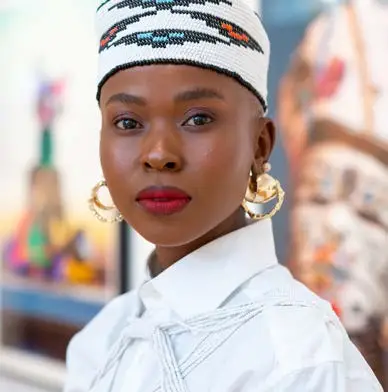
The work of South African visual artist Zana Masombuka weaves together ancestry, dreams, and imagination
By Kenyaa Mzee
Ndebele Superhero
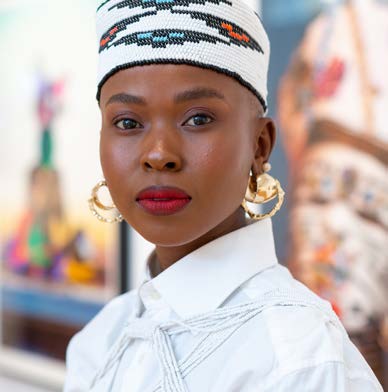
Speaking with the artist Zana Masombuka, I notice how explanation, conclusion and resolution move into one another without clean separation – a sense of fluidity embodied in her art as well. I sit across from Masombuka surrounded by nature, and that same quality returns in conversation. She pauses, then continues without rushing toward closure. This rhythm of thought is not driven by a fear of finality or conclusion, but a deep respect for the process of ritual, for the practice – one sustained through constant unfolding, weaving, sifting and tracing. The work she makes carries this charged energy, existing inside a practice that does not neatly settle into final forms.
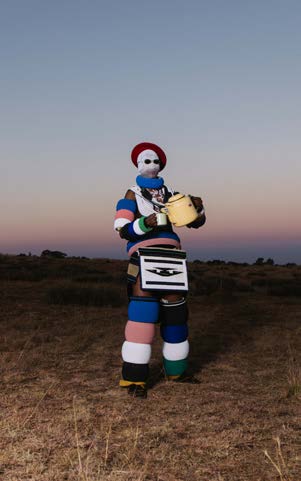
Zana Masombuka, also known as the Ndebele Superhero, is a South African visual artist whose work moves through ancestry, dreams, and imagination as a spiritual practice. Photography, installation, beadwork, sculpture and expanded image-making form the ground of her work, where storytelling becomes a way of holding futurity within the same field. Here, the visual culture of the Ndebele people is approached as something alive, carried forward through those who engage with it with intention, rather than as a closed reference.
Masombuka’s entry into image-making begins in her first year at South Africa’s Stellenbosch University. A shift comes during her first encounters with a professional set. Makeup, styling, camera, direction. The construction of image becomes active. She speaks about standing inside that environment and noticing the direction of gaze, and how quickly a body becomes source material for story, and how photography functions as a conduit. From there, early experiments emerge: campus life, friends, short films, and small screenings held in domestic spaces. One-night exhibitions. A camera passed between. A garden used for projection. The works carried agency, not formality. They were driven by making something visible in spaces where visibility often became solidified immediately.
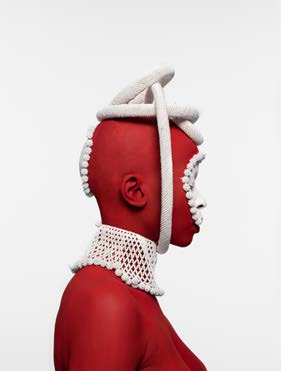
Alongside this, the act of making becomes tied to ritual, and not simply ideas. A sense of guidance that does not follow static instruction. She pauses, then speaks into it: “Dreams carry information that doesn’t pass through rational thought.” In her framing, dreams hold encounters and signals that inform how she moves through story and visuals, almost like a cascading logic of image and meaning that does not sit in linear form. Her answers come through with conviction, softened by moments of laughter, steady in how she holds each idea. “It moves through guidance,” she says. Imagination holds a similar position. It becomes a method of engagement, not escape, a way of entering what is already present in another form.
Here ancestry moves through duality – inheritance and responsibility braided into the same field. She speaks about lineage as something carried through bodies, returning through memory. Cultural knowledge does not sit in a fixed position in her thinking. It shifts, transforming through those who carry it.
The figure of the Ndebele Superhero holds everything at once. It does not function as a persona in a conventional sense. It moves through her work as a dedicated form of storytelling, where symbols act as containers, portals, and language. She speaks about symbols as carriers of wisdom, making space for what cannot be contained in a single reading. Within this, dreaming and imagination sit alongside each other as guidance systems, carrying knowledge that bypasses analytical or rational thought. The Superhero becomes a composition of intuition, where Ndebele visual culture is reworked through futurity without breaking ancestral continuity.
During the conversation, nature moves alongside us. The hiking path becomes part of the thinking process. Animals pass through the same space without interruption. She continues speaking through these moments, holding attention across multiple directions at once. Nothing breaks the thread of thought as everything connects in an exchange between environment and speech. Zana’s practice holds the same deliberate attentiveness to what is present. Image-making does not separate from her surroundings. It moves with them.
When asked about the feminine lens within her work, she describes it as something that emerges without staging or performance. It comes through a way of engaging that remains open and responsive. Her practice carries a demand for grounding in self, and trust in what is forming without force or excess control. She faithfully returns to the importance of whimsy with certainty. “You should never lose your whimsy,” she says. Not as frivolity, but as a way of remaining open to wonder, curiosity, and the unexpected possibilities that emerge through both living and creating.

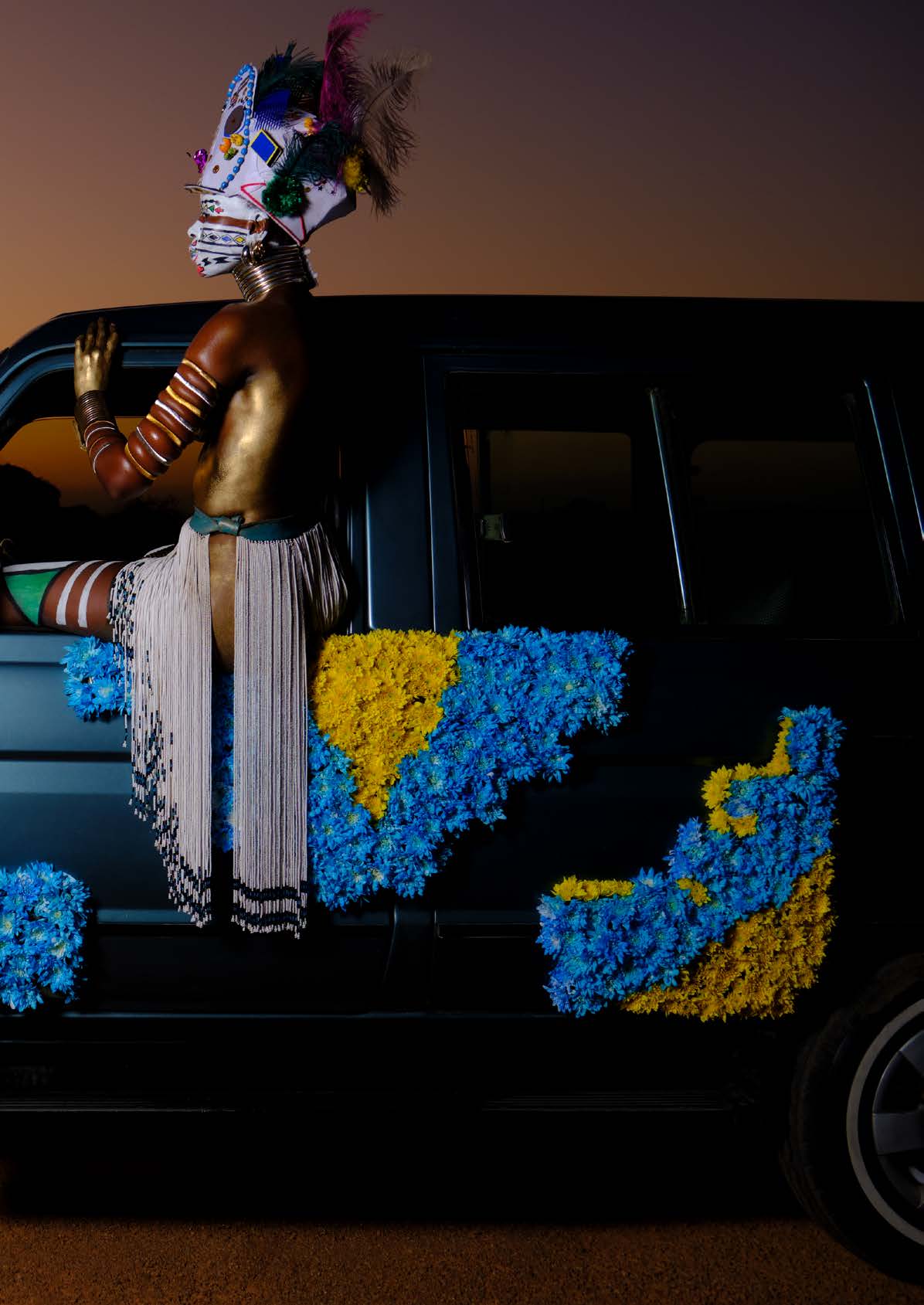
Inheritance sits within all of this without the weight of obligation. For Masombuka, lineage can be honoured while still allowing movement and transformation. It is not rigid, but composed through how meaning is made in practice. Visual making, in this sense, feels less like choice and more like a path that extended toward her. She speaks to it as something she answered, allowing it to guide her into the work she continues to build.
The post Ndebele Superhero appeared first on Nomad Africa Travel & Magazine.