Muni University among African institutions recognised for higher education transformation
Uganda’s Muni University has been named among five African institutions recognised for advancing institution-wide transformation in higher education. The university was recognised alongside Addis Ababa University in Ethiopia, the International Institute for Water and Environmental Engineering in Burkina Faso, Kwame Nkrumah University of Science and Technology in Ghana, and the University of Rwanda. The institutions […] The post Muni University among African institutions recognised for higher education transformation appeared first on Daily Star.
 Black News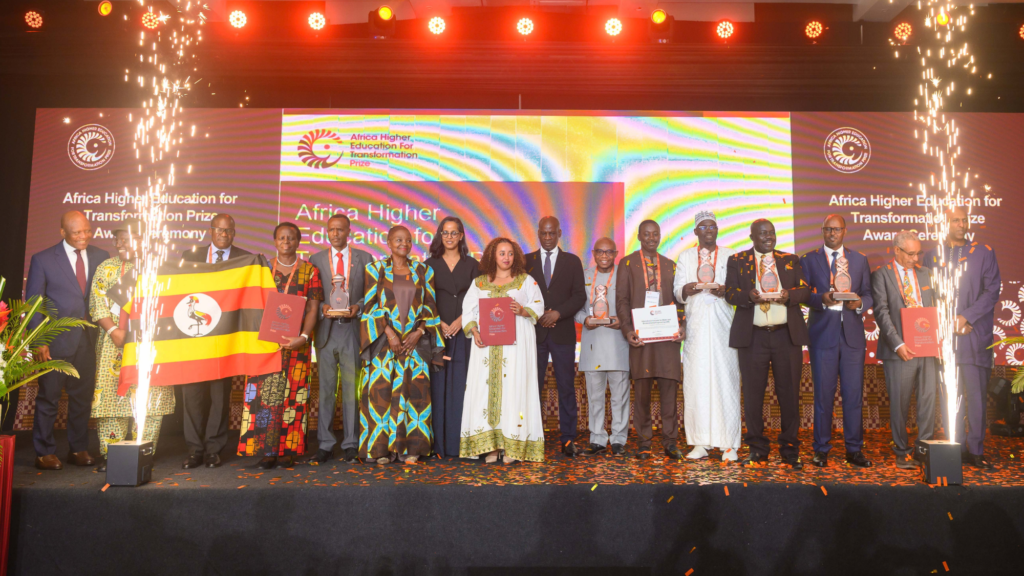
Uganda’s Muni University has been named among five African institutions recognised for advancing institution-wide transformation in higher education.
The university was recognised alongside Addis Ababa University in Ethiopia, the International Institute for Water and Environmental Engineering in Burkina Faso, Kwame Nkrumah University of Science and Technology in Ghana, and the University of Rwanda.
The institutions were announced as the inaugural laureates of the Africa Higher Education for Transformation (AHEFT) Prize during the Higher Education Transformation Convening hosted by the Mastercard Foundation in Accra, Ghana.
The convening brought together leaders from African universities, the African Union, governments, financial institutions, industry and youth under the theme, “Reimagining Higher Education for Africa’s Human Capital Development.”
The discussions focused on how African universities can become stronger drivers of economic transformation by improving teaching and learning, developing skills relevant to the labour market, promoting research and innovation, and creating stronger pathways from education to employment.
Sewit Ahderom, president and chief executive officer of the Mastercard Foundation, said higher education transformation should go beyond improving individual universities and should contribute directly to the wider economy.
“Transformation is not just a better university. It is a university that makes the whole economy around it work better for young people,” Ahderom said.
She said universities should develop curricula in partnership with employers, introduce credentials that demonstrate what graduates can do, prepare young people to lead emerging technologies and ensure research moves beyond campuses into industry, government and communities.
The convening also highlighted the need for African universities to focus research, innovation and skills development on areas where the continent has strategic advantages and potential for greater impact.
Participants called for stronger partnerships with the private sector to align talent development and applied research with changing workforce needs.
Young people participating in the discussions also called for their experiences and aspirations to be reflected in decisions on education, employment and opportunities, saying they should be active partners in shaping the systems that affect their lives.
Dr John Nkengasong, executive director for higher education and strategic initiatives at the Mastercard Foundation, said Africa’s rapidly growing young population presents a major opportunity if countries can develop and retain talent.
“Africa’s young and growing population presents one of the world’s greatest opportunities,” Nkengasong said.
He said higher education transformation should be treated as an economic priority requiring governments, universities, industry, investors and development partners to work together.
“No one institution can do this alone, but through the power of partnerships, this transformation is achievable,” he said.
Professor Saidou Madougou, director of the African Union Department of Education, Science, Technology and Innovation, said the African Union’s Decade of Education and Skills Development 2025–2034 provides an opportunity to strengthen higher education as a strategic investment in the continent’s future.
He said higher education spending across Africa averages less than 0.8 per cent of gross domestic product, while research and development receives less than 0.5 per cent of national budgets.
Madougou called for stronger collaboration among universities, increased faculty and student mobility and systems that allow talent, knowledge and innovation to move more freely across African borders.
The initiative is aligned with the African Union’s Decade of Education and Skills Development, which seeks to improve education systems, learning outcomes and skills development in line with the continent’s long-term development priorities under Agenda 2063.
The AHEFT Prize, which was presented for the first time during the Accra convening, recognises universities implementing sustained, institution-wide changes in areas including teaching and learning, research and innovation, transition of students into employment and health outcomes.
The five 2026 laureates will each receive $3 million to scale their transformation initiatives.
The prize is backed by a $500 million commitment and is expected to recognise at least 150 institutions across Africa over the next decade.
Susan Chomba, chair of the AHEFT jury, said the applications demonstrated a growing willingness among African universities to rethink how students learn, prepare for work and engage with industry.
She said the winning institutions stood out for approaches that were ambitious, rooted in their local contexts and capable of providing lessons for other institutions.
“Together, they demonstrate that there are multiple pathways to meaningful transformation and offer the wider higher education ecosystem practical examples to learn from, adapt, and build upon,” Chomba said.
Applications for the 2027 AHEFT Prize cycle are expected to open later this year.
The Accra discussions ended with calls for universities, governments, industry, investors and development partners to translate the growing consensus on higher education reform into coordinated action.
Participants were urged to identify system-level changes they can advance by 2028, particularly by strengthening the links between education, employment, research and investment so that more young Africans can acquire relevant skills and access opportunities.
The post Muni University among African institutions recognised for higher education transformation appeared first on Daily Star.