
Minister Jobe unveils bold vision for sustainable tourism growth
Speaking at the MansaKunda Ministerial Town Hall Season 2 held Friday at the Sir Dawda Kairaba Jawara International Conference Centre, tourism minister, Jobe and his team responded to questions from citizens, stressing that the government is pursuing a diversified tourism model that moves beyond the traditional “sun, sea and sand” approach. Jobe stressed that peace and stability remain The Gambia’s biggest asset, attracting tourists who value the country’s reputation as one of the most peaceful destinations in the region They emphasized that arts, culture, creative industries, and youth entrepreneurship are now central to the country’s tourism agenda, describing them as engines for economic growth, job creation, and community development. The officials highlighted the impact of the Youth Empowerment Project (YEP) in supporting young entrepreneurs, promoting locally made products, and attracting independent travellers seeking authentic Gambian experiences. They also cited the Tourism Diversification and Resilience Project as a key driver in strengthening institutional capacity and expanding opportunities nationwide. Reforms at the Gambia Tourism and Hospitality Institute (GTHI) were presented as a major achievement; modernising training programmes to include tour operations, event management, and short courses tailored to evolving market demands. Minister Jobe disclosed that aggressive digital marketing campaigns have opened new tourism markets in Spain and Portugal, reducing reliance on seasonal winter visitors from northern Europe. He said government is working to position The Gambia as a year-round destination by promoting rural tourism, cultural festivals, and improved infrastructure to spread benefits across communities. The ministry is also rehabilitating and beautifying tourist sites, including areas threatened by river erosion, with restoration already completed in some locations. Despite progress, Minister Jobe and his team admitted that littering and poor waste management continue to damage The Gambia’s reputation as the “Smiling Coast of Africa.” They urged citizens to take greater responsibility for protecting the environment. Concerns were also raised over criminal activities involving so-called “bumpsters” around beaches, where tourists have reportedly been attacked and robbed. Officials warned that such incidents undermine efforts to market The Gambia as a peaceful and secure destination and called for stronger collaboration among communities, security agencies, and tourism stakeholders to safeguard visitors. On stalled projects, Minister Jobe acknowledged the failure of the eco-lodge initiative. He said the National Assembly has directed the ministry, working with Gamworks, to review similar ventures to ensure future investments deliver sustainable value. Despite these setbacks, the minister reaffirmed government’s commitment to working with communities, development partners, and the private sector to address environmental degradation, improve security, and unlock the sector’s full potential. “Tourism is a shared responsibility, and together we can transform this country,” he declared.
 Black News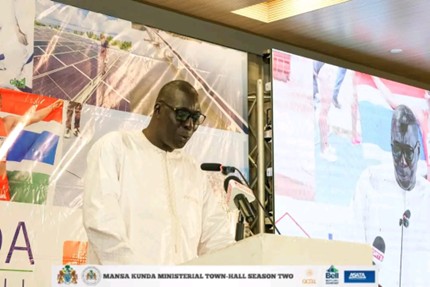
Speaking at the MansaKunda Ministerial Town Hall Season 2 held Friday at the Sir Dawda Kairaba Jawara International Conference Centre, tourism minister, Jobe and his team responded to questions from citizens, stressing that the government is pursuing a diversified tourism model that moves beyond the traditional “sun, sea and sand” approach.
Jobe stressed that peace and stability remain The Gambia’s biggest asset, attracting tourists who value the country’s reputation as one of the most peaceful destinations in the region
They emphasized that arts, culture, creative industries, and youth entrepreneurship are now central to the country’s tourism agenda, describing them as engines for economic growth, job creation, and community development.
The officials highlighted the impact of the Youth Empowerment Project (YEP) in supporting young entrepreneurs, promoting locally made products, and attracting independent travellers seeking authentic Gambian experiences. They also cited the Tourism Diversification and Resilience Project as a key driver in strengthening institutional capacity and expanding opportunities nationwide.
Reforms at the Gambia Tourism and Hospitality Institute (GTHI) were presented as a major achievement; modernising training programmes to include tour operations, event management, and short courses tailored to evolving market demands.
Minister Jobe disclosed that aggressive digital marketing campaigns have opened new tourism markets in Spain and Portugal, reducing reliance on seasonal winter visitors from northern Europe. He said government is working to position The Gambia as a year-round destination by promoting rural tourism, cultural festivals, and improved infrastructure to spread benefits across communities.
The ministry is also rehabilitating and beautifying tourist sites, including areas threatened by river erosion, with restoration already completed in some locations.
Despite progress, Minister Jobe and his team admitted that littering and poor waste management continue to damage The Gambia’s reputation as the “Smiling Coast of Africa.” They urged citizens to take greater responsibility for protecting the environment.
Concerns were also raised over criminal activities involving so-called “bumpsters” around beaches, where tourists have reportedly been attacked and robbed. Officials warned that such incidents undermine efforts to market The Gambia as a peaceful and secure destination and called for stronger collaboration among communities, security agencies, and tourism stakeholders to safeguard visitors.
On stalled projects, Minister Jobe acknowledged the failure of the eco-lodge initiative. He said the National Assembly has directed the ministry, working with Gamworks, to review similar ventures to ensure future investments deliver sustainable value.
Despite these setbacks, the minister reaffirmed government’s commitment to working with communities, development partners, and the private sector to address environmental degradation, improve security, and unlock the sector’s full potential.
“Tourism is a shared responsibility, and together we can transform this country,” he declared.