Canton Fair capitalizes on China’s new zero-tariff policy for 53 African nations
The 140th session of the China Import and Export Fair, globally known as the Canton Fair, has launched a promotional campaign at the African Union (AU) Headquarters in Addis Ababa. Marking a milestone in its 70-year history, this is the first time the trade exhibition has been promoted at a regional international organization. The event […]
 Black News

The 140th session of the China Import and Export Fair, globally known as the Canton Fair, has launched a promotional campaign at the African Union (AU) Headquarters in Addis Ababa. Marking a milestone in its 70-year history, this is the first time the trade exhibition has been promoted at a regional international organization. The event aligns with the African Union’s Agenda 2063 and seeks to deepen cooperation between Chinese innovation and Africa’s economic development.
The 140th session comes at a pivotal moment in China-Africa relations, as it takes advantage of China’s newly implemented zero-tariff policy for 53 African nations with diplomatic ties.
This tariff exemption, which took effect earlier this year, has injected fresh momentum into bilateral trade. By removing trade barriers, the policy turns the Canton Fair from a traditional buying platform into a gateway for African countries seeking to expand exports and access the large Chinese consumer market.
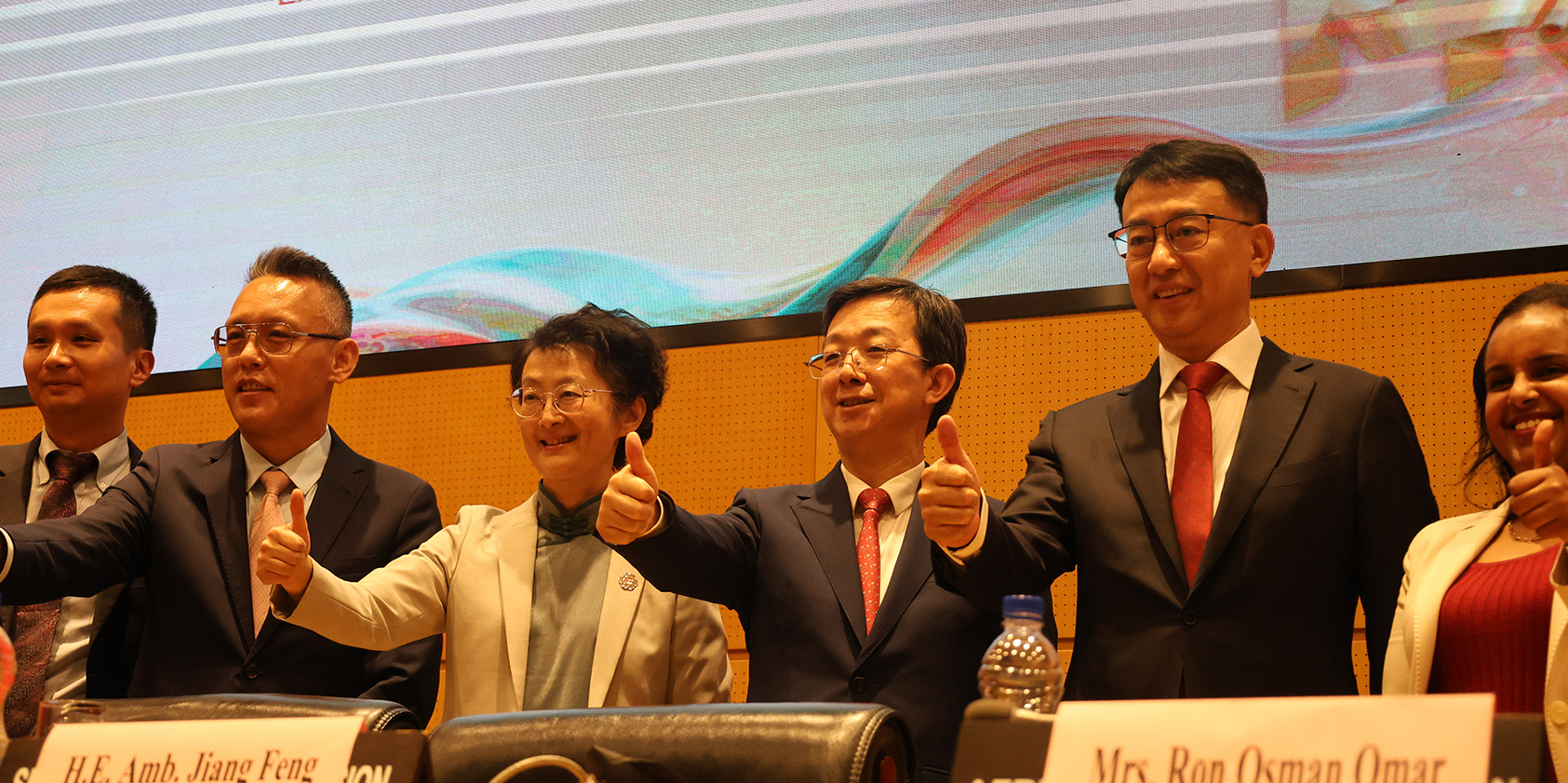
The promotion conference brought together diplomats, policymakers and industry leaders to outline a new blueprint for Global South cooperation. Co-hosted by the China Foreign Trade Centre, the AU Commission, the Mission of China to the African Union and the Embassy of China in Ethiopia, the gathering highlighted trade as a stabilizing force in an uncertain global economy. Speakers said the zero-tariff framework marks a shift from simple resource trade to deeper, higher-value industrial integration.
During the event, keynote speakers said the Canton Fair is well positioned to make the most of the tariff advantages by offering solutions tailored to Africa’s development needs. With more than 1.55 million square meters of exhibition space and over 30,000 participating enterprises, the October 2026 fair is designed to support Africa’s industrial modernization. By linking duty-free access with advanced Chinese technology, the fair aims to create a stronger ecosystem for trade and investment.
Addressing the conference, Zhu Yong, director general of the China Foreign Trade Centre, outlined the fair’s vision around three themes: working together, sharing green and smart opportunities, and creating new cooperation models. Over the past decade, the fair has attracted more than 204,000 African buyers, while nearly 20 percent of participating enterprises have moved toward an integrated trade and investment model, creating more than 200,000 local jobs across the continent.
The 140th session will be held in three phases to match Africa’s economic priorities. Phase 1 will focus on advanced manufacturing, including new energy vehicles, industrial automation, solar photovoltaics and service robots, offering equipment for Africa’s green transition. Phase 2 will feature home products and building materials to support urbanization, while Phase 3 will showcase smart medical care, textiles and agricultural modernization equipment.
To improve efficiency under the zero-tariff regime, the Canton Fair is also introducing digital upgrades for global buyers. Visitors will benefit from an improved mobile app with booth-level navigation, year-round remote badge issuance at airports and an AI system that can automatically generate meeting notes during business discussions.
Representing the private sector, Zhang Huarong, chairman of the Huajian Group and vice president of the China Chamber of Commerce to Africa, highlighted the success of the Huajian International Light Industry City in Ethiopia. Zhang presented a new “China Manufacturing · Ethiopia Global E-commerce Development” blueprint designed to combine traditional manufacturing with digital commerce.
The plan calls for importing raw materials under the low-tariff policy and locally manufacturing higher-value products such as solar photovoltaics and aluminum profiles for global markets. It also includes training multilingual cross-border live-streaming teams to take advantage of time-zone differences for 24-hour e-commerce activity, creating a two-way trade corridor between China and Africa.
Supporting this vision, Minister Counsellor Lyu Ruihao of the Mission of China to the AU, along with diplomatic envoys and representatives from the UN Economic Commission for Africa, reaffirmed their support for building a resilient China-Africa community with a shared future. By linking China’s 15th Five-Year Plan with the AU’s Agenda 2063, the 140th Canton Fair aims to turn tariff exemptions into long-term gains and help drive Africa’s industrial growth toward greater self-reliance.