
The Invisible Currency: Why Expectations Matter More Than Banknotes
Money is one of humanity’s greatest inventions, yet its value rests on something we cannot see. A banknote is little more than paper. A balance in a bank account is merely a collection of electronic records. Even gold derives much of its value not from its practical uses, but from what people collectively believe it […] The post The Invisible Currency: Why Expectations Matter More Than Banknotes appeared first on NewZimbabwe.com.
 Black News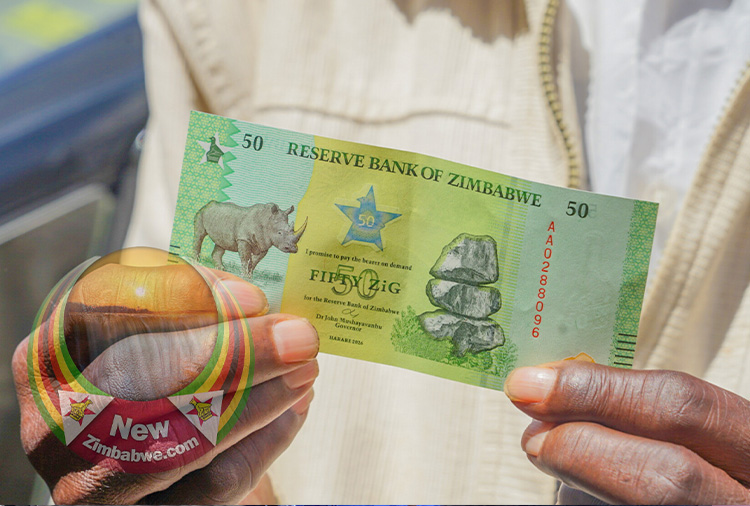
Money is one of humanity’s greatest inventions, yet its value rests on something we cannot see.
A banknote is little more than paper. A balance in a bank account is merely a collection of electronic records. Even gold derives much of its value not from its practical uses, but from what people collectively believe it is worth. What transforms these objects into money is not their physical form, but a shared expectation that someone else will accept them tomorrow.
Money is perhaps the only product whose value increases simply because other people believe in it.
That invisible force is trust.
Yet trust itself is often misunderstood. Economists sometimes speak about confidence as though it were an emotion. It is something much more precise. Trust is an economic mechanism through which millions of people continuously revise their expectations about the future.
Every day, households, businesses and investors quietly ask the same questions. Will prices remain stable? Will this policy still exist next year? Will supermarkets continue accepting this currency? Will importers continue pricing goods in it? Can I safely save in it for five years?
Every answer updates expectations. Every expectation shapes behaviour.
Trust is not an event. It is the cumulative memory of thousands of economic experiences.
This is why money is unlike almost any other economic asset. Its value depends not only on what we believe, but on what we believe everyone else believes. I accept a currency today because I expect you to accept it tomorrow. You accept it because you expect someone else to do the same.
Economists describe this as a coordination problem.
Confidence compounds. So does doubt.
Once expectations strengthen, a currency becomes easier to use, easier to save and increasingly attractive to hold. When expectations weaken, the opposite process can unfold with surprising speed.
Zimbabwe provides one of the clearest illustrations of this principle.
Over the past two decades, the country has moved from hyperinflation to dollarisation, then to bond notes, RTGS balances, the Zimbabwe dollar, widespread re-dollarisation and now ZiG. Each reform sought to solve a particular economic challenge. Yet beneath these policy changes lay a single, persistent question: would people willingly hold the currency beyond the moment they received it?
The true test of a currency is not whether people accept it today, but whether they willingly keep it until tomorrow.
This also explains why discussions about trust often fail to move the debate forward. Saying that people trust the US dollar more than ZiG tells us very little. Most Zimbabweans already know that. The more revealing question is why millions of individuals, acting independently, often reach the same conclusion without coordinating with one another.
The answer lies in expectations built through experience.
Expectations are history looking forward. People forecast tomorrow using yesterday’s evidence.
Citizens observe whether governments keep their promises, whether inflation remains under control, whether exchange rates are stable, whether businesses continue accepting the currency and whether tomorrow resembles yesterday. No single event determines confidence. Rather, countless small experiences accumulate until people gradually revise their expectations.
Trust is earned incrementally, but it can be weakened remarkably quickly.
Perhaps the most overlooked aspect of Zimbabwe’s monetary debate is that trust is not simply present or absent. It has a time horizon.
Many Zimbabweans are comfortable accepting ZiG to buy groceries, pay transport fares or settle everyday expenses. Far fewer are willing to hold their savings, negotiate long-term contracts or plan for retirement in the same currency.
The real question is therefore not whether people trust ZiG. It is how long they are prepared to trust it.
A currency that people willingly hold for an afternoon performs a very different economic function from one they are willing to hold for twenty years.
This distinction also sheds light on Zimbabwe’s stated ambition of returning to a fully domestic currency by 2030. The objective itself is neither unusual nor unreasonable. Every sovereign nation would prefer a currency that its own citizens willingly use, save and invest in.
The challenge is that confidence does not follow political calendars.
Governments can announce deadlines. They cannot announce belief.
Expectations change only when people repeatedly observe evidence that justifies changing their minds.
This is why de-dollarisation is ultimately less a monetary exercise than an institutional one. Once salaries, savings, imports, leases, accounting systems and business contracts become organised around the US dollar, reversing that process becomes progressively more difficult.
Currencies, like habits, become harder to replace the longer people live with them.
Every additional year of dollarisation strengthens the dollar’s network of users, making it more useful simply because so many others already rely upon it.
This raises another question that is frequently asked: why can’t Zimbabwe simply make ZiG an international currency?
The answer is that international currencies are not appointed by governments. They are chosen by markets.
Reserve currencies are earned, not elected.
No country declared the US dollar the world’s dominant currency. Businesses, banks and investors gradually adopted it because they had confidence in the size of the American economy, the depth of its financial markets, the rule of law and the credibility of its institutions. The same is true, in different ways, of the euro, the British pound and other widely used currencies.
Currencies become international only after foreigners voluntarily choose to trade, lend, borrow and save in them.
No currency becomes global before becoming trusted locally.
This does not mean Zimbabwe cannot build a strong domestic currency. Economic history shows that countries have restored monetary credibility after periods of instability. But they achieved this not through new banknotes alone. They reduced uncertainty. They strengthened institutions. They maintained fiscal discipline. Above all, they allowed citizens and investors to observe, year after year, that economic rules remained predictable.
Confidence was not announced.
It accumulated.
Zimbabwe’s monetary journey therefore offers a lesson that extends far beyond Zimbabwe itself. Every economy ultimately competes in the same market.
Not the foreign exchange market.
The market for expectations.
People do not choose between currencies.
They choose between promises.
Every banknote is ultimately a promise about the future. The strongest currencies are not those backed only by gold, foreign exchange reserves or legal tender laws. They are those whose promises have been honoured so consistently that citizens no longer need to think about trusting them.
They simply do.
Long before a country can expect the rest of the world to hold its currency, it must first persuade its own citizens to keep it in their wallets.
That is the invisible currency beneath every visible one.
The post The Invisible Currency: Why Expectations Matter More Than Banknotes appeared first on NewZimbabwe.com.