Marcus Miller and the Record That Reached Back
The centenary of Miles Davis’s birth has celebrated a man who never looked back. The bassist who built Tutu and Amandla shows what Davis was reaching for, where it came from, and how it carries on.The post Marcus Miller and the Record That Reached Back first appeared on Rolling Stone Africa.
 Black News
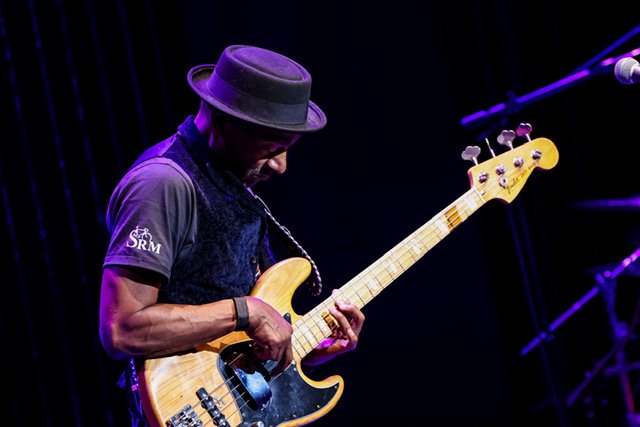
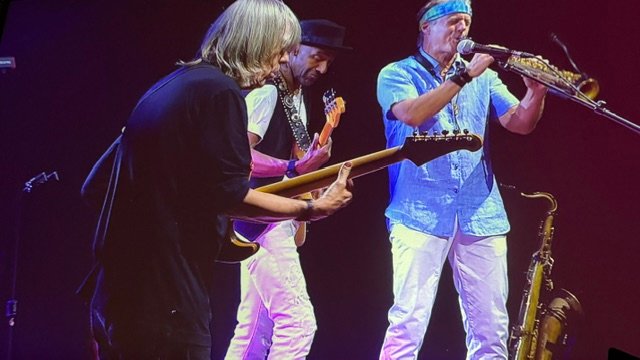
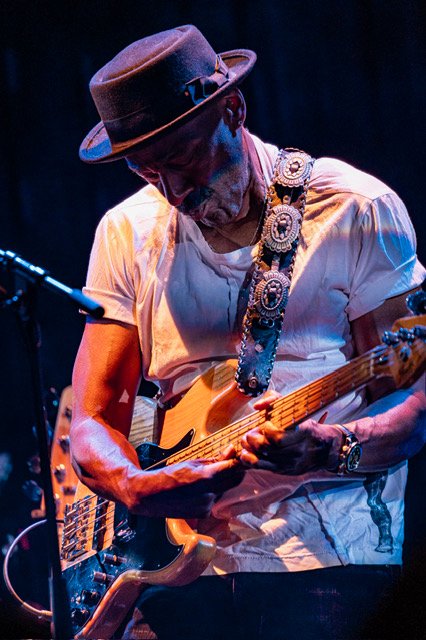
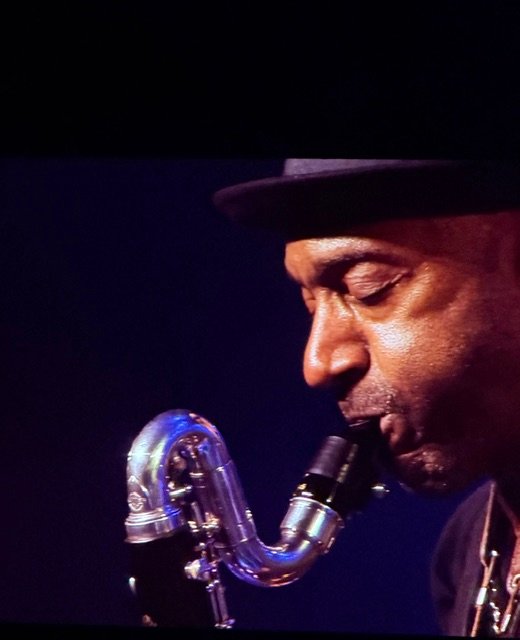
At the Hollywood Bowl in August, and again at SFJAZZ in San Francisco in September, Marcus Miller did something to “Tutu” that is not on the record. A few minutes into the tune he built for Miles Davis forty years ago, the band left it for a West African groove, improvised for about three minutes, and came back. Miller grew up in Jamaica, Queens, in New York, where African dance troupes rehearsed in the schoolyards, and the groove, he told me unprompted, is how he keeps Africa in the tune.
Tutu, the 1986 album Miller made for Davis, got Davis called a sellout. Stanley Crouch, the brilliantly combative American cultural critic and jazz historian, called him a surly one, and Robert Palmer, in the New York Times, heard only “fusion music for the hot tub.” Among musicians, Miller told me, “my experience was completely different.” Roberta Flack rang to say, “I can’t believe what I just heard.” Joe Zawinul sat him down at the North Sea festival in The Hague to talk about it. Joe Sample stopped him in the aisle of a 7-Eleven in Los Angeles to congratulate him. Al Jarreau told him he was writing lyrics to it and eventually wrote “Long Come Tutu.” “There are also college courses taught specifically about Tutu,” Miller said.
Davis took the critics in his stride. When one of his engineers said he did not like the album, Davis told Miller, “Get used to that. People got opinions, man.” Miller recalled at a listening party at the National Jazz Museum in Harlem that two months after the album came out, Davis stopped him at the door of his house. “Before we go inside, there’s something I need to say to you,” he said. “Thanks for bringing me back.” Miller took him to mean the argument as much as the record. Tutu had people fighting about Davis again, as Bitches Brew had in 1970, and he relished it.
This year marks the centenary of Davis’s birth, in Alton, Illinois, in May 1926. It has been kinder than the critics of 1986, but has made the same mistake in a gentler key. Its tributes have celebrated a man who never looked back. Davis encouraged the picture. “I have to change. It’s like a curse,” he said. Tutu, the record he kept playing to the end, says otherwise. The reinvention and the reaching back were the same act. He refused his own repertoire in favor of the inheritance beneath it.
Miller built Tutu in early 1986, playing most of it himself on the drum machines and synthesizers of the day, with the melody on a sample of a muted trumpet. When Davis heard the demo, he asked, “Who’s that playing the trumpet? Nat Adderley?” Davis later wrote in his autobiography, “With Marcus I don’t have to do much because he knows what I like.” What Miller was reaching for is on no sleeve. “Here’s Miles bringing his whole past with him but making it relevant for today,” he said. “That was what I envisioned.” He wanted the harmonies of Birth of the Cool and of Gil Evans, and “a New Orleans beat” that Davis had shown the band. When I asked Miller about it in San Francisco, he drummed it out on the table. Davis loved it, he said, because he could swing on it, and it was Davis who named it, a “New Orleans two-step.” “I’ve never heard this beat played in New Orleans,” Miller said. “But I knew what it felt like. I was 21, man. If he says it’s a New Orleans beat, then that’s what it is.”
Davis had his own line to the city. Raised in East St. Louis, on the Mississippi, he told the critic Leonard Feather in 1983 that the blues reached him partly through the riverboat bands from New Orleans. That beat did not begin in a studio, nor even in New Orleans. From the late eighteenth century, on Sunday afternoons at Congo Square, the enslaved gathered by the hundred to dance in rings to the drum. The drum was outlawed in South Carolina after the Stono Rebellion of 1739 but not in Catholic New Orleans, and the dance of the square fed the second-line beat still played at the city’s funerals. Many of those dancers had roots in West Central Africa, the Kongo and Angola coast, which supplied nearly half of all the Africans carried across the Atlantic. On Tutu, beneath the sheen of its era, that beat carries a muted trumpet. The beat came mainly from the Kongo and the Guinea Coast. The bent “blue” note came from the savannah, from Senegambia and the Islamic Sahel, where singers still place it where no European scale would. Even the banjo, the most American of instruments, descends from the akonting of the Jola people of the Casamance, in Senegambia.
Miller himself was not trying to put Africa into Tutu. “In ’86, I was focused on the situation in South Africa,” he said. “I wasn’t trying to create anything African in the song.” It was there anyway. Davis, by contrast, knew where he wanted the bent notes to come from. He had heard African women singers wailing a lament, Miller told me, “like a cry,” and he tried for years to get that sound into his trumpet. He got it, Miller said, in his solo on “Hannibal.”
Miller named the record for Desmond Tutu in the year Tutu became the first Black Archbishop of Cape Town. Miller’s paternal grandfather, a Trinidadian, had been an Anglican bishop, a formal man he never felt close to. “When I learned about Tutu,” he said, “that somehow humanized my grandfather.” Desmond Tutu wrote to Davis to thank him for his “contribution to the struggle.” Davis made Miller come to the house to read the letter, and refused him a copy.
Davis named the next album Amandla, the word for power chanted in the streets of Soweto. Around then he called Miller and told him to listen to Kassav’, a band from Guadeloupe he had just discovered. Miller answered with “Catémbe,” named for a small town in Mozambique that he had heard of from the family of Eduardo Mondlane, the founder of the country’s liberation movement. Davis himself had named that movement in “Calypso Frelimo” in 1974. Miller calls “Catémbe” “a diaspora ‘mash up’ of South Africa, West Africa and Caribbean sounds.” For Davis and Miller in those years, Africa was not nostalgia. It was news.
Asked why Davis was so keen to stay current, Miller went back to East St. Louis, where Billy Eckstine’s big band came through with Dizzy Gillespie and Charlie Parker in it, a trumpeter fell ill, and the teenage Davis was put on the stand without notice. The music was new, hip of the moment, Miller said, and Davis searched for that sense of the new for the rest of his life.
He reached back just as persistently. In 1959, as Kind of Blue was taking shape, Davis went to see Les Ballets Africains and heard thumb pianos. The company had been assembled by the Guinean Fodéba Keïta in Paris in 1952 from Mande griot song and djembe drumming. Davis told Miller years later that he had been struck that “the chord isn’t changing, but it’s beautiful.” That thought gave him “So What.” Until then, Miller said, “it was all about harmonic changes, basically European-based harmonic changes.” “So What” broke that rule. Built on two scales rather than a racing sequence of chords, it opened the way to modal jazz, and Kind of Blue became the best-selling jazz record ever made.
Guinea had been independent for less than a year when Les Ballets Africains toured America as its national company. For Black Americans in 1959, a free African nation sending its dancers on tour was a political fact as well as a musical one. The historian Ingrid Monson has shown how the civil rights years called jazz musicians toward Africa. Miller put it in terms of the country Davis grew up in. Black American culture, he said, “developed separately for so long. We had our own food. We had our own music. We had our own customs,” made by the only people who “didn’t come here because we wanted to.”
When Davis came back from six years of silence in 1981, the one old tune he brought back was Gershwin’s “My Man’s Gone Now.” Miller had just arrived, on the recommendation of the band’s saxophonist, Bill Evans. Davis asked for a reggae beat and sang a bit of rhythm to the drummer Al Foster, Foster turned it into a full beat, Miller jumped on it with a bass line, and only then did Davis play the melody. “I didn’t even know what this song was,” Miller told me. The band was inside the present before the past was let in.
Gil Evans, who had arranged that tune for Davis on Porgy and Bess in 1958, was soon in the studio himself. For Star People, recorded between August 1982 and February 1983, Evans (no relation to the saxophonist) took guitar solos improvised in run-throughs and wrote them out as themes for the horns. He is not named in the credits, but Davis told Feather, who wrote the sleeve notes, “Gil and I arranged things together,” and later singled out “Star on Cicely” as Evans’s arrangement. The bassist on it is Miller. Evans was no stranger to electric instruments. In 1974, his own orchestra had recorded an album of Jimi Hendrix’s music with guitars and synthesizers. For a few months Davis’s orchestrator of the 1950s and his orchestrator of the 1980s were at work on the same record. Three years later the sleeve of Tutu read “Musical Arrangements by Marcus Miller.”
Crouch never accepted the method, old music remade with the instruments of the day. When he told Miller his music was too temporary to last, Miller asked him about Herbie Hancock’s Head Hunters, the 1973 jazz-funk record purists once dismissed. That’s a classic, Crouch said. It wasn’t a classic when Herbie made it, Miller replied.
Miller thinks the dismissal ran deeper than taste. The African elements of the music, he said, “gave America its cultural calling card. It’s always devalued. It’s always harmony and melody.” He has never wanted to play music where an audience could not find the beat. “I’m not going to give up that much of my African heritage,” he said. Even inside Africa’s polyrhythms, “somebody’s always holding down the beat, because it’s connected to dance. It’s connected to the body.” “With a technological sound,” Miller said of his own records, “I can find the balance between the rhythm and harmony.”
The inheritance comes through households before it reaches bandstands. Terence Blanchard, as he told me in London in July, heard in the bridge of Art Blakey’s “Moanin’” the very rhythm his father had beaten out at home to correct a cousin playing James Brown. He had taken it in as a child, untaught, before he knew what it was. W. E. B. Du Bois described the same thing in 1903, a melody his family had carried for two hundred years, “knowing as little as our fathers what its words may mean, but knowing well the meaning of its music.” Miller put it in today’s terms. For most of his life, “all we could do is say, my folks came from South Carolina,” he told me. “Now you send in saliva tests,” and the continent answers with a people and a place.
Miller’s father practiced the piano every day in a Brooklyn apartment and on Sunday mornings before church, with the shaving cream still on his face, rehearsed conducting the choir, bringing in the altos and then the tenors with his hands. When Miller was a boy, a marching band came down a street in Bedford-Stuyvesant and he followed it for three blocks, hypnotized. He took up the bass in the early 1970s because it led every song he loved, from the Temptations’ “Papa Was a Rollin’ Stone” to Sly and the Family Stone, whose bassist was Larry Graham. He studied Graham, Stanley Clarke and Jaco Pastorius “note for note,” he said, along with James Jamerson’s Motown lines and the bassists of Davis’s own earlier bands, Paul Chambers and Ron Carter.
He has been following that marching band ever since, into the beat under Tutu and, thirty years later, into Afrodeezia, which began in Paris, where he had stayed on after a tour with Herbie Hancock to see Hancock named a UNESCO Artist for Peace. He played “Gorée” there the next year, and UNESCO’s director asked him to be the spokesman for its Slave Route project and to help “transmit the story to the next generation.” He planned the album as a journey, from North Africa down to West Africa, across to the Caribbean and South America, to New Orleans and up to Detroit. Detroit is there in “Papa Was a Rollin’ Stone,” played with Wah Wah Watson, a guitarist on the Temptations’ original. West Africa came in through Alune Wade, a Senegalese bassist in Paris, who was not originally meant to play on the album but only to bring in the traditional players, his friends on balafon, kora, ngoni and percussion. On “Hylife,” a nod to West African highlife, Wade suggested a clave, then two bells, and “it becomes like Afrobeat,” he told me recently. Miller, whom he calls “extremely humble and extremely smart,” had him work with the musicians and then sing. Because the album was a journey, Wade sang place names, Ouagadougou, Calabar and Colobane, a district of Dakar. He also wrote the Wolof words for “Preacher’s Kid,” Miller’s song for his father, a church organist who, Wade said, “dedicated all his life to God.”
Ahead of its release, Miller played with Gnawa musicians at their festival in Essaouira, in Morocco, where part of the album was recorded. Their guembri is both bass and drum. Randy Weston had found the same thing in 1972. Gnawa music was passed down unwritten, he wrote in the notes to Blue Moses, and the guembri “sounds somewhat like a stringed bass.” Their ancestors, the historian Chouki El Hamel has shown, were West Africans from lands between Senegal and Chad, Mali and Nigeria, carried across the Sahara and sold in Moroccan markets, a second diaspora made by the desert rather than the ocean. On the album Miller plays the guembri himself. He recognized at once that the bass played as rhythm, which he had dated to the funk of the mid-1960s, was centuries old. He also plays a kalimba, a thumb piano of the kind Davis had heard in 1959. He did not want a record “that sounded like Olatunji,” he said, but one made with the players of today, and when he goes to hear them now, “it’s like, oh, you’re playing my licks too. This is not a one way street. It’s going back and forth.” It is not because of the melanin, he once told a Berklee audience. It is culture.
The centenary’s concerts carried the same two-way traffic. In July at Ronnie Scott’s in London, Kenny Garrett, Davis’s last saxophonist, played “For Art’s Sake,” his tribute to Art Blakey and to Tony Allen, the Nigerian drummer who built Afrobeat with Fela Kuti, music that is, he has said, “about remembering the spirit of the sounds of our ancestors.” Allen’s Afrobeat is not jazz exported to Lagos but the Yoruba homeland speaking back, through a music that had crossed the Atlantic and returned. In August, Herbie Hancock, who had brought the kora back into jazz in 1987 with the Gambian griot Foday Musa Suso, led a tribute to Davis at the Hollywood Bowl, where Davis had played his last concert in 1991. At SFJAZZ in September, Miller played “Hannibal,” the longest piece at that last concert, and his percussionist Mino Cinelu answered on the udu, a clay drum of the Igbo women of Nigeria, and on the cajón, the box drum that enslaved Africans in Peru made from a packing crate. One had crossed from West Africa unchanged. The other had been made in the Americas from what was to hand.
At the Vogel in Red Bank, New Jersey, on 25 October, Miller’s set followed the same map as our conversations. He played “Catémbe” and “Maputo,” which he wrote in 1986, the year he named Tutu, for Mozambique’s capital. He dedicated “Sublimity (Bunny’s Dream)” to his mother-in-law, Mary, who grew up in Philadelphia but was born in Alice, South Africa, where her father, an African American missionary, taught young men. A photograph on that campus, Miller said, shows him with his students, a seventeen-year-old Nelson Mandela among them. When Miller asked his band for a tune for her, he told the audience, he gave them “an AI prompt.” It needed some South Africa in it.
He told the audience, too, how he had come to Davis. Roberta Flack, who hired Miller and Luther Vandross as young session musicians and then fired them on the same day, told Miller, “I see you playing with legends like Miles Davis.” Davis, Miller answered, had not played a note in five years. “We don’t even know if he’s alive.” Within six months Davis called, and the road to Tutu began.
He ended the night with “Tutu,” and inside it the West African groove. He first played it that way in France after the COVID pandemic, for an audience with many Africans in it, and keeps it because “connecting the dots, especially for my audience in America, is really important.” A record, he told me, is “the infant version of the song. You gotta do live versions to show people the adult version.”
This year also brought the first serious study of Davis’s last decade, Rethinking Miles Davis, edited by Roger Fagge, Nicolas Pillai and Tim Wall. It maps the decade through the industry, the technology, the market and the image, and is intelligent and long overdue. It does not ask where the deepest sound came from, the question this article has been asking.
Davis’s genius lay in reaching back and staying current at once, and in finding, in Gil Evans and then in Marcus Miller, the collaborators who could build the past with the tools of the present. Chinua Achebe wrote that the world is like a mask dancing, and that to see it well you do not stand in one place. Davis never stood in one place. That is how he saw where the music came from, and the labor of each generation is what keeps it in view.
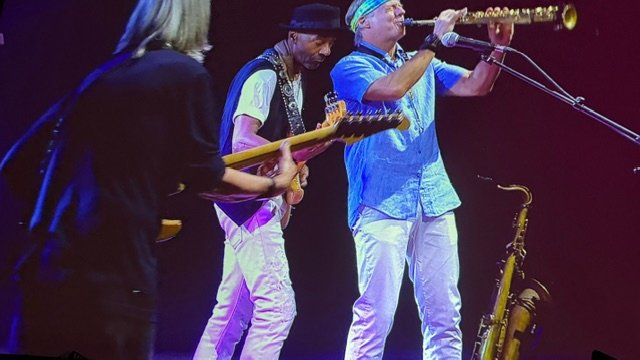
Kofi Adjepong-Boateng is a historian at the University of Cambridge and a Research Affiliate in history at MIT. He is writing a book on the African sources of the music of Miles Davis.
The post Marcus Miller and the Record That Reached Back first appeared on Rolling Stone Africa.