From Africa to Brazil, US War Department unlocks $1.55 billion funding package as rare earth race with China escalates
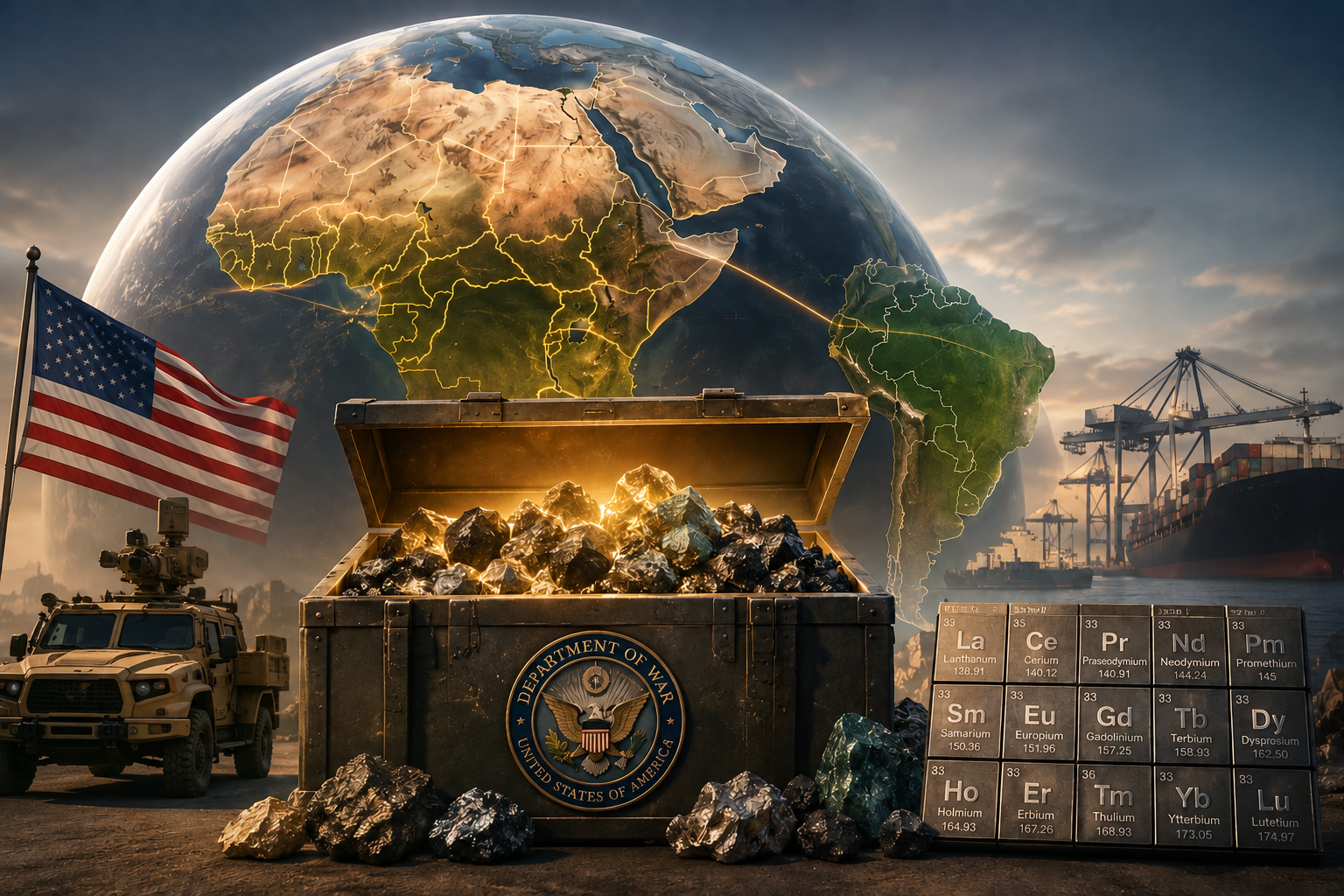
The United States has opened a $1.55 billion rare-earth financing package in Brazil, days after committing $62.8 million to projects across four African countries, as Washington accelerates efforts to challenge China’s dominance of the strategic minerals supply chain.
 Black News


The United States has opened a $1.55 billion rare-earth financing package in Brazil, days after committing $62.8 million to projects across four African countries, as Washington accelerates efforts to challenge China’s dominance of the strategic minerals supply chain.
- The US has launched a $1.55 billion rare-earth financing package in Brazil and recently committed $62.8 million to projects in four African countries.
- The Brazilian package includes a $750 million government investment, a $300 million Defense Logistics Agency purchase commitment, and a $500 million bank commitment.
- Africa's funding focuses on early-stage projects to attract private capital, while Brazil's operating mine receives larger backing because it already produces key rare earths.
- The US is racing to secure supplies of critical minerals like dysprosium, terbium, neodymium, and praseodymium outside Chinese control.
The latest commitment, announced by the US Department of War on August 24, includes a $750 million US government investment to support an offtake agreement for rare-earth materials from Serra Verde’s Pela Ema project in central Brazil.
The broader financing structure also includes a $300 million purchase commitment from the US Defense Logistics Agency and a $500 million commitment from a major bank.
The announcement came just five days after a Business Insider Africa report revealed that the U.S. International Development Finance Corporation (DFC) had committed $62.8 million to rare-earth projects in Malawi, Angola, Madagascar and South Africa.
DON'T MISS THIS: 4 African countries secure over $62.8 million from US for rare-earth projects as private investors avoid China-dominated market
The timing highlights the widening geographical scope of Washington’s push to secure alternative supplies as China maintains its dominance over global rare-earth mining and processing.
Africa first, Brazil gets the bigger US bet
Washington’s African strategy has focused on helping projects reach a stage where they can attract private capital.
Of the $62.8 million committed across Africa, about $50 million is going to South Africa’s Phalaborwa project, backed by mining investor TechMet. The remaining funding covers projects in Malawi, Angola and Madagascar.
None of the four African projects had reached production when the DFC disclosed the commitments, with US officials telling Reuters that private investors remained reluctant to finance the sector because of the risks involved and concerns over Chinese influence on rare-earth prices.
Brazil, by contrast, already has an operating rare-earth mine.
Serra Verde’s Pela Ema project is currently the only commercial producer of all four magnetic rare earths outside Asia, according to USA Rare Earth, which is acquiring Serra Verde. The company says more than $1 billion has already been invested in the Brazilian project.
DON'T MISS THIS: America wants Africa’s rare earths. Can the continent turn Trump’s $3 billion push into jobs, factories and billions in investment?
The US has also previously backed Serra Verde with a $565 million financing agreement from the DFC to optimise and expand the Pela Ema project. The new $1.55 billion structure therefore adds substantially more US-backed financing to an asset already positioned to supply Western markets.
Why Washington is racing China
Rare earths are essential for the permanent magnets used in fighter jets, nuclear submarines, missiles, drones, satellites, electric vehicles, energy infrastructure and electronics.
The Department of War said the Brazil deal would secure supplies of dysprosium, terbium, neodymium and praseodymium, four of the most strategically important rare earth elements for defence and industrial applications.
The move reflects Washington’s growing urgency to establish supply chains that can operate without Chinese-controlled mining, processing and refining.
DON'T MISS THIS: Africa braces for impact as US and China turn to deep-ocean mining for critical minerals worth up to $16 trillion
China remains the dominant force across the global rare-earth supply chain, while Beijing’s export restrictions have increased pressure on the US and its allies to find alternative sources.
Brazil is particularly attractive because it has the world’s second-largest rare-earth reserves after China, while its production remains far below its geological potential. The country is consequently attracting increasing foreign investment as the US, Australia and other countries seek to diversify supply away from China.
For Africa, the US push presents both an opportunity and a challenge.
DON'T MISS THIS: Trump’s $3 billion minerals push puts Madagascar’s rare earths on the frontline of U.S.-China rivalry
The continent has significant deposits of rare earths and other critical minerals, but many projects remain at development stages and struggle to attract private financing.
The latest US funding shows Washington is willing to use public capital to de-risk African projects, while the much larger Brazil package demonstrates the scale of funding it can deploy when an established producing asset is available.
The result is an increasingly global rare-earth contest in which Africa is receiving early-stage US backing while Brazil is securing a much larger bet, all as Washington seeks to build a supply chain capable of reducing its dependence on China.