Eskom 2.0: Ramokgopa draws the line on bailouts and double-digit hikes
Pretoria – Electricity and Energy Minister Kgosientsho Ramokgopa has ruled out further government bailouts for Eskom and said South Africans should not expect sustained double-digit electricity tariff increases as the utility enters what he calls its “Eskom 2.0” era. Ramokgopa made the announcement in Pretoria on Friday while outlining government’s expectations for Eskom as the utility moves beyond the immediate... Read more → The post Eskom 2.0: Ramokgopa draws the line on bailouts and double-digit hikes appeared first on African Insider.
 Black News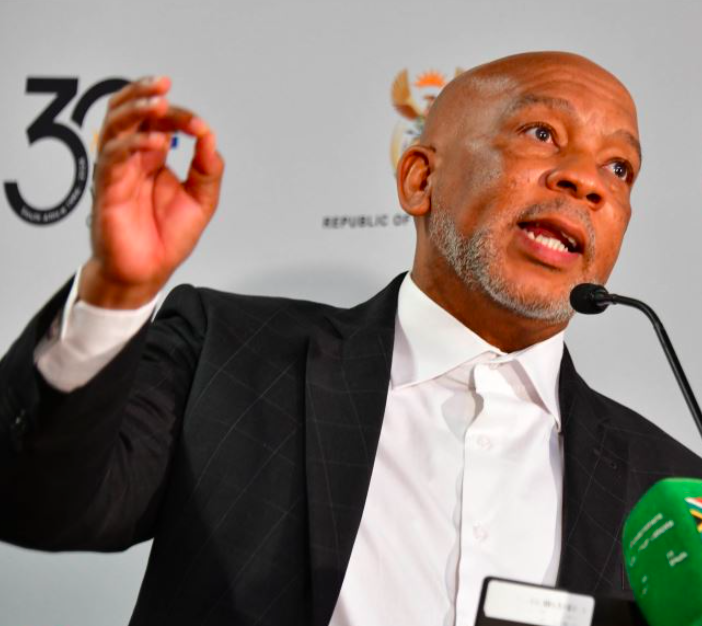
Pretoria – Electricity and Energy Minister Kgosientsho Ramokgopa has ruled out further government bailouts for Eskom and said South Africans should not expect sustained double-digit electricity tariff increases as the utility enters what he calls its “Eskom 2.0” era.
Ramokgopa made the announcement in Pretoria on Friday while outlining government’s expectations for Eskom as the utility moves beyond the immediate crisis of load shedding towards financial reform, greater competition and an expanded electricity grid.
“The shareholder expects a financially sustainable Eskom that can fulfil its obligations without treating repeated fiscal support or sustained double-digit tariff increases as its business model,” Ramokgopa said.
“So there will not be any bailouts from government. There will not be double-digit electricity tariff increases in this country. It will not be happening. And for that Eskom must prepare itself.”
HAPPENING NOW | Electricity Minister Kgosientsho Ramokgopa is briefing the media on Eskom’s leadership, governance and future direction, as changes at board level loom. pic.twitter.com/BiM9LdpM7G
— SABC News (@SABCNews) September 25, 2026
The minister said the focus must now shift towards reducing the cost of electricity while ensuring Eskom can remain financially sustainable without transferring its inefficiencies to consumers.
Eskom has reported its second consecutive annual profit for the financial year ended March 2026, following improvements in operational performance and cost controls. Government has said the utility’s improved performance provides an opportunity to move from crisis management to longer-term structural reform.
Ramokgopa said Eskom would have to tackle electricity theft, inaccurate metering, billing problems, technical losses and weak revenue collection if consumers were to benefit from lower electricity costs.
“Electricity is exceptionally expensive so we must go beyond the talk, we must address the issue of the cost of electricity,” he said.
The minister said Eskom’s board would be expected to develop a strategy focused on improving plant performance, procurement, maintenance, project delivery and workforce productivity.
“Our intention of lowering the cost of electricity will not materialise, will not eventuate, for as long as Eskom is unable to address these inefficiencies,” Ramokgopa said.
Ramokgopa also said Eskom must adapt to a more competitive electricity market as independent power producers increase their role in South Africa’s energy system.
He said the loss of market share to private generators should be viewed as part of the sector’s transition rather than a threat to Eskom.
Electricity and Energy Minister Kgosientsho Ramokgopa says Eskom is entering a new phase, which government has dubbed “Eskom 2.0”.
Ramokgopa says Eskom must move away from doing almost everything across the electricity value chain, as private producers increasingly enter the… pic.twitter.com/wy0gLAn8bn
— Kaya News (@KayaNews) September 25, 2026
“That is to be welcomed,” he said.
“We know the perils of a monopoly. A monopoly that is complacent, a monopoly that is not efficient, is going to drag the country with us.”
Government wants Eskom to use available generation capacity to increase electricity exports into the Southern African region while also supporting new domestic demand, including from data centres.
A major part of the new strategy will be expanding South Africa’s electricity transmission network.
Ramokgopa said government wants about 14,500 kilometres of new transmission lines built at an estimated cost of R440 billion.
He said the programme should also support local manufacturing and job creation instead of relying heavily on imported equipment.
“We have every intention of industrialising on the back of that build programme. We are not going to export jobs,” Ramokgopa said.
“We are not going to allow dumping of these components in the country.”
According to The Witness the transmission expansion is expected to become increasingly important as more private generation is connected to the national grid and Eskom’s role changes within a more liberalised electricity market.
[WATCH] Electricity and Energy Minister Kgosientsho Ramokgopa announces that Mteto Nyati’s term as Eskom Board chairperson has been extended by a further three years, saying: “If it ain’t broken, why fix it?” #Newzroom405 pic.twitter.com/VKMDvjJa5X
— Newzroom Afrika (@Newzroom405) September 25, 2026
The “Eskom 2.0” announcement came alongside government’s decision to retain Mteto Nyati as Eskom board chairperson for another three years.
Nyati, who was appointed chair in 2023, will continue in the position as Eskom moves into the next phase of its turnaround. Reuters reported that Eskom had gone more than 490 days without load shedding as of Friday.
TechCentral reported that the board is expected to develop a roadmap covering Eskom’s three-, five- and 10-year priorities, including its public obligations, future generation mix and investment requirements.
Ramokgopa said the improved performance of the power system should now be used as a foundation for a more sustainable electricity sector.
The challenge, he said, is to ensure Eskom’s improved operational performance translates into lower costs, stronger finances and a more competitive electricity market.
Follow African Insider on Facebook, X and Instagram
Picture: X/@SAgovnews
For more African news, visit Africaninsider.com
Compiled by Glaan Sibuyi
The post Eskom 2.0: Ramokgopa draws the line on bailouts and double-digit hikes appeared first on African Insider.