Elon Musk’s Five-Year AI Warning: The Way We Make Money May Never Be the Same Again????
Elon Musk’s Five-Year AI Warning: The Way We Make Money May Never Be the Same Again???? By Moses Chibuike Ezechukwu Artificial intelligence is moving from being a useful workplace tool to becoming a powerful economic force. Elon Musk’s latest predictions about AI, robots and the future of work raise an uncomfortable question: what happens when […]
 Black News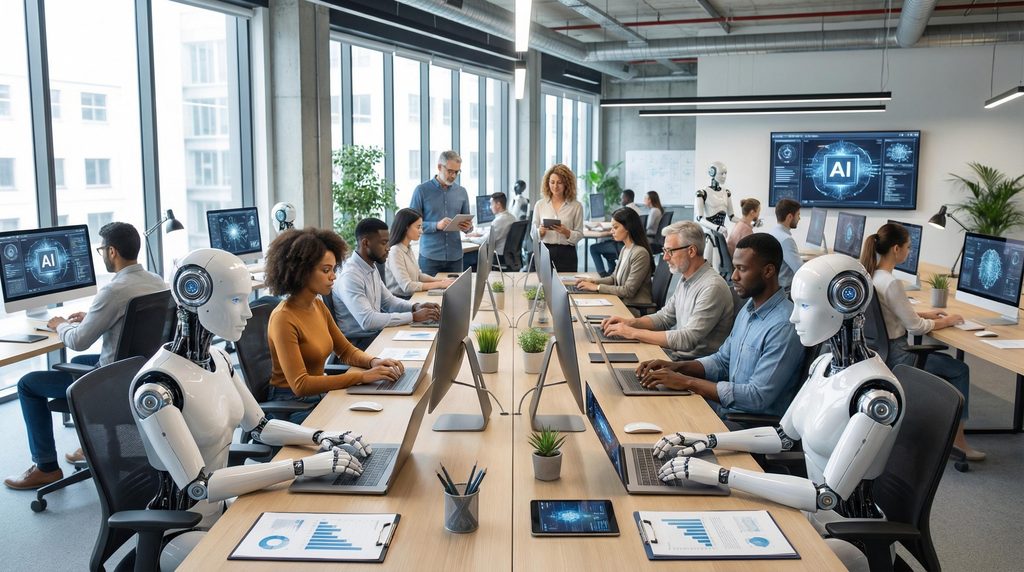
Elon Musk’s Five-Year AI Warning: The Way We Make Money May Never Be the Same Again
By Moses Chibuike Ezechukwu
Artificial intelligence is moving from being a useful workplace tool to becoming a powerful economic force. Elon Musk’s latest predictions about AI, robots and the future of work raise an uncomfortable question: what happens when technology can perform more of the work people currently depend on for income?
The Five-Year Warning Everyone Is Talking About
There is a statement circulating widely online claiming that Elon Musk has warned people they have “at most five years left to make money selling their work” because artificial intelligence will soon handle most tasks.
That wording, however, needs some clarification.
Musk did not make that exact statement in the Forbes interview that has been circulating. What he actually said was arguably just as significant. During a May 2026 interview, Musk predicted that within five years, digital intelligence could exceed the combined intelligence of humanity. He also predicted that there could be at least 100 million humanoid robots, potentially as many as one billion, within the same period.
He went even further, predicting that the global economy could become roughly twice its current size within five to seven years because of an extraordinary acceleration in economic output.
So while the viral “five years left to work” quote is not an accurate direct quotation, the underlying warning is real: Musk believes the next five years could bring an extraordinary transformation in the relationship between humans, machines and work.
And that is something ordinary workers cannot afford to ignore.
AI Is Already Changing the Workplace
The biggest mistake people can make is thinking that AI disruption is something that will happen in 2030 or 2040.
It is already happening.
Companies are increasingly using AI to write documents, analyse information, answer customer questions, generate images and videos, write computer code, conduct research, create presentations and automate repetitive business processes.
Microsoft’s 2025 Work Trend Index found that 46% of business leaders surveyed said their organisations were already using AI agents to fully automate certain workflows or business processes. The same research found that 78% of leaders were considering hiring for new AI-related roles.
That tells us something important.
The future may not simply be about humans versus AI.
It may be about humans who know how to use AI versus humans who do not.
The Old Equation Is Being Challenged
For generations, the basic economic arrangement was straightforward.
You had a skill. You exchanged your time and that skill for money.
A teacher taught for several hours and received a salary. A designer spent days creating a design. A customer-service representative answered customers throughout the day. A writer spent hours researching and producing an article.
But AI changes the economics of time.
A machine does not need lunch breaks. It does not sleep. It can potentially work around the clock, process enormous amounts of information and perform the same task thousands of times without becoming tired.
This is why businesses are interested.
If one employee using AI can accomplish what previously required several people, companies will naturally begin reconsidering how much labour they need for certain tasks.
That does not mean every human job disappears.
But it does mean that the value of certain types of human labour can change dramatically.
The Numbers Do Not Point to “No More Jobs”
This is where the conversation needs balance.
It is tempting to read Musk’s prediction and conclude that humans will soon become economically useless. Current research does not support such a simple conclusion.
The International Labour Organization estimates that around one in four workers globally are in occupations with some exposure to generative AI. But the organisation also says most jobs are more likely to be transformed than completely eliminated because human involvement remains necessary for many tasks.
The World Economic Forum’s Future of Jobs Report 2025 similarly paints a more complicated picture. It projects that 170 million jobs could be created globally by 2030 while 92 million could be displaced, producing a net increase of 78 million jobs.
That is not the end of work.
It is the transformation of work.
And that difference matters.
The Real Danger Is Staying the Same
The greatest danger may not be that AI takes everyone’s job.
The greater danger could be that people refuse to change while the value of their existing skills declines.
Imagine two employees doing similar work.
Employee A refuses to use AI and continues completing everything manually.
Employee B learns how to use AI to research faster, communicate better, analyse information, automate repetitive tasks and serve more customers.
If both employees remain equally skilled in every other area, who do you think becomes more valuable to an employer?
That is the question workers should be asking.
The answer is uncomfortable but obvious.
What This Means for Nigeria
For Nigeria, this transformation could be both a threat and an enormous opportunity.
Nigeria has one of the world’s largest young populations and a growing pool of people working in technology, customer service, digital marketing, software development, design and other remote services.
The Nigerian government itself recognises that AI will play an important role in the country’s economic future.
Nigeria’s National Artificial Intelligence Strategy identifies AI as a tool for economic growth, productivity, innovation and human development. The government has also established programmes aimed at building technical talent and positioning Nigeria as a participant in the global digital economy.
Nigeria’s 3 Million Technical Talent programme, for example, was created to develop technical skills and position Nigeria as a global talent exporter.
That ambition becomes even more important in the age of AI.
Nigeria should not only ask, “Which jobs will AI destroy?”
We should also ask:
Which new industries can Nigerians build with AI?
The People Who Adapt Could Have the Biggest Advantage
Every technological revolution creates winners and losers.
The internet destroyed some business models but created millions of new opportunities.
Smartphones eliminated some traditional jobs while creating app developers, social media managers, digital creators, online businesses and countless other professions.
AI will probably follow a similar pattern, although potentially at a much faster speed.
The opportunity is not simply to learn how to “use ChatGPT.”
It is to understand how AI can multiply your existing ability.
A graphic designer can become an AI-assisted creative director.
A customer-service worker can become an AI-enabled customer-experience specialist.
A software developer can use AI to build products faster.
A journalist can use AI for research and data analysis while maintaining human judgment and editorial responsibility.
A small business owner can use AI for marketing, customer support, accounting assistance and business research without hiring a large team.
The people who understand this shift early could have a significant advantage.
Human Skills May Become More Valuable, Not Less
There is another side to the AI revolution that deserves attention.
When machines become better at routine cognitive tasks, distinctly human qualities may become more valuable.
Leadership.
Judgment.
Empathy.
Trust.
Creativity.
Relationship-building.
Critical thinking.
The ability to understand people.
These qualities are difficult to reduce to simple instructions.
The ILO’s findings are particularly important here because they suggest that AI exposure does not automatically mean complete job replacement. In many occupations, AI is more likely to change what workers do rather than remove the worker entirely.
That means the future worker may not be someone who competes against AI.
The future worker may be someone who directs, supervises, questions and improves what AI produces.
The Five-Year Countdown Should Be a Motivation, Not a Panic Button
Perhaps the biggest lesson from Musk’s prediction is not that everyone should panic about losing their jobs.
It is that nobody should assume the economic rules of today will remain unchanged forever.
The five-year timeline may prove too aggressive. Musk has made many ambitious predictions before, and technological forecasts are notoriously difficult.
But the direction of travel is difficult to ignore.
AI is becoming more capable.
Companies are investing heavily in automation.
AI agents are beginning to perform increasingly complex workflows.
Robotics is advancing.
And workers everywhere are being forced to reconsider what skills will remain valuable.
The smart response is not fear.
It is preparation.
Learn the tools.
Understand the technology.
Build something.
Develop skills that complement AI.
Create assets instead of relying exclusively on hours worked.
Build relationships.
Learn how to solve problems that matter.
Most importantly, do not wait until AI has already transformed your industry before deciding to understand it.
The future of work is not necessarily a future without humans.
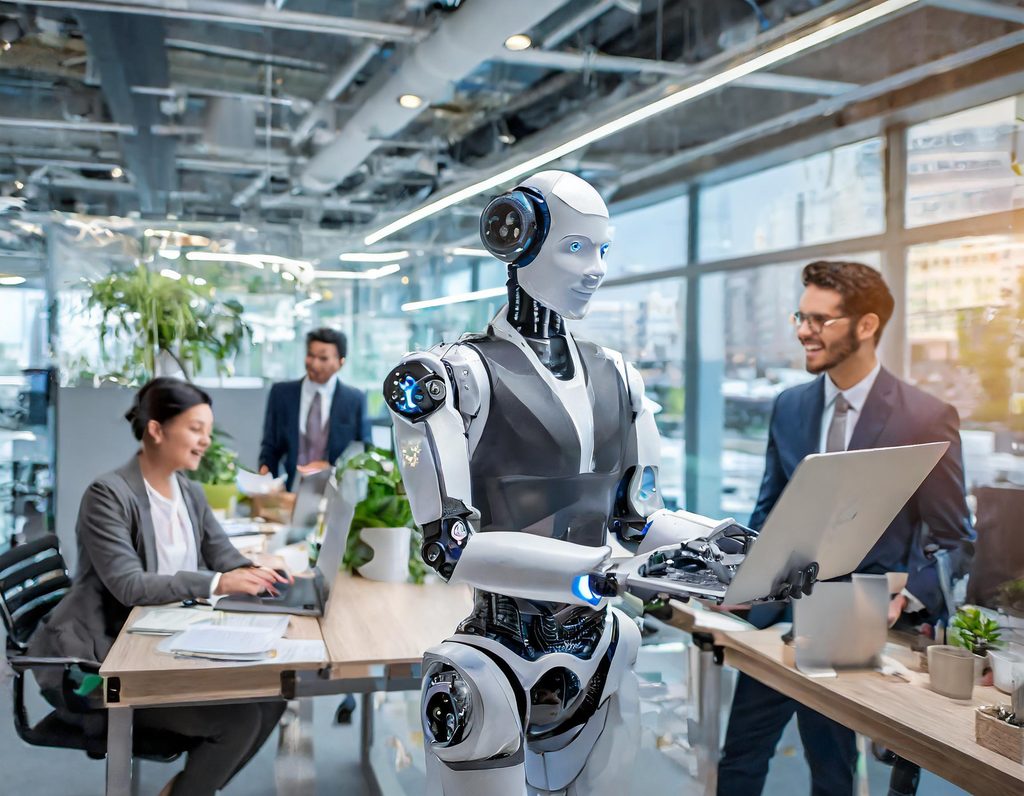
It may instead be a future where one capable person, equipped with powerful AI systems, can accomplish what once required an entire team.
That could be frightening.
But it could also be the greatest opportunity of our generation.
The question is no longer whether AI is coming.
The question is whether you will be ready when it arrives.
Nigeria has huge youth talent in tech, customer service, and remote work. What’s one NEW AI-powered industry or service you think Nigerians should build and export now?
Are you the Employee A who is still doing everything manually, or Employee B who is learning to use AI to 10x your output? What is ONE task in your job or business you will start automating with AI this week?*
#NigeriaMagazine
#ElonMusk #AIWarning #FiveYearWarning #FutureOfWork #ArtificialIntelligence
#AIandJobs #AIRevolution #WorkTrend #Automation #DigitalIntelligence #HumanoidRobots #FutureOfMoney
#Nigeria #NigeriaMagazine #NigeriaTech #3MTT #NationalAIStrategy #AfricanYouth #TechInNigeria #DigitalEconomy
#AdaptOrBeLeftBehind #LearnAI #AIforGood #Productivity #Innovation #TechSkills #CreatorEconomy