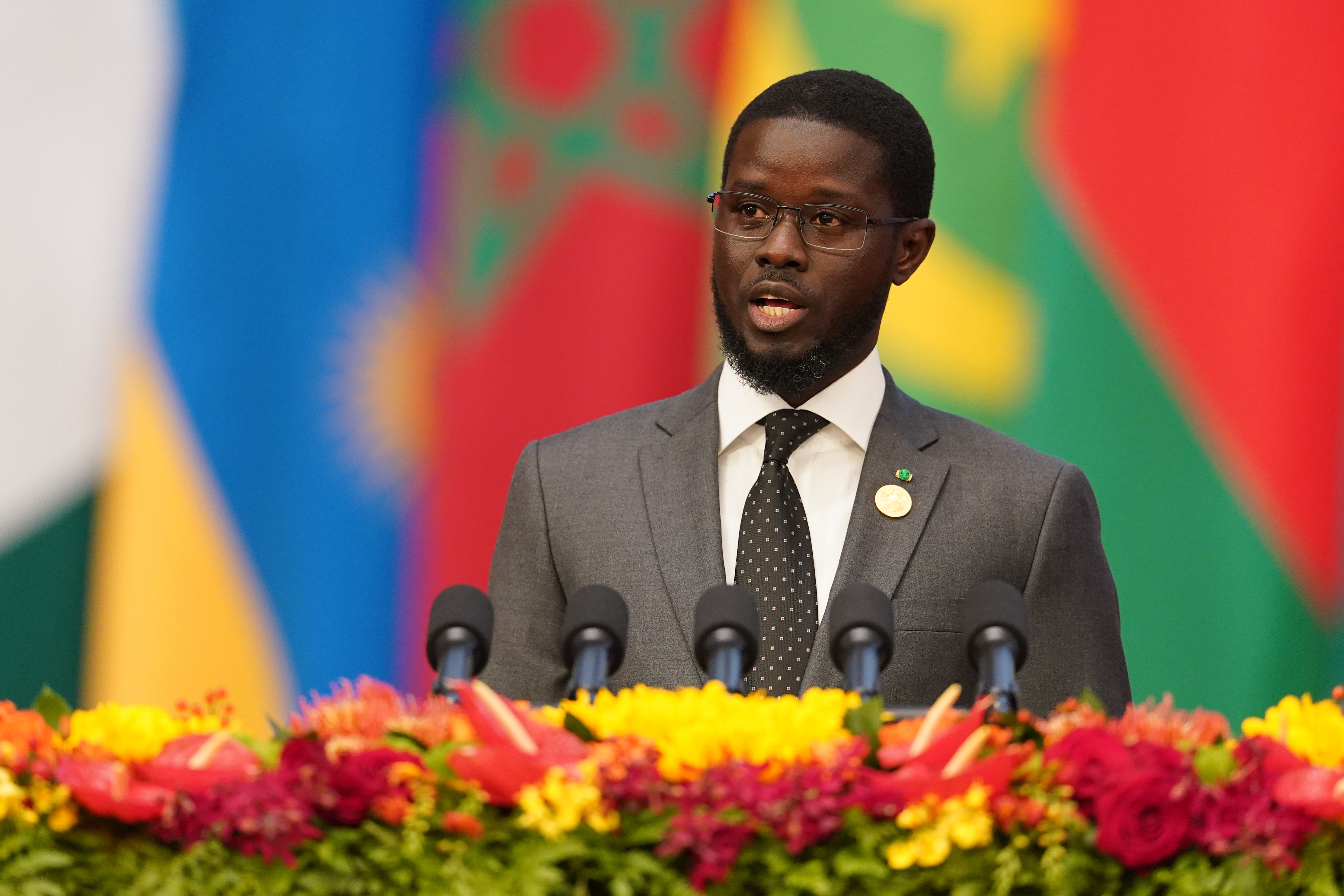
Japan sources 70% of its cocoa from Ghana as both countries deepen value addition push
Ghana is deepening its cocoa partnership with Japan as the West African country pushes to process at least half of its cocoa locally and capture more value from one of its most important exports.
 Black News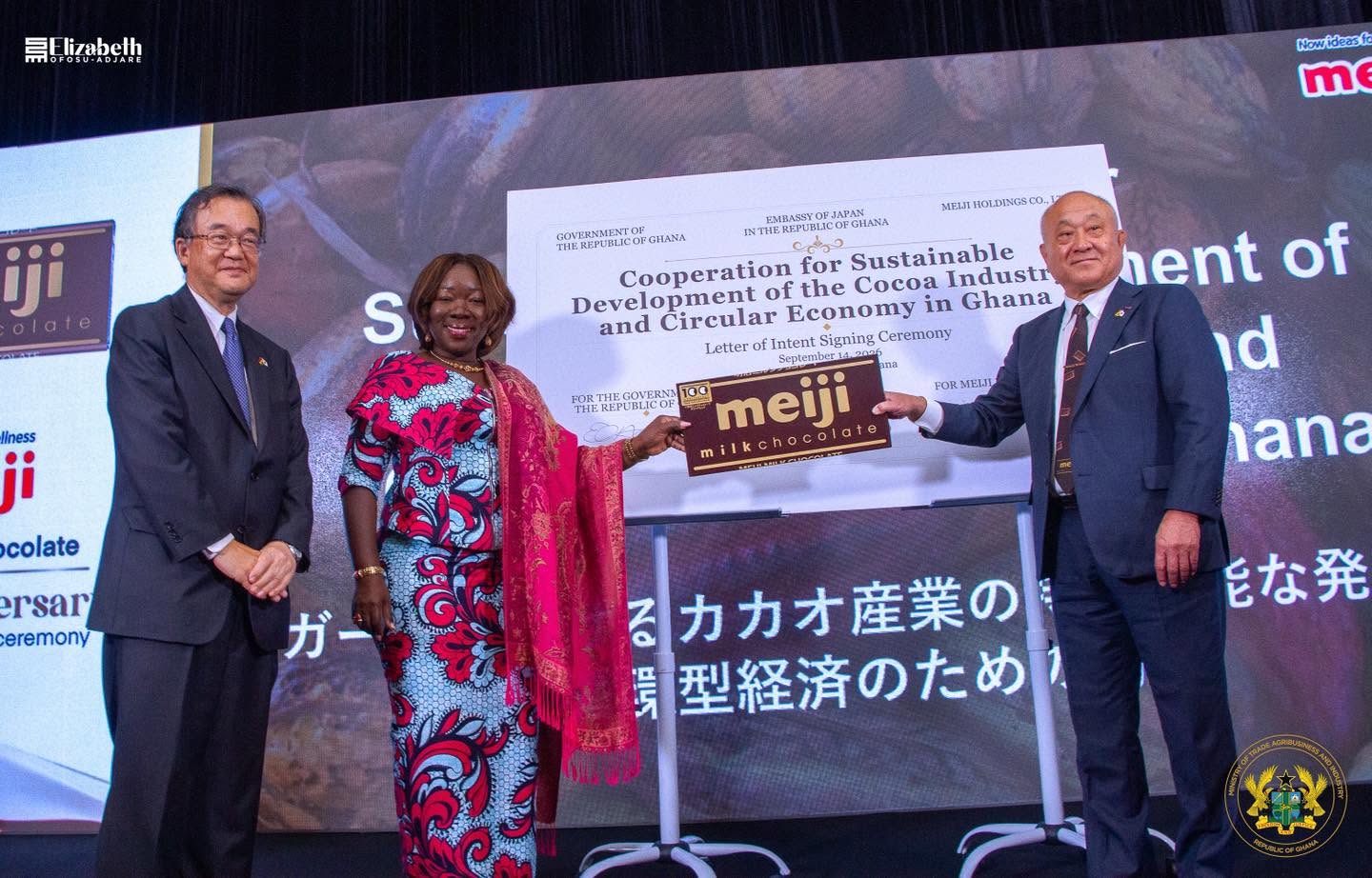

Ghana is deepening its cocoa partnership with Japan as the West African country pushes to process at least half of its cocoa locally and capture more value from one of its most important exports.
- Ghana is strengthening its cocoa partnership with Japan and Meiji Holdings.
- The country wants at least 50% of its cocoa processed locally.
- The agreement focuses on sustainable production and cocoa waste reuse.
- Ghana aims to create more jobs and retain more value from cocoa exports.
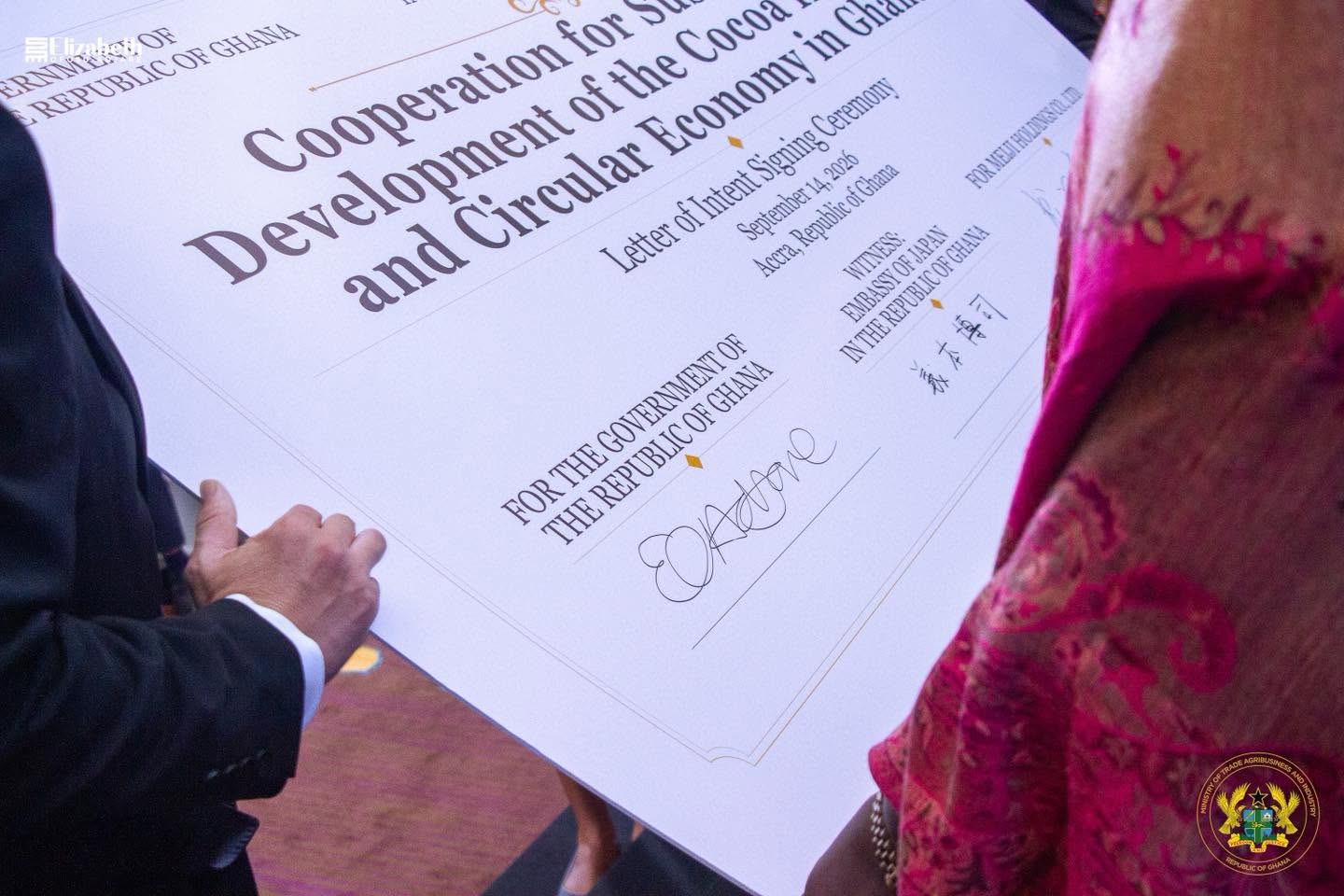
The Ghanaian government, Japan and Japanese confectionery company Meiji Holdings signed a Letter of Intent in Accra to strengthen cooperation on sustainable cocoa production and circular-economy initiatives.
The agreement was signed on September 14 during an event marking the 100th anniversary of Meiji Milk Chocolate.
Ghana News Agency reported that Japan sources about 70% of its cocoa from Ghana, making the Asian country an important market as Accra tries to shift more of its cocoa industry from raw exports towards domestic processing and manufacturing.
The agreement, announced by Ghana’s Minister for Trade, Agribusiness and Industry, Elizabeth Ofosu-Adjare was signed by her, and Japan’s Ambassador to Ghana, Hiroshi Yoshimoto, while Meiji’s chief executive also initialled the agreement.
No specific investment amount, financing commitment or implementation timetable was disclosed.
DON'T MISS THIS: The world's second-largest cocoa producer warns output could fall 16%, raising fears of higher chocolate prices
Ghana wants more value from its cocoa
The partnership comes as Ghana undertakes a wider restructuring of its cocoa industry.
In February, the government directed that at least 50% of Ghana’s cocoa beans should be processed locally from the 2026/27 crop season.
The government said the change would allow the country to increase value addition and create jobs rather than continue sending much of its crop overseas as raw beans.
Ghana also plans to revive the state-owned Cocoa Processing Company and increase supplies to domestic processors.
The policy represents a significant change for one of the world’s biggest cocoa-producing countries, where raw beans have traditionally accounted for a large share of cocoa exports.
The new agreement with Japan could support that shift through technology transfer, climate-resilient farming practices and the development of new uses for cocoa by-products.
DON'T MISS THIS: One of the world’s largest gold producers could be the next country in Africa to ban the trade of all of its most precious exports
From cocoa waste to new products
The circular-economy element of the agreement seeks to extract more value from materials generated along the cocoa value chain instead of treating them as waste.
Meiji offered one example at the signing ceremony, presenting Ghana with 10,000 ballpoint pens made using cacao-derived bioplastic.
The Japanese company already has a longstanding relationship with Ghana’s cocoa industry, including the Meiji-Ghana Traceability Programme, which dates back to 2007.
The latest agreement expands that relationship at a difficult time for Ghana’s cocoa sector.
Falling international cocoa prices prompted Ghana to cut its producer price earlier this year, while COCOBOD has faced liquidity problems and the government has begun wider reforms of the sector.
DON'T MISS THIS: Indonesia, Nigeria and Ecuador on standby to replace Ghana as world’s second-largest cocoa producer
For Ghana, increasing domestic processing offers an opportunity to retain more of the value generated by cocoa before products reach consumer markets such as Japan.
The new Ghana-Japan agreement does not yet attach a financial value to that ambition, but it brings one of Japan’s major chocolate producers into Ghana’s wider push to extract more economic value from the crop it has supplied to global chocolate makers for decades.