

Colombia Denies Entry to Nearly 19,000 Foreigners Since 2022
Colombia’s immigration authority has denied entry to nearly 19,000 foreign nationals since President Gustavo Petro took office in August 2022, citing national security concerns, immigration violations, fraudulent documentation and other legal grounds, according to figures released Monday by Migración Colombia. The government said 18,994 foreigners were refused entry between August 2022 and June 2026 under […]
 Black News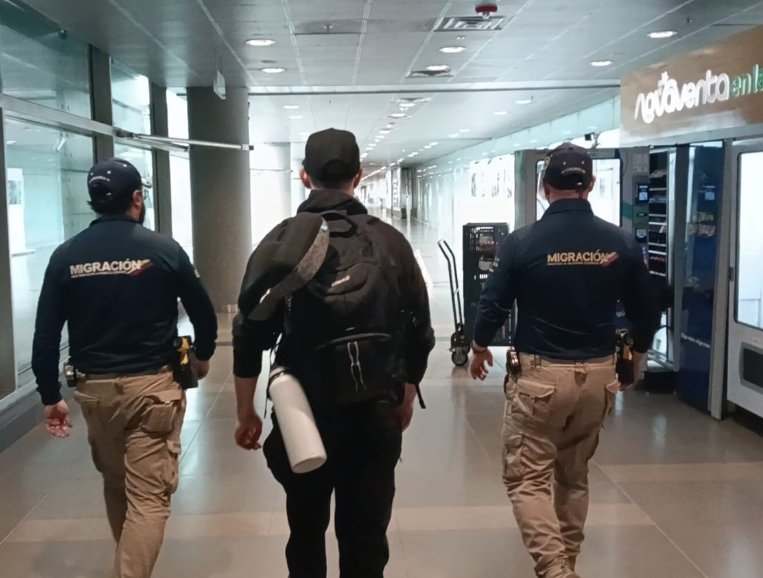
Colombia’s immigration authority has denied entry to nearly 19,000 foreign nationals since President Gustavo Petro took office in August 2022, citing national security concerns, immigration violations, fraudulent documentation and other legal grounds, according to figures released Monday by Migración Colombia.
The government said 18,994 foreigners were refused entry between August 2022 and June 2026 under administrative powers that allow immigration officials to reject travelers who fail to meet entry requirements, pose a security risk or provide false information during immigration inspections.
The figures come as Colombia continues to experience a sharp increase in international arrivals, driven by expanding air connectivity and the growing popularity of destinations such as Bogotá, Medellín and Cartagena.
Migración Colombia said more than 2,700 travelers were denied entry for reasons related to national sovereignty, state security or public order. Nearly 3,600 lacked the visa required for entry, about 2,900 failed to present legally required travel documents, and more than 3,800 provided false or misleading information during immigration interviews or attempted to deceive authorities.
Other cases involved travelers with international criminal records, intelligence alerts, outstanding immigration fines, the absence of onward travel tickets, or aggressive behavior toward immigration officials and airline personnel.
International airports registering the highest number of inadmissions this year included Bogotá’s El Dorado International Airport, Medellín’s José María Córdova International Airport, Cartagena’s Rafael Núñez International Airport, Cali’s Alfonso Bonilla Aragón International Airport and Barranquilla’s Ernesto Cortissoz International Airport. Authorities also reported refusals at the Rumichaca border crossing with Ecuador, the Simón Bolívar crossing in Cúcuta on the Venezuelan border, and Paraguachón in La Guajira.
According to the agency, the largest share of travelers denied entry were citizens of the Dominican Republic and the United States, each accounting for 12% of the total, followed by Venezuela (10%), Ecuador (5%), Mexico (5%) and Cuba (5%).
“Just as Colombians are expected to comply with the laws of the countries they visit, foreign nationals also have obligations under Colombia’s Constitution and laws,” Gloria Esperanza Arriero López, director-general of Migración Colombia, said in a statement. “They must meet the legal requirements for entry, behave appropriately during their stay, and respect Colombian authorities.”
The agency said it has intensified immigration controls over the past year while maintaining compliance with international human rights obligations. Authorities said the measures are intended to safeguard national security, promote orderly and regular migration, and strengthen international cooperation against human trafficking and the commercial sexual exploitation of children.
Of the nearly 1,600 foreign nationals refused entry so far in 2026, more than 140 cases were linked to suspected child sexual exploitation.
Since August 2022, more than 375 foreign travelers have also been denied entry as a preventive measure against the commercial sexual exploitation of children and adolescents. Migración Colombia said those decisions were based on intelligence shared with domestic and international law enforcement agencies, including information on convicted child sex offenders, suspected transnational sexual predators and alerts issued through the U.S.-based Angel Watch program.
Under Colombia’s Decree 2136 of 2021, immigration authorities may deny entry to foreign nationals on national security or legal grounds and order their immediate return to the country from which they traveled, their country of origin, or another country willing to admit them. The decision is final and is not subject to administrative appeal.