
As School Season Begins, Trump Calls for a Revised Vaccine Schedule
President Donald Trump on Monday revived his attempt to change the nation’s approach to childhood vaccines by signing an executive order that would upend the routine schedule of jabs children receive in their early years. Titled “Delivering Gold Standard Childhood Vaccine Recommendations for Americans,” the executive order calls for states to voluntarily implement an abbreviated […] The post As School Season Begins, Trump Calls for a Revised Vaccine Schedule appeared first on Word In Black.
 Black News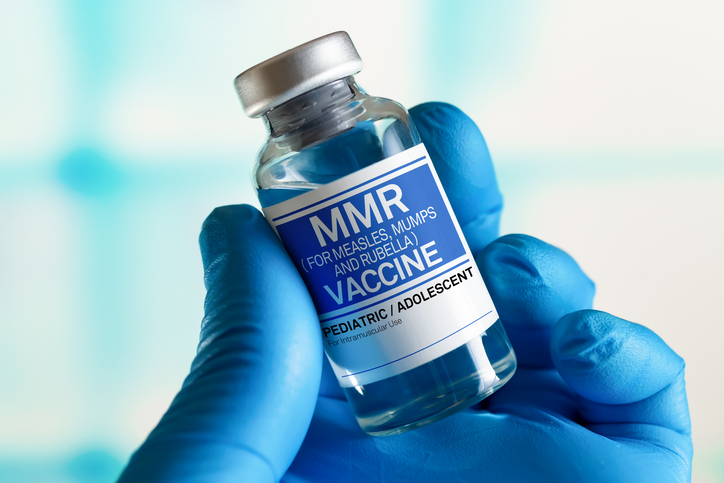


President Donald Trump on Monday revived his attempt to change the nation’s approach to childhood vaccines by signing an executive order that would upend the routine schedule of jabs children receive in their early years.
Titled “Delivering Gold Standard Childhood Vaccine Recommendations for Americans,” the executive order calls for states to voluntarily implement an abbreviated vaccine schedule. The order also calls for states to “break up” the all-in-one measles, mumps, and rubella (MMR) vaccine children receive.
The change would reduce from 18 to 11 the number of diseases children currently are recommended to be vaccinated against during childhood. And by breaking up the standard two-dose regimen to deliver the measles, mumps and rubella vaccine, families would have to make more visits to doctors and health clinics to get each shot.
“For example, at one year, you should have five separate visits for vaccines rather than getting them all in the same day,” Trump said from the Oval Office.
The Specter of Autism Is Raised Again
The combined MMR vaccine has been administered to infants since 1971. Public health experts also say there is no indication that spreading out the vaccines would benefit children.
In fact, several note that children are more likely to miss doses by having to visit their doctors more often. The change also will require patients to meet additional co-pays for each visit and could increase other out-of-pocket costs.
During his comments on Monday, the president implied that U.S. children receive far more vaccines compared to children in other countries, which is false. He also repeated the thoroughly debunked claim that vaccines, especially the MMR, are linked to autism.
An array of medical, public health and industry experts say Trump’s executive order is extremely unhelpful — especially with its release just as millions of children, teenagers and young adults prepare to return to school.
Increased Number of Measles Cases
Already this year, measles cases have reached a 35-year high in the United States, with the Centers for Disease Control and Prevention reporting measles outbreaks in 45 states and the District of Columbia. As of August 6, more than 2,400 confirmed measles cases have been reported, with about 1,670, or 60%, of the cases striking youths ages 19 and under.
Roughly 93% of those affected were unvaccinated, or their vaccination status was unknown, according to the CDC. Ten percent of children under age 5 were hospitalized, according to the statistics.
In a statement, Dr. Andrew D. Racine, president of the American Academy of Pediatrics, condemned Trump’s order, pointing to “dozens of studies involving millions of people” that disprove the link between autism and vaccines.
“[This] executive order is not based on ‘gold-standard science,’” Racine said, adding that “there is no new evidence” to justify the decision. Yet Trump and others “continue to promote this outdated, disproven idea to scare families,” he said, even though “delaying or skipping shots is risky, especially as measles continues to spread and children go back to school.”
Last year, the American Academy of Pediatrics, the American Public Health Association, and several other medical groups sued Health and Human Services Secretary Robert F. Kennedy Jr. and his department over his decision to stop recommending COVID-19 vaccinations for children and pregnant women. The lawsuit was broadened to include Kennedy’s changes to other CDC childhood vaccine recommendations.
In March, a federal judge issued a preliminary injunction that prevents HHS from implementing those changes. Some view Trump’s executive order as an attempt to skirt the injunction.
Earlier this year, at least 23 states said they planned to follow the American Academy of Pediatrics’ guidance for immunizations despite rollbacks by Kennedy and HHS. Immunizations required for school attendance are set at the state and local level.
RELATED: Federal Judge Halts Kennedy’s Vaccine Policy Overhaul
During the president’s announcement, Kennedy argued for removing vaccine mandates as requirements for attending school. He said the United States “recommended more childhood vaccines than any other peer nation,” while other countries achieve high rates of vaccination through “education, informed consent and public trust rather than mandates.”
In his statement, however, Racine stressed that the American Academy of Pediatrics’ immunization recommendations are “based on decades of research and systematic tracking of real-world experiences.” That includes timing the vaccines for specific ages, he said, “based on when children’s immune systems will respond best and when they are most vulnerable to certain diseases.”
Drug Companies Raise Concerns
U.S. drug company representatives echoed his comments.
The current vaccine schedule “is built on decades of rigorous scientific research and public health expertise designed for the U.S. population,” Dr. Michael Ybarra, chief medical officer with Pharmaceutical Research and Manufacturers of America, said in a statement. Changing it to match recommendations from foreign countries, he said, “would mean accepting a lower bar of protection against diseases that remain serious and, in some cases, life-threatening for children in the United States.”
Currently, there are no separate, actively licensed vaccines to prevent measles, mumps or rubella, according to PHRMA.
On the same day the president issued the vaccine executive order, the Asthma and Allergy Foundation of America reiterated its guidance on the importance of several vaccines.
The nonprofit stressed that vaccines intended to protect against respiratory illness including COVID-19, influenza and RSV, or respiratory syncytial virus, are health maintenance tools for people who have asthma.
“AAFA endorses the strong scientific evidence supporting the efficacy and safety of the approved vaccines in the U.S.,” the foundation said in a statement. “There are over 28 million people in the U.S. who have asthma, and this includes about 5 million children. Respiratory infections are a major cause of asthma exacerbations and emergencies. Additionally, it is known that children who get sick with (RSV) infection have a higher chance of developing asthma, a lifelong condition.
“AAFA has and continues to recommend influenza, RSV, pneumococcal and COVID vaccines for people with asthma, or for those who come in close contact with those who have asthma.”
Three million Black adults in the United States have asthma, making them one of the most affected populations in the nation. And roughly 1 million Black children have asthma, which is nearly twice the rate of white American children.
RELATED: CDC Downgrades Childhood Immunization Schedule Amid Deadly Flu Surge
The post As School Season Begins, Trump Calls for a Revised Vaccine Schedule appeared first on Word In Black.