Are we marketing Ghana before fixing the experience? A hard question for our tourism ambition
Ghana is about to receive something many African countries would gladly pay millions to achieve: global visibility in one of the world's biggest sporting and entertainment ecosystems. The Visit Ghana partnership with Sunderland Football Club, which will place “Visit Ghana” prominently on Sunderland’s shirts during the 2026/27 English Premier League season, is an ambitious marketing opportunity. The initiative is expected to expose Ghana to millions of football fans through television broadcasts, digital platforms and international media.
 Black News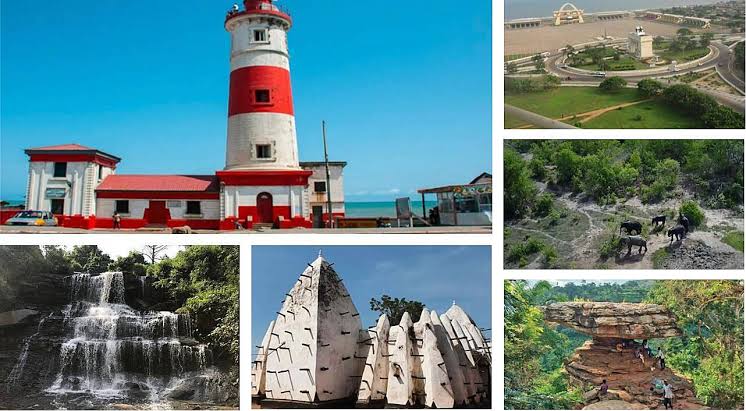
Ghana is about to receive something many African countries would gladly pay millions to achieve: global visibility in one of the world’s biggest sporting and entertainment ecosystems.
The Visit Ghana partnership with Sunderland Football Club, which will place “Visit Ghana” prominently on Sunderland’s shirts during the 2026/27 English Premier League season, is an ambitious marketing opportunity. The initiative is expected to expose Ghana to millions of football fans through television broadcasts, digital platforms and international media.
That is excellent marketing.
But here is the uncomfortable question:
What happens after the tourist sees the advertisement and decides to come to Ghana?
This is where our tourism conversation needs to become much more serious.
Are we marketing Ghana faster than we are fixing the experience of visiting Ghana?
I recently checked hotel prices for Accra and Miami, and the comparison made me pause.
At the time of my own search, a room at Kempinski Hotel Gold Coast City Accra was starting at approximately US$414 per night, while Moxy Miami South Beach was showing rates around US$154 per night for a comparable search.
These prices fluctuate depending on dates, demand, taxes, room category and promotions, so this is not presented as a scientific hotel-price comparison.
There is also an important qualification: Kempinski is a five-star luxury property, while Moxy Miami South Beach is generally classified as a four-star property. Moxy is also located in the South Beach area rather than being directly on the beachfront.
So the comparison should not be interpreted as “Ghanaian five-star hotels are always more expensive than Miami hotels.”
The bigger question is more important:
Why does accommodation—and the broader cost of experiencing Ghana—so often feel expensive relative to the value received?
That is the conversation we should be having.
GHANA DOES NOT HAVE A TOURISM PROBLEM. WE HAVE A COMPETITIVENESS PROBLEM.
The numbers show that people are already coming.
Ghana recorded 1,306,962 international tourist arrivals in 2025, up from 1,288,804 in 2024, while tourism generated approximately US$4.34 billion in revenue. Domestic tourism also increased to about 1.79 million visits in 2025.
The tourism ecosystem is growing too.
Licensed tourism enterprises increased from 6,702 to 7,109, while accommodation enterprises increased from 5,210 to 5,424. Travel-trade enterprises grew by an impressive 18.6%.
These are encouraging numbers.
But growth in visitor numbers should not make us complacent.
Our objective should not simply be to bring more people into Ghana.
It should be to make them:
Stay longer.
Spend more.
Travel beyond Accra.
Return again.
Recommend Ghana to others.
That requires more than advertising.
It requires value.
THE REAL PRODUCT IS NOT THE HOTEL ROOM
When we sell Ghana to the world, we are not actually selling a hotel room.
We are selling an experience.
A visitor pays for:
- The hotel.
- Transportation.
- Airport transfers.
- Restaurants.
- Internet connectivity.
- Electricity reliability.
- Tourist attractions.
- Tour guides.
- Security.
- Customer service.
- Shopping.
- Entertainment.
- Beaches.
- Cultural experiences.
- Convenience.
- And ultimately, the feeling they take home.
If the room costs US$300–400 a night but the visitor spends the next morning fighting traffic, dealing with inconsistent service, struggling with transportation or paying premium prices for basic services, the hotel price becomes part of a much bigger competitiveness problem.
And this is not simply my personal observation.
Recent industry commentary in Ghana has identified land costs, utility costs, financing, taxes and regulatory requirements as significant contributors to hotel operating costs. Tourism analysts have also pointed to service quality, staff responsiveness, cleanliness, food quality, internet connectivity, maintenance and consistency as critical components of value for money.
Another recent assessment warned that poor service delivery could undermine Ghana’s tourism competitiveness even when the country has strong natural, cultural and political advantages.
So perhaps the question is not:
“Why are Ghanaian hotels expensive?”
The better question is:
“Why does it cost so much to deliver hospitality in Ghana?”
That distinction matters.
THE COST OF DOING BUSINESS EVENTUALLY BECOMES THE COST OF TOURISM
Hotels cannot simply be told to reduce prices if the cost of operating them remains high.
If a hotel is dealing with expensive financing, expensive land, high utility costs, multiple taxes and levies, imported equipment, maintenance costs and other regulatory expenses, those costs eventually find their way into the room rate.
The Ghana Tourism Federation has previously raised concerns about the number of taxes and levies affecting tourism businesses, saying businesses could face as many as 20 different taxes and levies from various institutions.
Ghana’s own tourism development planning documents have also acknowledged that rising operational costs can reduce the profitability of tourism businesses.
Therefore, if government wants cheaper and more competitive tourism, the solution cannot simply be to tell hotels to charge less.
We must reduce the structural cost of producing the tourism experience.
SO WHAT SHOULD GHANA DO?
1. Create a genuine tourism cost-competitiveness programme
Government, the Ghana Tourism Authority, hotel associations and private-sector operators should jointly identify the biggest cost drivers affecting accommodation.
Electricity.
Water.
Taxes.
Import duties.
Financing.
Land.
Insurance.
Transportation.
Regulatory charges.
Digital infrastructure.
Then we should ask:
Which of these costs can realistically be reduced without compromising quality?
A competitive tourism industry requires a competitive operating environment.
2. Review the tax and levy structure affecting hospitality
Ghana does not necessarily need to eliminate tourism taxes.
But we should ask whether the current collection structure is efficient, transparent and internationally competitive.
A simplified, consolidated or one-stop system could reduce administrative costs and make compliance easier for businesses.
The objective should be:
Collect revenue without making the tourism product unnecessarily expensive.
3. Build a stronger mid-market tourism industry
Not every visitor coming to Ghana can—or wants to—spend US$400 a night.
We need a much stronger ecosystem of:
Affordable three-star hotels.
Quality boutique hotels.
Serviced apartments.
Eco-lodges.
Guesthouses.
Family accommodation.
Business hotels.
Tourism becomes more competitive when visitors have choices.
Interestingly, current market data already shows that Accra has accommodation across different price points. Booking.com currently lists average rates of approximately US$99 for three-star hotels, US$172 for four-star hotels and US$384 for five-star hotels, although actual prices vary considerably by date and property.
The issue therefore is not simply “all hotels in Ghana are expensive.”
It is that Ghana needs to ensure that every price segment delivers credible value.
4. Stop measuring tourism success only by arrivals
This is critical.
Imagine Ghana attracts two million tourists but the average visitor stays only a few nights, spends relatively little outside Accra and leaves dissatisfied with the value proposition.
Have we really won?
Our tourism dashboard should track:
Average visitor spending.
Average length of stay.
Repeat visitation.
Visitor satisfaction.
Hotel occupancy.
Cost per visitor acquisition.
Regional distribution of tourists.
Domestic tourism spending.
Tourism jobs created.
The goal should be higher-value tourism, not simply higher visitor numbers.
The Ghana Tourism Authority itself has identified sustainable, high-value tourism, ecotourism, community tourism, heritage preservation and MICE tourism among its strategic priorities.
That direction is right.
Now we need to execute it aggressively.
5. Make Ghana easier to experience
A tourist should not need a complicated itinerary to enjoy Ghana.
We need integrated tourism packages where a visitor can easily purchase:
Airport transfer + hotel + tour + attraction tickets + transportation + cultural experience + food experience.
Imagine landing in Accra and being able to book a professionally managed three-day, five-day or ten-day Ghana experience from one platform.
This is where technology and private-sector innovation can transform tourism.
6. Take tourism beyond Accra
If tourism investment and visitors remain heavily concentrated in Accra, we will continue to experience congestion and high prices in the capital while enormous tourism potential elsewhere remains underdeveloped.
Ghana has:
Cape Coast.
Elmina.
Kakum.
Kumasi.
Mole.
Volta.
Ada.
Axim.
Nzulezu.
Aburi.
Lake Bosomtwe.
The Northern Savannah.
Our festivals.
Our castles.
Our food.
Our music.
Our traditional communities.
The opportunity is to turn these destinations into complete tourism economies, not simply places tourists visit for a few hours.
That means roads, accommodation, sanitation, digital connectivity, tour operators, restaurants, guides, security and entertainment must develop together.
7. Treat service excellence as national infrastructure
We often talk about roads, airports and hotels as tourism infrastructure.
People are infrastructure too.
A beautiful hotel cannot compensate for poor service.
A beautiful beach cannot compensate for poor sanitation.
A world-class tourist attraction cannot compensate for unreliable transportation.
And an expensive hotel room cannot compensate for an experience that does not feel worth the price.
Recent industry concerns about customer reception, delayed service, weak accountability and inadequate recognition of high-performing hospitality workers should therefore be taken seriously.
Ghana needs a national service-excellence culture.
8. Make the “Visit Ghana” campaign a promise—not just an advertisement
This is perhaps the most important point.
The Sunderland partnership gives Ghana something incredibly valuable:
attention.
But attention is only the beginning.
The visitor sees “Visit Ghana.”
We must make sure the next thought is:
“I want to go.”
And after they come:
“I want to come back.”
And after they leave:
“You must visit Ghana.”
That is when marketing becomes economic development.
THE OPPORTUNITY IS MUCH BIGGER THAN TOURISM
Tourism is not just about hotels.
It connects agriculture, transportation, construction, aviation, entertainment, fashion, restaurants, technology, banking, real estate, manufacturing and thousands of small businesses.
A visitor who spends US$2,000 in Ghana does not leave the money in a hotel.
It circulates through the economy.
The hotel hires workers.
The restaurant buys food.
The tourist hires a driver.
The driver buys fuel.
The tour operator employs guides.
The visitor buys crafts.
The craft producer buys materials.
The photographer gets paid.
The musician performs.
The airline earns revenue.
That is the tourism multiplier.
And that is why competitiveness matters.
LET US MARKET GHANA—BUT LET US ALSO FIX GHANA
I strongly support the Visit Ghana initiative with Sunderland.
We should be proud when Ghana gets global visibility.
We should market our culture.
We should market our beaches.
We should market our history.
We should market our food.
We should market our hospitality.
We should market our people.
But marketing cannot permanently compensate for structural weaknesses.
If we spend money telling the world to come to Ghana, we must simultaneously invest in making Ghana easier, better and more affordable to experience.
The objective should not be to become the cheapest tourism destination.
It should be to become one of the best-value destinations.
There is a difference.
A visitor will gladly pay a premium when the experience justifies it.
The challenge is ensuring that Ghana’s price is consistently matched by Ghana’s value.
So as we celebrate the Visit Ghana partnership and the global attention it can generate, perhaps we should ask ourselves one uncomfortable but necessary question:
Are we ready for the people we are asking the world to send us?
Because the greatest tourism campaign Ghana can ever run is not a billboard.
It is a visitor who goes home and says:
“Ghana was worth every dollar.”
That is the Ghana I want us to build. 
By Eng. Joseph K. Awuni
Sources / Credit: Ghana News Agency; Ghana Tourism Authority; Ghana Tourism Development Fund; Ghana Tourism Federation; Kempinski Hotel Gold Coast City Accra; Marriott International / Moxy Miami South Beach.