World’s largest EV battery maker joins $39 million Egyptian factory targeting fivefold capacity increase
The Chinese company responsible for almost four in every 10 electric-vehicle batteries installed worldwide is entering Egyptian manufacturing through a planned $39 million factory serving vehicles and renewable-energy projects.
 Black News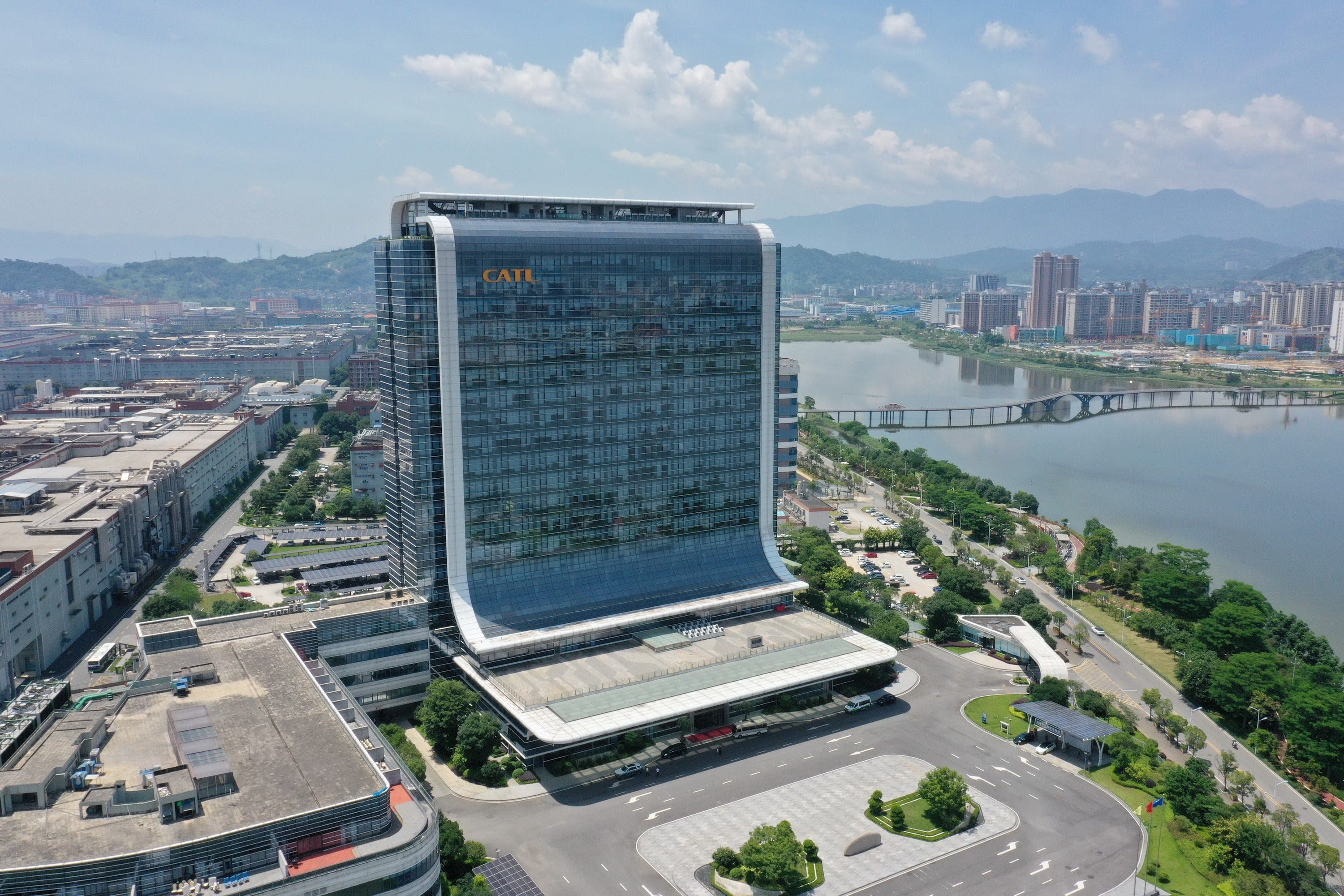
The Chinese company responsible for almost four in every 10 electric-vehicle batteries installed worldwide is entering Egyptian manufacturing through a planned $39 million factory serving vehicles and renewable-energy projects.
- China’s CATL has joined Egyptian companies in a new venture planning a battery factory with first-phase investment above $39 million (EGP2 billion).
- Initial annual capacity is planned at 1 GWh for heavy commercial vehicles, rising fivefold to 5 GWh during a second phase.
- Later production would include passenger-car batteries and storage systems for solar and wind projects, with local content targeted at 40%.
- The agreement has been signed, but the site, ownership split, construction schedule, customers and financing beyond the first phase remain undisclosed.
Contemporary Amperex Technology Co. Limited, better known as CATL, has joined two Egyptian automotive businesses to form BME Battery Manufacturing, according to Egypt’s Ministry of Industry.
Prime Minister Mostafa Madbouly witnessed the partners sign the factory agreement on Sunday, September 13.
The first phase carries an investment of more than $39 million (EGP2 billion) and is designed to produce one gigawatt-hour of batteries annually, according to Ahram Online.
The plant would initially manufacture battery systems for heavy commercial vehicles.
A second phase is intended to lift annual capacity to 5 GWh and add batteries for passenger cars, alongside energy-storage systems for solar and wind projects.
The government and companies have not disclosed when either phase will begin, where the factory will be built or how much the expansion to 5 GWh will cost.
DON'T MISS THIS: Africa’s second-largest economy secures $560 million solar mega-project as clean energy investments surge
Egypt is securing access to the industry’s dominant company
CATL’s participation gives the project more weight than its initial investment alone suggests.
The company retained 39.9% of the global EV battery market during the first seven months of 2026, according to data from South Korean research company SNE Research.
CATL supplied 289.6 GWh during the period, nearly three times the 106.7 GWh installed by second-placed BYD. Its Egyptian partners bring local industrial experience and access.
Manufacturing Commercial Vehicles Company produces buses and trucks, while Auto D for Industry, Trade and Supplies is a publicly traded supplier of automotive products and services.
BME is a newly created joint venture involving CATL and the two Egyptian companies. However, the partners have not disclosed their individual shareholdings.
Together, they are attempting to move Egypt from importing finished battery systems towards producing a product at the centre of the global transition from petrol and diesel vehicles.
The proposed 40% local-content ratio is therefore one of the deal’s most important tests.
The announcement does not explain whether the local content will include battery cells, packs, casings, electronics or mainly assembly and related components.
That distinction will determine how much technology, skilled employment and economic value remain in Egypt.
DON'T MISS THIS:Another Chinese firm joins Egypt’s $4.5 billion tyre manufacturing boom with $300 million plant
The opportunity extends beyond electric cars
Passenger EV adoption remains limited across much of Africa, which makes the factory’s wider product strategy important.
Its first customers could come from commercial fleets, where operators can plan charging and calculate fuel savings more easily than individual motorists.
MCV’s position in bus and truck manufacturing provides a possible route into that market, although the partners have not announced any purchase or supply agreement.
The proposed energy-storage systems could create a second and potentially larger opportunity.
Batteries allow electricity generated by solar panels and wind turbines to be stored and used after the sun sets or when wind output falls.
![CATL has joined a planned $39 million Egyptian battery factory targeting 5 GWh of capacity, 40% local content and vehicle and energy-storage markets. [Egypt's cabinet]](https://ocdn.eu/pulscms/MDA_/0ed80091fe5f6dbe4c6ac0b028bd6ebb.jpg)
That capability matters to Egypt and other African markets trying to add renewable power without weakening already constrained electricity grids.
CATL is also expanding aggressively beyond vehicle batteries.
The Financial Times reported that the Chinese company shipped 121 GWh of energy-storage cells in 2025, representing a 30% annual increase. Energy storage accounted for approximately 15% of its revenue.
The company is competing for demand from electricity grids, data centres, businesses and households as battery prices fall.
DON'T MISS THIS:Middle East conflict is accelerating Africa’s shift to electric ride-hailing, Uber’s EV partner says
Egypt’s location adds a potential export advantage. A factory near major ports could serve markets in Africa, the Middle East and Europe while avoiding some of the cost of transporting complete battery systems from East Asia.
Industry Minister Khaled Hashem said the venture was intended to reduce shipping costs, develop a domestic supply chain and serve local and international buyers.
However, the facility’s precise location has not been disclosed, making it impossible to assess its proximity to ports, vehicle factories, customers or energy infrastructure.
A significant entry, but still small by CATL’s standards
The project would be important for Egypt, yet modest within CATL’s global production network.
CATL’s planned Hungarian factory alone has a stated annual capacity of 100 GWh. That is 20 times the Egyptian project’s proposed second-phase output. The comparison does not make the Egyptian venture insignificant.
Instead, it indicates that the project is more likely to serve as a targeted regional foothold than a new global production centre, at least during its early stages.
A 5 GWh facility could still support thousands of commercial or passenger vehicles, depending on battery size, while providing storage capacity for renewable-energy projects.
The critical questions are whether CATL will supply completed cells for local assembly or transfer enough technology for more advanced manufacturing, how much equity it owns in BME, which components Egypt can realistically source locally and whether customers have committed to buying the proposed output.
Egypt has attracted investment from one of the world’s most powerful clean-energy manufacturers. But the strength of the project will ultimately be determined by what is produced inside the country, not simply by the CATL name attached to the agreement.
Until construction, funding and production dates are announced, the deal should be presented as a serious industrial entry rather than a completed manufacturing breakthrough.
Egypt has secured CATL’s participation. It has not yet built the factory or delivered the promised fivefold increase in capacity.