
Welcome to The Next Chapter of Erika Jayne
Ahead of her three-show solo UK tour as DJ Pretty Mess and joining Kesha on the Freedom Tour, BRICKS founder Tori West caught up with the star to discuss creative credibility, freedom, ageing, and why discovering hope has become her most defining chapter yet. The post Welcome to The Next Chapter of Erika Jayne appeared first on BRICKS Magazine.
 Black News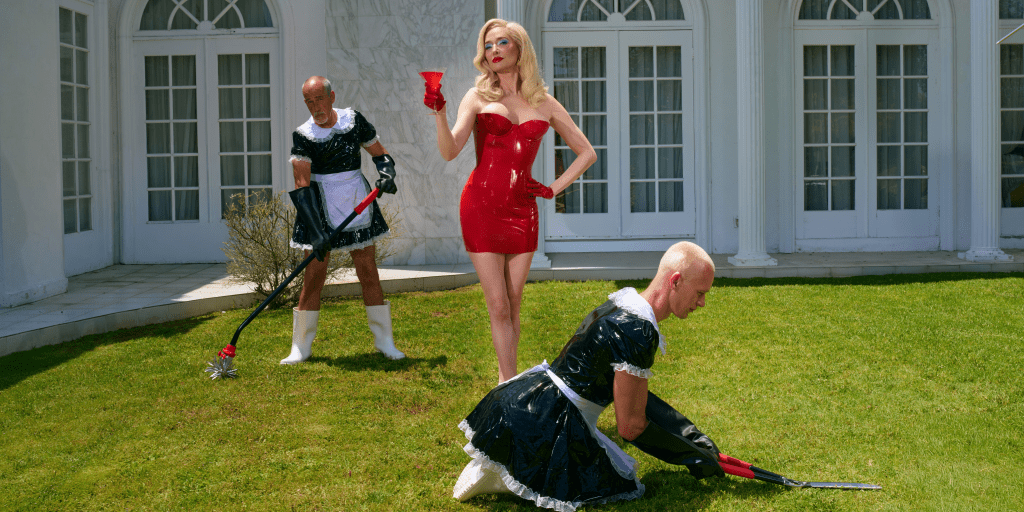
CREATIVE DIRECTION & PHOTOGRAPHY Darby Routtenberg
SET DESIGN & STYLING Daria Fontaine Pasquali
HAIR Scott King
MUA Damien Diaz
LIGHTING TECHNICIAN Khalil Bowens
PHOTO ASSISTANT Minh
MODELS Nik Kieler, Christine Martine, Dennis Irvine & John Davis Walker
LOCATION The White House
FASHION All outfits by Vex Latex and BustedBrand
Having watched Erika Jayne on The Real Housewives of Beverly Hills for the best part of a decade, I expected the larger-than-life personality I’d come to know on screen. During our call, it’s certainly there, but it’s accompanied by something less visible to television audiences: a woman who speaks with the kind of perspective that only seems to arrive after you’ve lived enough life to stop performing for everyone else.
If you’re a Bravo fan like me, chances are you’ve also spent the past decade as a fly on the wall in Erika Jayne’s life too. Since joining the RHOBH in 2015, she’s become one of reality TV’s most recognised and talked-about figures. While the Bravo show may have introduced Jayne to millions, for her it was simply another accolade in a career she’s spent her whole life carefully building. Long before our television screens, she had carved success as a dance artist, earned a devoted following in the LA club circuit, and scored an impressive seven No. 1 singles on Billboard’s Dance Club Songs chart before ever joining the franchise. Truth is, Erika Jayne is far more than just a reality star.


However, few corners of popular culture are as commercially successful, yet as creatively dismissed, as reality television. While the entertainment genre creates household names, secures numerous brand deals and dominates online discourse, the performers at its centre are rarely afforded the same creative legitimacy as artists whose careers emerged outside of it. I ask Jayne whether that perception has ever undermined her creative credibility. “You’re 100% right,” she admits. “I also have to remind everybody that I started performing when I was a kid and went to a great performing arts high school… Reality TV is seen as camp and as a joke. A lot of the performers are discredited.”
Jayne’s career, however, suggests creative credibility and reality television aren’t nearly as incompatible as they’re often made out to be. Since joining the RHOBH cast, she’s gained a further two No.1 Billboard Dance Club tracks, starred as Roxie Hart in Chicago on Broadway, headlined her own Las Vegas residency, Bet It All On Blonde, and returned to the stage for performances including London’s beloved queer-led festival Mighty Hoopla.
Reality TV is seen as camp and as a joke. A lot of the performers are discredited.
What the reality show has brought her is international visibility. Her status as a queer icon has been cemented thanks to her television appearances, viral one-liners and monologues – but like her music career, it was forged long before the camera crew arrived. Her relationship with LGBTQIA+ communities has been “hand in hand since I was a kid.” Growing up in dance studios and performing as a go-go dancer in the 90s, she remembers listening to Kraftwerk as that’s what her dance teachers, many of whom were queer, had on rotation. Looking back, she sees those formative years as instrumental to the artist she would become known as today: DJ Pretty Mess.


“I believe that gay people have their fingers on the pulse of good taste and culture,” she says. “I was privileged enough to grow up around a lot of very influential gay people in the arts.” As her own dance and music career developed, those same communities became the first to embrace her sound. “I was fortunate to perform and really continue my creative life in having that support,” she says, describing that decades-long relationship as “a real privilege.”
Jayne’s next chapter begins this summer, with her 3-show solo UK tour in London, Manchester, and Glasgow, followed by joining Kesha on select US dates of her Freedom tour; a tour title which feels especially fitting for the duo. Kesha’s career became defined by a lengthy legal battle with her former producer Dr Luke, while Jayne’s public identity became inseparable from the scrutiny and speculation circulating her now-former husband Tom Girardi’s own legal case. For both women, years of successful creative work were often eclipsed by the hardships surrounding them. Now, they’re finally able to reclaim authorship on their own terms.
When I ask what the word ‘freedom’ means to her today, Jayne’s answer isn’t about the headlines or vindication; it’s about autonomy. “I’m free to stand on my own two feet, to carve out the next chapter of my life as I see it,” she says. “To shed possibly some old beliefs and some old thoughts that no longer serve me.” It’s a freedom she thanks to the experience of ageing. “I think that I’ve become… more free, or freer, the older I get,” she laughs. “Because I’m able to look back and say, while I once thought I was free, I was not.” Freedom is a journey and perspective that she hopes continues to evolve with time.
I’m able to look back and say, while I once thought I was free, I was not.
Like many women, I spent my younger years dreading the milestone of turning thirty; a fear society has a habit of quietly handing to us long before we ever even reach it. I tell Jayne I eventually found the opposite to be true. Every passing year has brought greater clarity, stronger boundaries and a deeper appreciation for the life I’ve already lived, even through times of adversity. She smiles. “Funny you should bring up turning 30,” she says. “I remember the day I turned 30, and I was driving out of my driveway, and I had never felt more comfortable in my own skin.” Twenty-five years later, that feeling has only intensified – our interview took place just weeks before her 55th birthday, and Jayne is the most at peace with herself she’s ever been.
“As you continue to age, that increases,” she tells me. “You really become more familiar with who you are, what your point of view is, and your appreciation for things like time and people.” Growing older hasn’t diminished any part of her life, something society would have pushed you to believe or fear. Instead, age has enriched it, with Jayne claiming it’s also helped her re-prioritise her relationships. The things that matter most aren’t the grand gestures, but the private moments shared with people she loves; they’re intentional. “The older you get,” she shares, “the sweeter life can be. It’s the little things, not the big things.” When I suggest we’re often only taught to measure life by money or productivity as we age, she gently interrupts. “Money comes and goes, but you have a finite amount of time, so you need to use it wisely.”

Every woman has a story of resilience. Whether she’s telling it outwardly on a reality TV show, like the women on my cast are, or not. Every woman has faced her own personal hardships where she’s had to make tough choices.
For someone whose career has been defined by public conflict, Jayne’s perspective now feels surprisingly grounded in empathy. “Every woman has a story of resilience,” she says. “Whether she’s telling it outwardly on a reality TV show, like the women on my cast are, or not. Every woman has faced her own personal hardships where she’s had to make tough choices.” It’s why she encourages women to look closer to home. “Get to know your female friends, your female family members, your female co-workers,” she adds. “They all have a story to tell, and it ain’t easy.”
If every woman has a story to tell, for Jayne, fashion is simply another way of communicating hers. At a time when women continue to be criticised for refusing to tone down their outfits with age, her upcoming UK tour promises no such restraint. “Latex,” she laughs. “A chic S&M vibe.” Latex is, of course, an Erika Jayne staple, but this time she wants to embrace something darker, sharper and more mysterious. “Clothes, costumes, they tell stories,” she says. “You’re allowed to tell many stories, provided they’re true to you.” Whether that’s dressing like a skater one day or stepping out of a 1940s film the next, authenticity remains the constant. “I can always tell when the person is wearing the clothes,” she says, “and when the clothes are wearing the person.”
Throughout our conversation, there’s one word she keeps returning to: strength. It’s a label that’s followed Jayne throughout her life, but never more so than over the past six years. The period was shaped by her very public divorce from personal injury attorney Thomas Girardi, who was later found guilty of wire fraud and embezzling tens of millions of dollars from his clients. This was then followed by her first public revelation as a survivor of domestic violence. As the cameras followed her while she navigated these extremely challenging experiences, even filming her therapy sessions at times – her castmates repeatedly returned to the same observation: that she was strong. But I wondered whether that word still felt like a compliment, or whether it had become another expectation placed upon her.

“I think my relationship to the word ‘strength’ is thank you, but what other option did I have?” she admits. “I just didn’t have any other option other than to survive.”I think that I am at peace, and I am looking forward, for the first time in a very long time.” When asked how she’d describe Erika Jayne today, the word she reaches for isn’t strong at all. It’s “hopeful.”
There’s still a story to tell that needs to be told, and it will be told.
“Things are peaceful,” she adds. “They’re quiet. They’re not as volatile as they were, and I can see light at the end of this very long, dark tunnel.” She explains that what people often fail to understand isn’t just the public nature of hardship, but what it takes from you. “It steals your joy. It steals your creativity. It steals any sort of magical, childlike feeling that you had,” she says. “Life was not any fun.”
After a transformative six years and in the wake of her 55th birthday, the occasion has prompted Jayne to be more curious about how she’s grown. Her first memoir, the New York Times bestseller Pretty Mess, arrived in 2018, years before the events that would come to define such perceptions of her.
“I need to write another book,” she says. “Since 2018, so much has happened, and there’s a lot to talk about.” Before putting pen to paper, she wants to revisit the woman who wrote the first one. “I’d like to go back and read the book and see how much I’ve changed.” She pauses before adding, “There’s still a story to tell that needs to be told, and it will be told.”
Enjoyed this story? Help keep independent queer-led publishing alive and unlock the BRICKS Learner Platform, full of resources for emerging and aspiring creatives sent to you every week via newsletter. Start your 30-day free trial now.
The post Welcome to The Next Chapter of Erika Jayne appeared first on BRICKS Magazine.