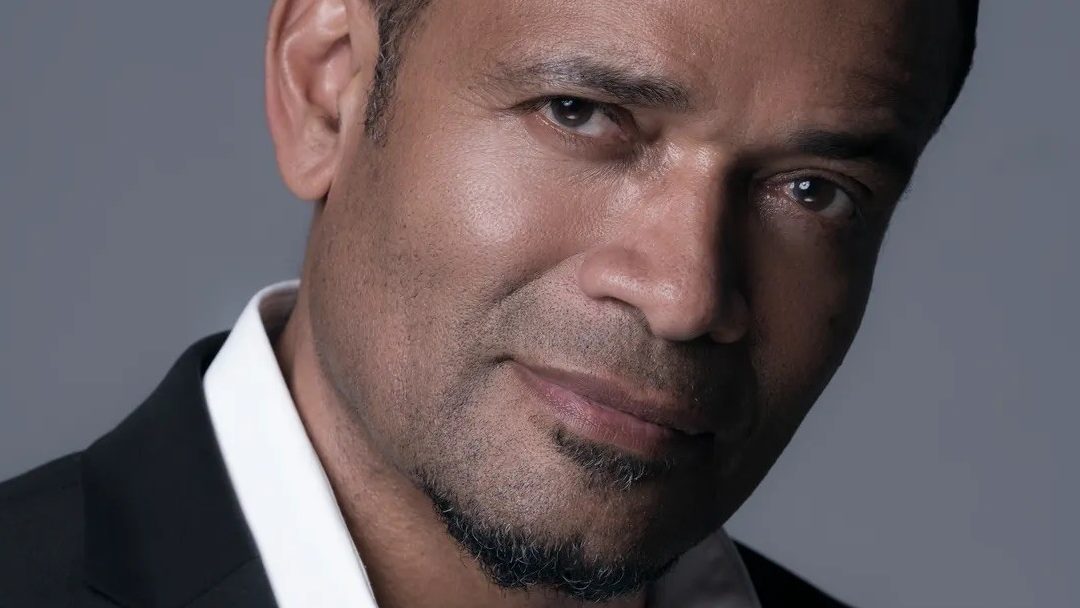
Tony Cornelius Connects Soul Train’s Legacy to a New Chapter as the Awards Return to BET
Few names are as closely associated with the history of Black television and music as Don Cornelius, the creator of Soul Train. For his son, Tony Cornelius, the legacy is more than a family connection. It is a career, a responsibility and a firsthand understanding of what it took to build one of the most influential…
 Black News
Few names are as closely associated with the history of Black television and music as Don Cornelius, the creator of Soul Train.
For his son, Tony Cornelius, the legacy is more than a family connection.
It is a career, a responsibility and a firsthand understanding of what it took to build one of the most influential television franchises in American history.
Tony Cornelius spent decades working within Don Cornelius Productions, learning the television business from the ground up and eventually serving in executive leadership.
His career has included production, television specials, music programming and entertainment projects, while his connection to Soul Train has continued through the Soul Train Cruise, Soul Train Cruise 2.0 and new initiatives designed to carry the experience into the future.

As the Soul Train Awards prepare to return to BET in November 2026, Tony reflects on his father, the lessons he learned, the cultural significance of Soul Train and what comes next for a legacy that continues to connect generations.
You were around Soul Train from a very young age. What do you remember about those early days?
Tony Cornelius: I remember that it was always work. My father was very serious about what he was building. I was around artists, production meetings, rehearsals, cameras, lighting, dancers and sets. I was watching all of it.
My father would tell me, “If you see something on fire, put the fire out.”
He wanted me to learn. He wanted me to understand every aspect of production, not just one part of it. That became the foundation for how I approached the business.
You started at the bottom and worked your way up. Why was that important to you?
Tony Cornelius: I started as a production assistant and worked through different positions. I eventually became an associate producer and then Executive in Charge of Production.
That experience taught me to appreciate every department. You have to understand the camera, lighting, audio, talent, scheduling, budgets and everything that goes into putting a production together.
I also learned that you don’t walk into a position simply because of your last name. There is a chain of command. You have to earn your place, learn the business and respect the people who are working alongside you.
What was the biggest professional lesson your father taught you?
Tony Cornelius: One of the biggest lessons was, “If you can find a need and serve it, you’ll always be successful.”
You have to know what you’re saying, prepare yourself and never reveal something until you are prepared to stand behind it. My father taught me about vision and commitment, but he also taught me about relationships and results. You have to deliver.
What do you think your father understood about Black audiences that television had not fully recognized at the time?
Tony Cornelius: He understood that Black audiences deserved positive representation and programming that spoke directly to them.
It wasn’t just about the music. It was about creating an environment where music, dancers, fashion and culture could all come together. He understood the power of programming and the opportunity that existed.
Do you think people sometimes misunderstand the significance of Soul Train?
Tony Cornelius: Absolutely. People sometimes look at Soul Train as just a music and dance show, but it was much bigger than that.
There was the business side, production, marketing, advertising, distribution, artist development and the platform itself. My father built an infrastructure around the program.
One of the things I think made him especially proud was that the audience knew where to find Soul Train every week. They didn’t necessarily need to be told through advertising. They were looking for it.
What was your professional relationship with your father like?
Tony Cornelius: It was demanding. There was a difference between being his son and being his employee. There was no pass because I was his son.
I am grateful for that because I learned the business. I also saw firsthand what it meant to fight for something. I watched my father fight against what sometimes seemed like impossible odds to keep Soul Train on the air.
Did you feel pressure being Don Cornelius’ son?
Tony Cornelius: Absolutely. There was always going to be pressure because of who my father was.
But I couldn’t spend my life trying to be my father. I had to become Tony. My responsibility was to respect the foundation he created while also contributing in my own way. My father will always be a beacon for me, but I also understand that I have my own path.
What does the Soul Train legacy mean to you personally?
Tony Cornelius: It represents opportunity.
Soul Train gave artists, dancers, musicians, producers, writers and entertainers a place to be seen and heard. I watched people come through those doors and become household names.
I also saw how the show affected families. People watchedtogether.
They learned dances together. They discovered music together. The fashion became part of the culture. The audience wasn’t just watching a television show. They were participating in something.
What does the return of the Soul Train Awards mean to you?
Tony Cornelius: The Soul Train Awards were created to recognize Black excellence and celebrate artists who were making an impact on music and culture. The return gives us another opportunity to celebrate today’s artists while remembering the history that made the platform possible.
When my father created Soul Train, there were artists who were not receiving the exposure they deserved from competing award shows and mainstream television. Soul Train helped change that.
What do you hope younger viewers understand about the Soul Train story?
Tony Cornelius: I hope they understand that it didn’t happen overnight.
People fought for opportunities. People took risks. Artists needed a platform, and executives had to believe that Black audiences mattered.
My father saw an opportunity and built something around it. He believed in the power of television to change how people were seen.
If you can see it, you can do it.
What has the Soul Train Cruise meant to you?
Tony Cornelius: The Soul Train Cruise has become another way for me to connect with the audience.
I’m able to host, interact with guests and hear their stories. We spend seven days on the ship dedicated to Love, Peace and Soul.
The cruise launched in February 2013 in honor of my father. People come from all over the country, and we’re seeing younger generations discover Soul Train through their parents and grandparents.
Music has a way of bringing people together. The artists, the audience and the stories we hear on the ship all give me another perspective on what Soul Train means to people.
You are now looking toward Soul Train Cruise 2.0 and a West Coast Initiative. What does that next chapter mean to you?
Tony Cornelius: Soul Train Cruise 2.0 is about continuing to build on the foundation that has already been created while looking at new ways to bring the Soul Train experience to people.
The West Coast Initiative is especially meaningful because of my connection to Los Angeles and the West Coast entertainment community.
I see an opportunity to bring that perspective into the next chapter of the Soul Train experience and create additional opportunities for artists, musicians, industry professionals and audiences to connect.
For me, it’s about taking what has always made Soul Train special and finding ways to continue that connection.
My father created Soul Train for his generation. We have tocontinue finding ways for that legacy to speak to new generations.
What are your thoughts on projects such as American Soul and Soul Train: The Musical?
Tony Cornelius: I think the story deserves to be told.
There are so many chapters to the Soul Train story. There is my father’s story, the artists, the dancers, the business, the people behind the scenes and the challenges that came with building something that had never existed before.
There are generations of people who should understand how Soul Train came to be and what it represented.
Tell us about the Don Cornelius Foundation and why that work is important to you.
Tony Cornelius: The foundation is extremely important to me. I created it because of my father’s passing, and I wanted to help families and communities address suicide prevention and mental health awareness.
For the past 11 years, Soul Train Cruisers have participated in a Don Cornelius wine tasting, pairing wine and soul food while raising money and raising a glass to those we have lost to suicide.
For me, the legacy isn’t only about television. It’s also about helping people.
When you look back at your career, what are you most proud of?
Tony Cornelius: I’m proud that I had the opportunity to work alongside my father and learn from him.
I’m proud of the productions I’ve been part of, the people I’ve worked with and the relationships I’ve built. I’m also proud that I found my own path.
Q: If your father could see what is happening with Soul Train today, what do you think he would say?
Tony Cornelius: I think he would be watching very closely.
My father cared deeply about presentation, the artists and the quality of the work. He would probably have opinions and a lot to say.
But ultimately, I believe he would want the legacy to continue and the brand to remain meaningful.
What does it mean to you when people say, “The legacy continues”?
Tony Cornelius: You can’t live in the past. You have to respect the past, learn from it and move forward.
My father created Soul Train for his time. Our responsibility is to respect what he created while continuing to tell the story, preserve the history and keep the values relevant to new generations.
For Tony Cornelius, the Soul Train legacy is more than television history. It is a responsibility. Don Cornelius created a platform that changed the visibility of Black artists and entertainers.
For many years, Soul Train was the longest-running first-run syndicated program in television, becoming a cultural touchstone that influenced music, fashion, dance and entertainment. Tony experienced that history from inside the production rooms, behind the cameras and within the executive offices. He earned his way through the organization, learning the business from the ground up before becoming an executive himself.
Today, his work continues through television, entertainment, the Soul Train Cruise, Soul Train Cruise 2.0 and the West Coast Initiative.
For Tony, the goal isn’t simply to recreate the past. It is to create opportunities for new artists, new audiences and new generations while keeping the music, movement and message connected to the foundation his father built.
The story continues. The legacy lives on.
For more information about the Soul Train Cruise, visit Soul Train Cruise.
For more information about Soul Train Cruise 2.0, also known as the Fall Soul Train Cruise, visit Soul Train Cruise 2.0.
As the Soul Train Awards return to BET, Tony Cornelius remains a direct connection between the history of Soul Train and its future.