Coolest Person in the Room: Iris Van Herpen
Popularity is relative, especially in the digital age. For our series, Coolest Person in the Room, we pinpoint all the people whose energy is contagious regardless of their following count or celebrity.First of all, so great to be speaking with you. So much of your work revolves around incorporating scientific innovation into clothing. What does that ideation process look like for that collaboration?All the collections are quite different in terms of techniques and materials. We always start with an R&D process, and then we do collaborations, often with architects or engineers or scientists, and we really do innovations on the material development. So it's a very experimental part of the process. After that starts the draping and the design process. But the material innovation is really dependent, of course, on the materials and the techniques. So it's quite different each time.The last collection, Sonic Starquakes, involved some really special techniques with the plasma and also the Lichtenberg, the electricity, and the particle accelerator. So it's often starting with research and then approaching the collaborators that we want to work with. And then you have a whole creative process that comes afterwards.During this year's Couture Week, you showed this dress that contained patterns formed from plasma. And the dress ended up designing the patterns prior to being shown on the runway. And when so much of couture is kind of about this complete control of the medium, you set something in motion and then accepted what it gave you. Is that a different way of working for you?Yeah, absolutely. It was quite radically different, to be honest, because, indeed, couture is so much about controlling the finest details and this really highly skilled craftsmanship that goes into every millimeter. It's kind of freeing to go and work from an entirely different perspective, where we actually let go of the whole design process, and it was really nature that was ultimately deciding where this dress was going to, like, how it would be formed and what the patterns would be. I do think it's a continuation of a balance that I'm looking for between nature and technology. I think they always have a beautiful balance within my work. Sometimes the gravity is more towards the control side of things, which is technology, and then often I like to invite nature as a collaborator into that process to find that ultimate balance between the two.That is so beautiful. Did you immediately have that outlook when you first heard that the plasma was designing patterns by itself, or did you initially panic?I initially panicked because this was two days before the show, and we had a whole plan set up with doing it live on the runway. So that whole plan didn't work out. But I remember the morning before the show waking up and then realizing it was actually more perfect than I could have imagined because this whole show was about these light-year forces influencing us. It felt kind of symbolic.The look suddenly became sort of the metaphor for the whole collection. Also, the patterning that was created through the lightning itself: we could have never done that. The intricacy and the beauty that occurred so naturally would have looked so much more controlled and organized if we had set that discharge in motion. So I really feel embraced by nature here, where it feels much more like a much deeper collaboration this way.Speaking of science, how do you feel about AI in the creative space?In my way of working, AI is a nice assistant. Especially within R&D, we do a lot of scientific research, and it's quite handy to summarize different types of knowledge. It just takes less time. We can come quicker to the end result within our research. So within science, and especially also the medical world, I see the importance of AI.Within the creative field, I am very critical towards AI for the main reason that AI is able to generate all this creative output, whether it's fashion or music or anything else, a script, because it has all the data from all the creators. I think ethically it's just incorrect because the data that is used is not compensated. It's not even asked for; it's not agreed upon. It's basically illegal, what they are doing. And if it had been done in a proper way, I would have been less critical. But the way it goes, I'm not standing behind it because it's just not in line with how I work within the creative field. I would personally not invite AI into my real creative process because it is spiritual. It's the most personal place that you have in your life, and simply, I don't want any interference in that space.As an assistant, it's useful, but the real meaningful parts of everything that I'm doing, I want to keep pure and human.Do you think that there's a way to reconcile the spiritual and the science after this very inhuman presence of AI?I don't even see AI as real science. I definitely see a spiritual world and a scientific world meeting up a
 Black News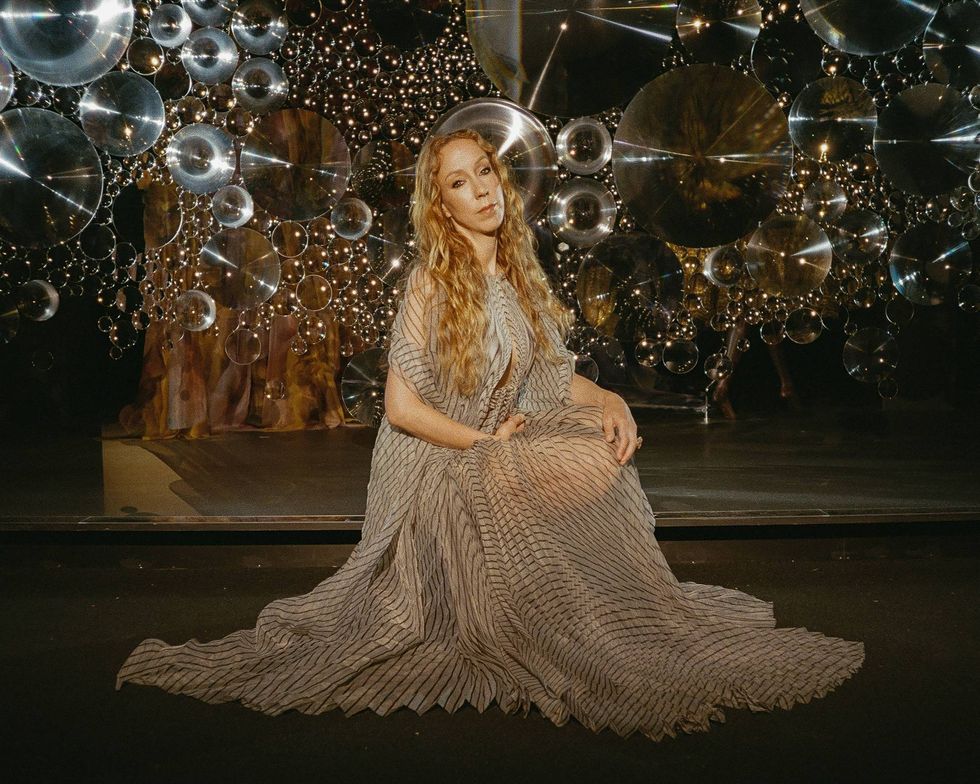
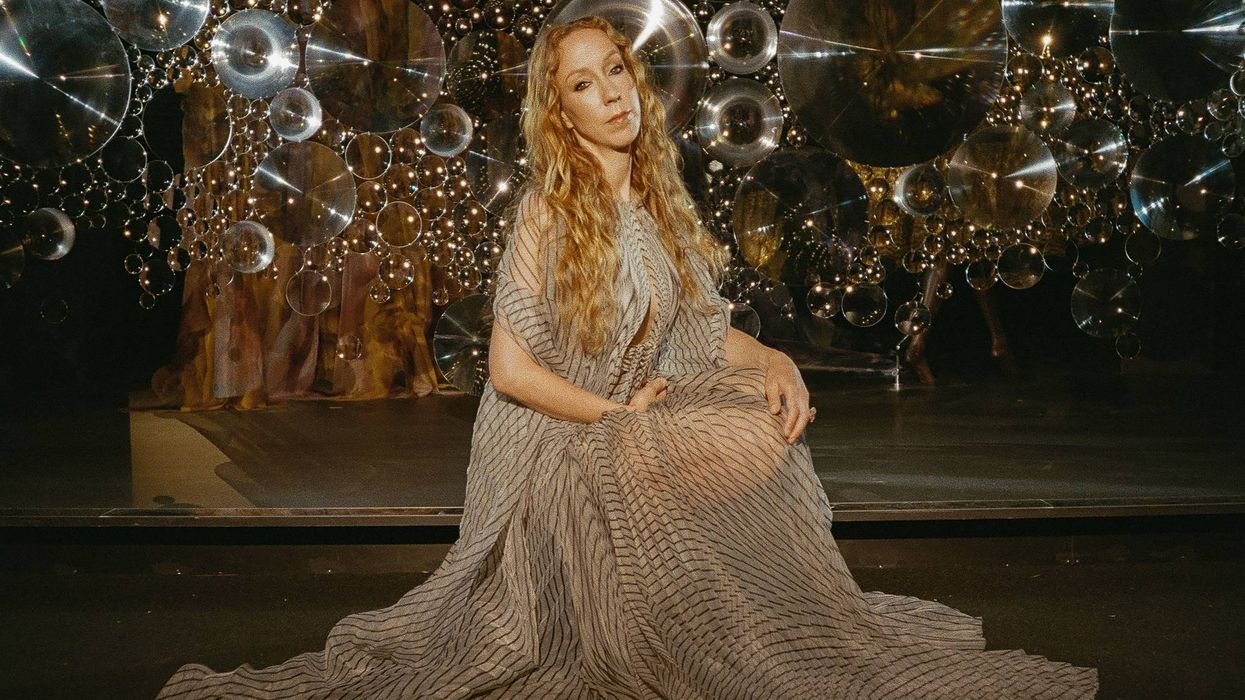
Popularity is relative, especially in the digital age. For our series, Coolest Person in the Room, we pinpoint all the people whose energy is contagious regardless of their following count or celebrity.

First of all, so great to be speaking with you. So much of your work revolves around incorporating scientific innovation into clothing. What does that ideation process look like for that collaboration?
All the collections are quite different in terms of techniques and materials. We always start with an R&D process, and then we do collaborations, often with architects or engineers or scientists, and we really do innovations on the material development. So it's a very experimental part of the process. After that starts the draping and the design process. But the material innovation is really dependent, of course, on the materials and the techniques. So it's quite different each time.
The last collection, Sonic Starquakes, involved some really special techniques with the plasma and also the Lichtenberg, the electricity, and the particle accelerator. So it's often starting with research and then approaching the collaborators that we want to work with. And then you have a whole creative process that comes afterwards.
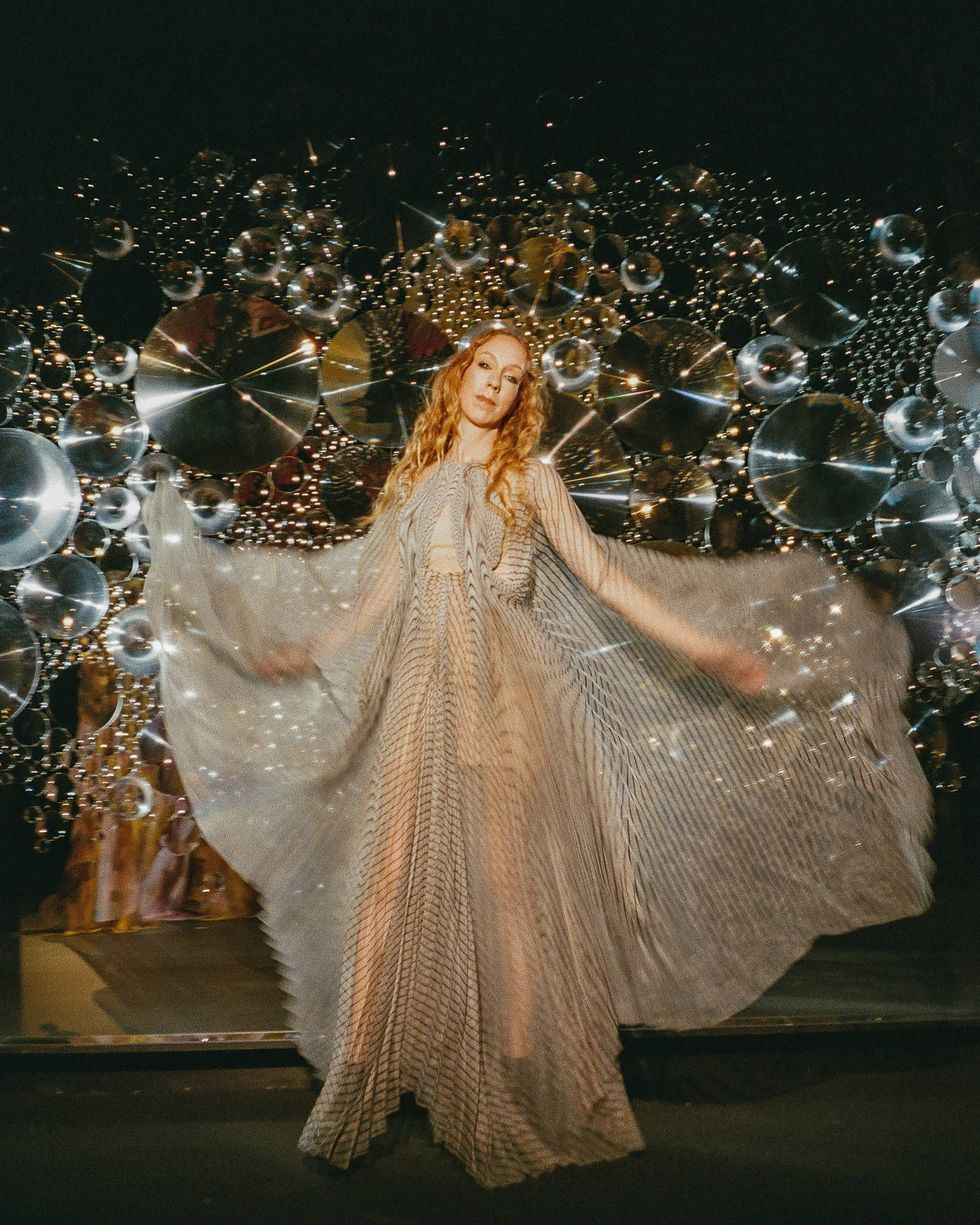
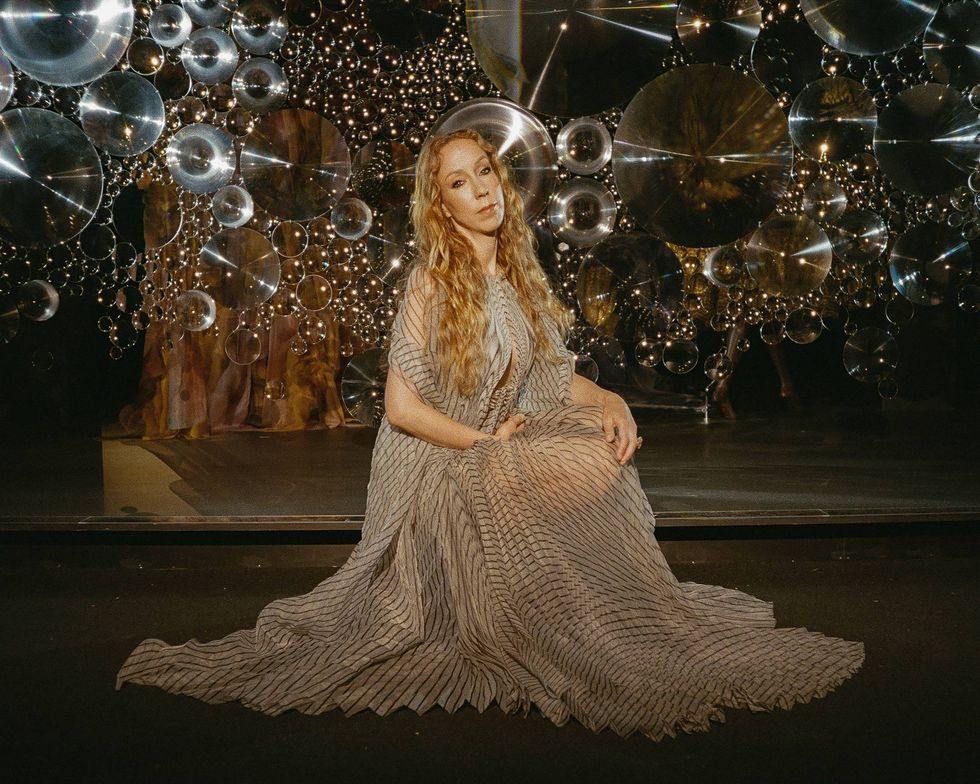
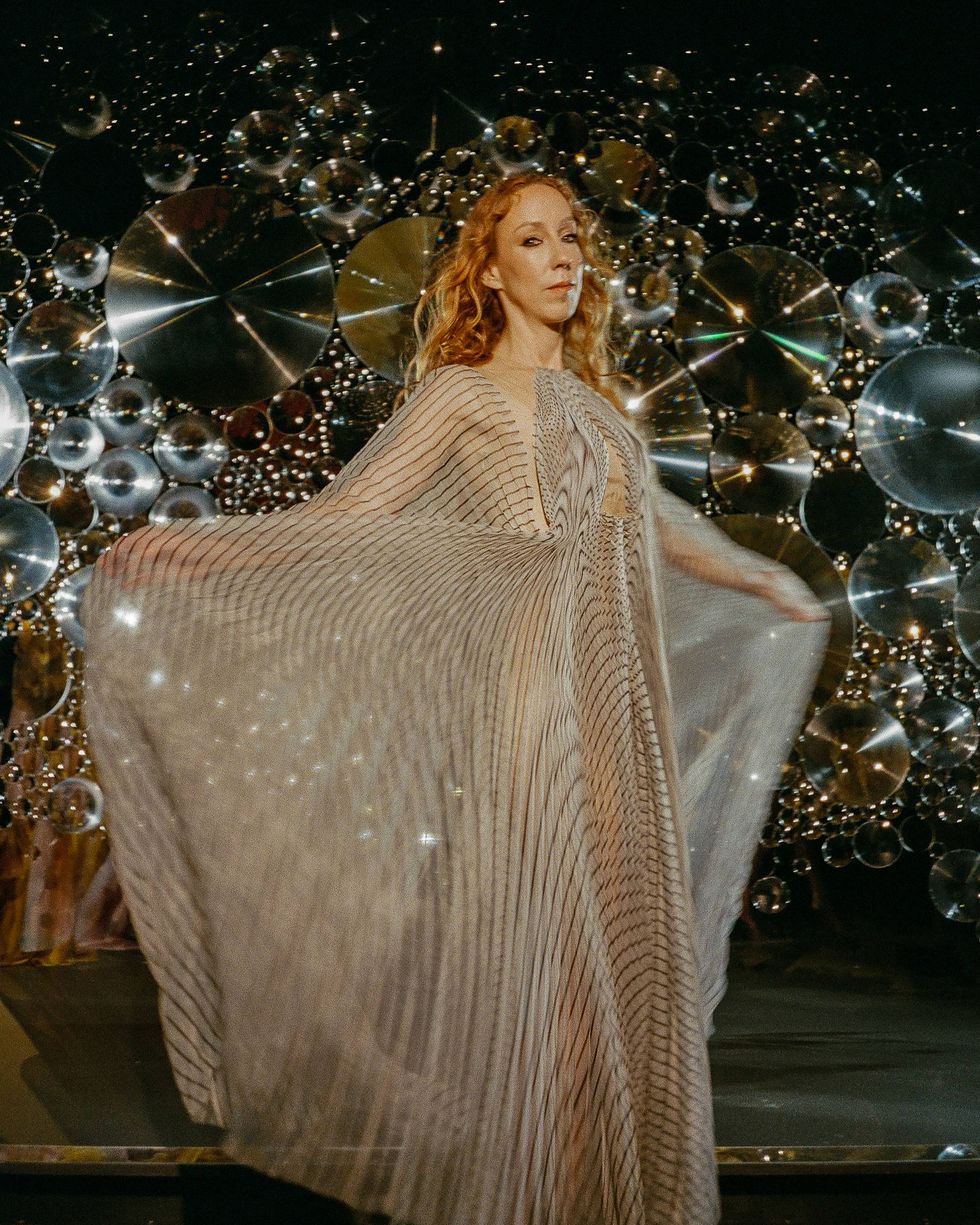
During this year's Couture Week, you showed this dress that contained patterns formed from plasma. And the dress ended up designing the patterns prior to being shown on the runway. And when so much of couture is kind of about this complete control of the medium, you set something in motion and then accepted what it gave you. Is that a different way of working for you?
Yeah, absolutely. It was quite radically different, to be honest, because, indeed, couture is so much about controlling the finest details and this really highly skilled craftsmanship that goes into every millimeter. It's kind of freeing to go and work from an entirely different perspective, where we actually let go of the whole design process, and it was really nature that was ultimately deciding where this dress was going to, like, how it would be formed and what the patterns would be. I do think it's a continuation of a balance that I'm looking for between nature and technology. I think they always have a beautiful balance within my work. Sometimes the gravity is more towards the control side of things, which is technology, and then often I like to invite nature as a collaborator into that process to find that ultimate balance between the two.
That is so beautiful. Did you immediately have that outlook when you first heard that the plasma was designing patterns by itself, or did you initially panic?
I initially panicked because this was two days before the show, and we had a whole plan set up with doing it live on the runway. So that whole plan didn't work out. But I remember the morning before the show waking up and then realizing it was actually more perfect than I could have imagined because this whole show was about these light-year forces influencing us. It felt kind of symbolic.
The look suddenly became sort of the metaphor for the whole collection. Also, the patterning that was created through the lightning itself: we could have never done that. The intricacy and the beauty that occurred so naturally would have looked so much more controlled and organized if we had set that discharge in motion. So I really feel embraced by nature here, where it feels much more like a much deeper collaboration this way.
Speaking of science, how do you feel about AI in the creative space?
In my way of working, AI is a nice assistant. Especially within R&D, we do a lot of scientific research, and it's quite handy to summarize different types of knowledge. It just takes less time. We can come quicker to the end result within our research. So within science, and especially also the medical world, I see the importance of AI.
Within the creative field, I am very critical towards AI for the main reason that AI is able to generate all this creative output, whether it's fashion or music or anything else, a script, because it has all the data from all the creators. I think ethically it's just incorrect because the data that is used is not compensated. It's not even asked for; it's not agreed upon. It's basically illegal, what they are doing. And if it had been done in a proper way, I would have been less critical. But the way it goes, I'm not standing behind it because it's just not in line with how I work within the creative field. I would personally not invite AI into my real creative process because it is spiritual. It's the most personal place that you have in your life, and simply, I don't want any interference in that space.
As an assistant, it's useful, but the real meaningful parts of everything that I'm doing, I want to keep pure and human.
Do you think that there's a way to reconcile the spiritual and the science after this very inhuman presence of AI?
I don't even see AI as real science. I definitely see a spiritual world and a scientific world meeting up all the time, which is really beautiful. A lot of spiritual and ancient knowledge that humans have imagined for centuries is now and then becoming a real thing through science, when it's tested through experiments. You see that happen more and more.
I would say 50 or maybe even 30, 40 years ago, a scientist would stay far away from any spiritual quotes. But if you look at a lot of scientists today, they actually embrace their spiritual side as well, and they don't see them as opposites. In that sense, the scientific world is becoming much more open-minded and also accepting that science comes from an imaginative mind as well. Science and spiritual beliefs are very much in a symbiotic relationship. AI, to me, is a commercial tool. Of course, early research came from scientific experiments, but I don't necessarily see it as science. It's really a commercial tool, and it completely depends on the way that we as humans use it, whether it's a positive or a negative thing.
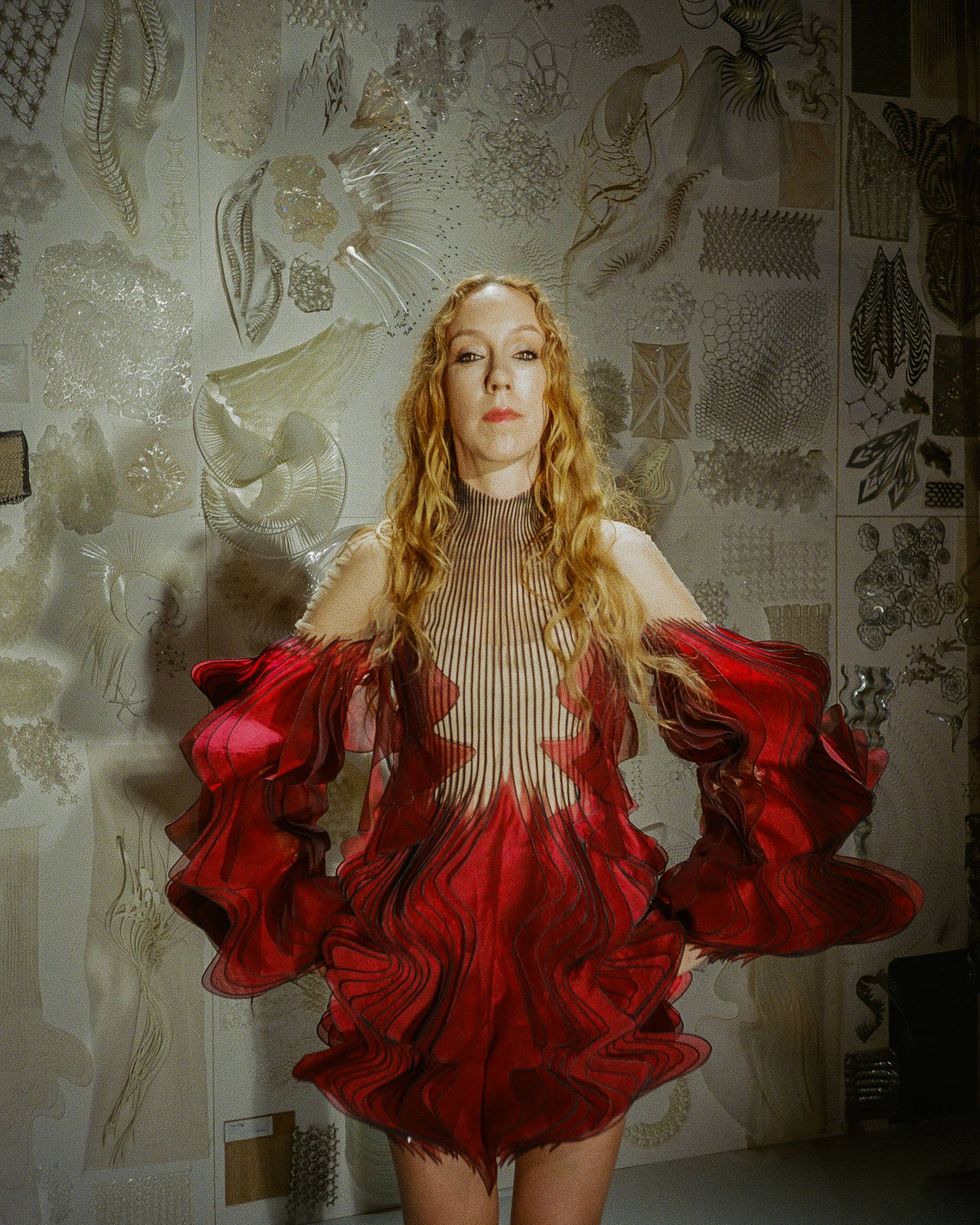
You mentioned that you were wary of allowing AI into your creative space because it has been stealing from other artists. Have you ever seen it steal your own work?
Yeah, all the time.
How does that make you feel?
I'm worried for the people that use it too much because whatever you do as a creative, you need to put the hours in there. Like, there are the famous quotes: art starts after you've worked on it for 10,000 hours. And it is really true that as an artist, it doesn't matter what you do, but you have to put your heart and your soul in it. And it requires a devotion of your entire time, basically.
I feel that AI is creating this shortcut, which is almost too easy for people, and therefore they think, I'll do it through AI. They’re done quicker. But they haven't actually grown themselves. They haven't actually evolved and learned themselves. It's very scary to make a creative decision. So you have to get used to that, and you have to get confident within it. What I see all the time is people sending me portfolios that are entirely generated through AI based on my own work. And I just feel sorry because it means that they've sat behind the computer, behind this algorithm, instead of sitting behind a piece of paper or behind the mannequin they have been draping on.
I just hope that people realize you can definitely use AI as your assistant, but don't set yourself aside. Don't let AI do the real work, because that's the value that you bring into this world, and you can do it much better than any AI can do it. People need to feel that confidence.
Walking past 20 years of your own work in one exhibit, how do you see your older work in relation to your newer work?
That's a good one. If I think of Sculpting the Senses, which is now at the Brooklyn Museum, there are pieces from the very early collections in there. And the essence of what we're doing today is still there. Like, some of the earliest pieces that are in the exhibition are inspired by alchemy, which is, of course, a transformation of ordinary material into a new material. And if I think of all the collaborations and innovations that I'm doing today, that spirit is in there.
The big difference between the early work and the work now is really the refinement of the materials and also the diversity of disciplines that are in there. Because in my early work, I was entirely focused on craftsmanship, and throughout the years, I started to implement all the other disciplines; science and architecture and art and engineering would become part of it. That's not part of the early work. So there's common ground and there are differences, but I feel within the exhibition, it creates a very beautiful story to see where it comes from and how it has evolved and what the differences are in the materials and the vision, but also what the thread is throughout the work.
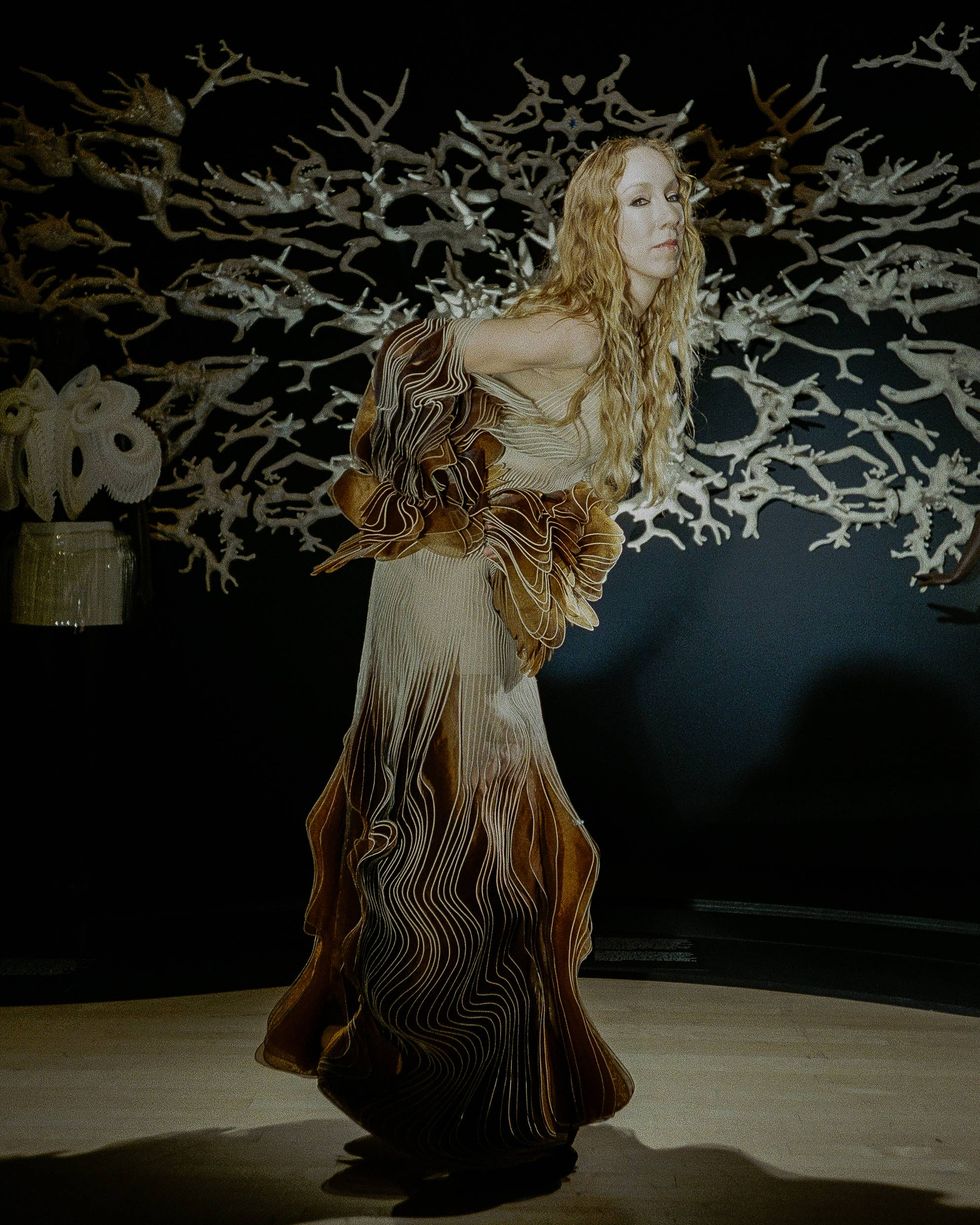
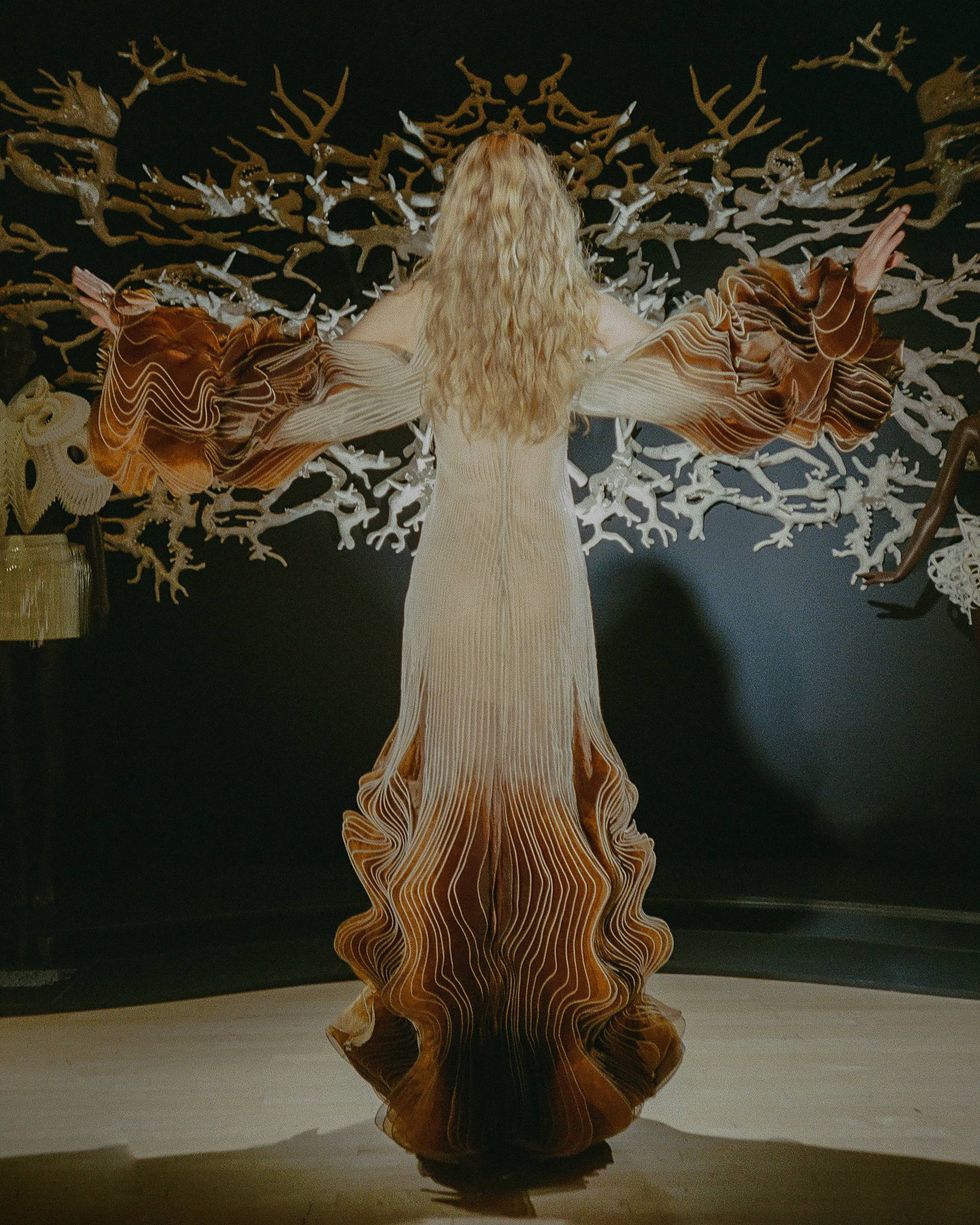
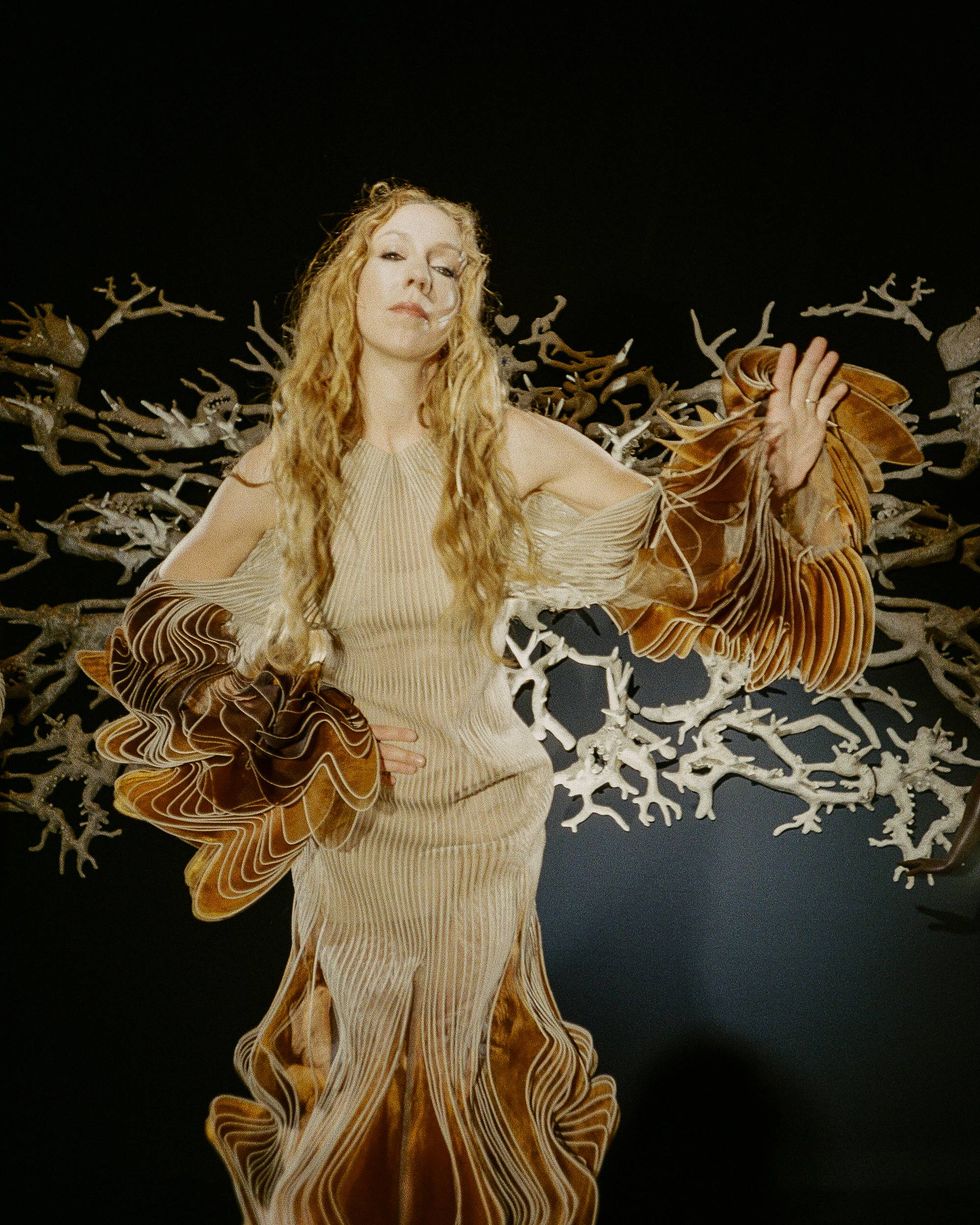
Your partner, Salvador Breed, made the soundtrack for this exhibit. How is collaborating with him different from collaborating with other creatives?
I can say it's the most personal collaboration, of course. We have been partners for 17 years, and our studios are very much entwined. I'm in this beautiful building next to the water in Amsterdam, and his studio is in the same place. So he sees my creative process on a daily basis, and he sees the textures evolving and even my mind, my inspiration. He’s just part of that whole evolution, I would say. So it's such a personal and organic and intimate collaboration.
We need very few words, which is beautiful. When I work with another collaborator outside of the studio, you have to get to know each other. You have to find a new language, which is not always easy, because when I'm talking to a scientist, he or she will have very specific knowledge and a way of talking about things, and then I will have a different way of using words. But with Salvador, we almost don't need any words. And there would not be a better person on this planet to embody my oeuvre into sounds, because he really translates the textures into the sonic soundscapes. And we both have somewhat of a synesthetic mind. I don't know if you are familiar with synesthesia, but there's one space in the exhibition that is devoted to the synesthetic way of thinking. And a lot of creatives have this. When I hear music, I can see patterns. And Salvador has different ways of translating textures into sound in his mind. And it's just one of the most profound collaborations that I've been in.
Most people experience your work through a digital image. What do you think is lost when fashion becomes this entirely digital experience?
I think the three-dimensionality is, of course, one aspect, and also the tactility, because my work is so focused on materials and the tactile experience that the looks carry with them. I wish our devices would implement, somehow, this tactile experience, but that's not possible at this stage. Hopefully in the future. But also the three-dimensionality. I have a dance background, so I like to think about the space around the body. It's very much focused on movement, which really comes alive when you see it in real life. But of course, on a two-dimensional screen, you get a sense of the depth and the three-dimensionality, but parts of it you just have to imagine as well.
I would say those two things, but of course, the beauty of it is that it is so accessible. It's quite extraordinary that someone very far away, even in a small village, can see the new show. It's quite amazing how accessible it is at the same time. Often people ask me whether I prefer the exhibitions or the runway shows, and they are really equal to me because the value of the exhibition is that people really have a personal experience, and they can come so close to the work and they can see every little detail. That's something you cannot see during a runway show because it's quick and it's more like an ambiance or an atmosphere that is transferred.
Is there a piece of technology or science you've wanted to work with but backed away from for logistical reasons or whatever else?
Well, there's this one material that I've tried to work with for a very long time, but it's inaccessible because it's only able to be used by the U.S. Army. It was invented a long time ago, quite a while ago. It mirrors the space behind it. So it becomes entirely invisible, basically. So you can basically erase certain body parts. And it's done so well that I was really hoping to work with it because I can really play with the different body parts and sort of deconstruct a human body.
I've tried, but it's patented, so it’s not possible for anyone to work with it. And there are a few other examples of technology that are happening but are not advanced enough for me. One example is 4D printing. I've worked a lot with 3D printing, but 4D printing has a lot of potential. It's a matter of time. It's still too early in its stage and not ready for couture because couture needs to have such a high level of control over the material. That might come later.
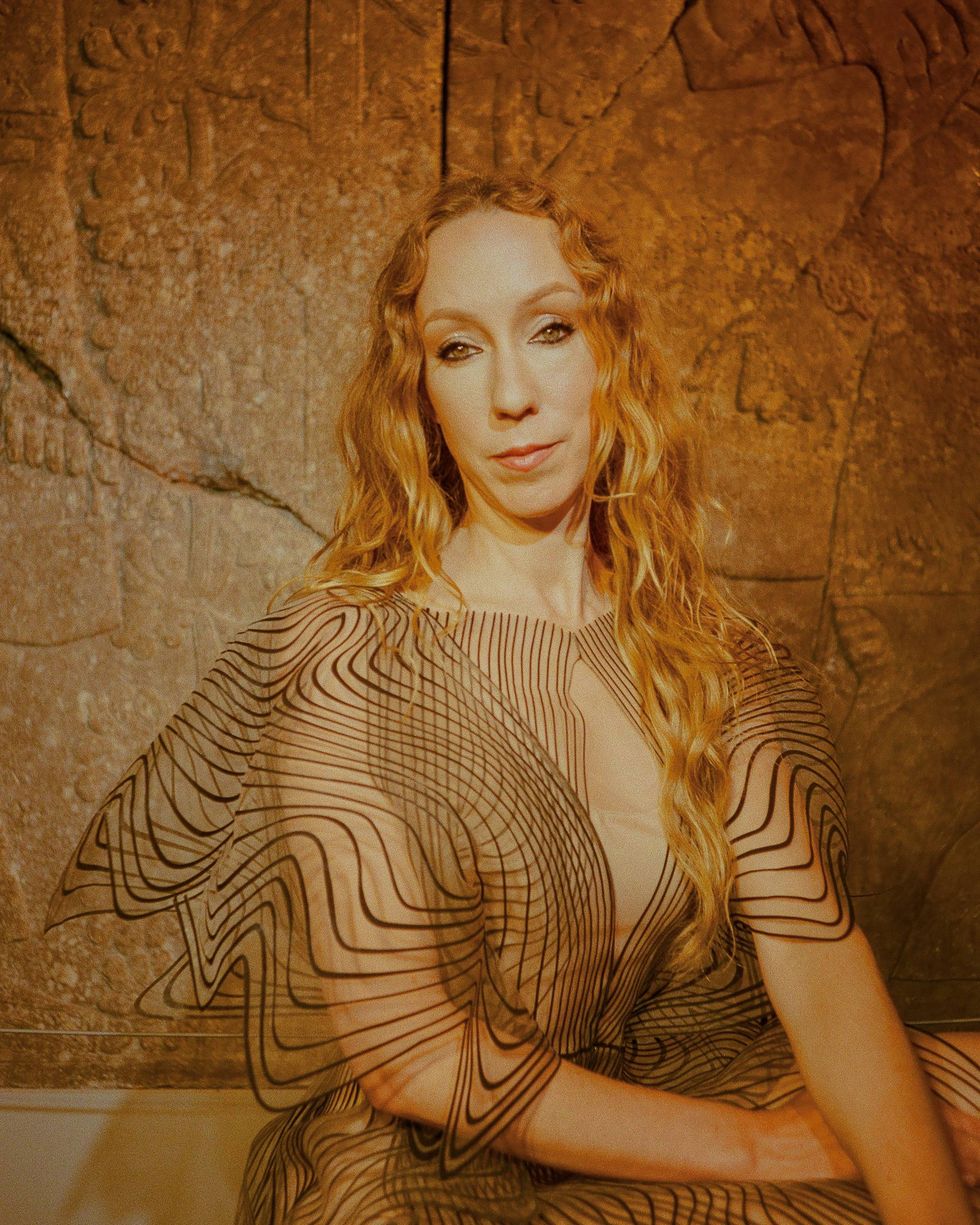
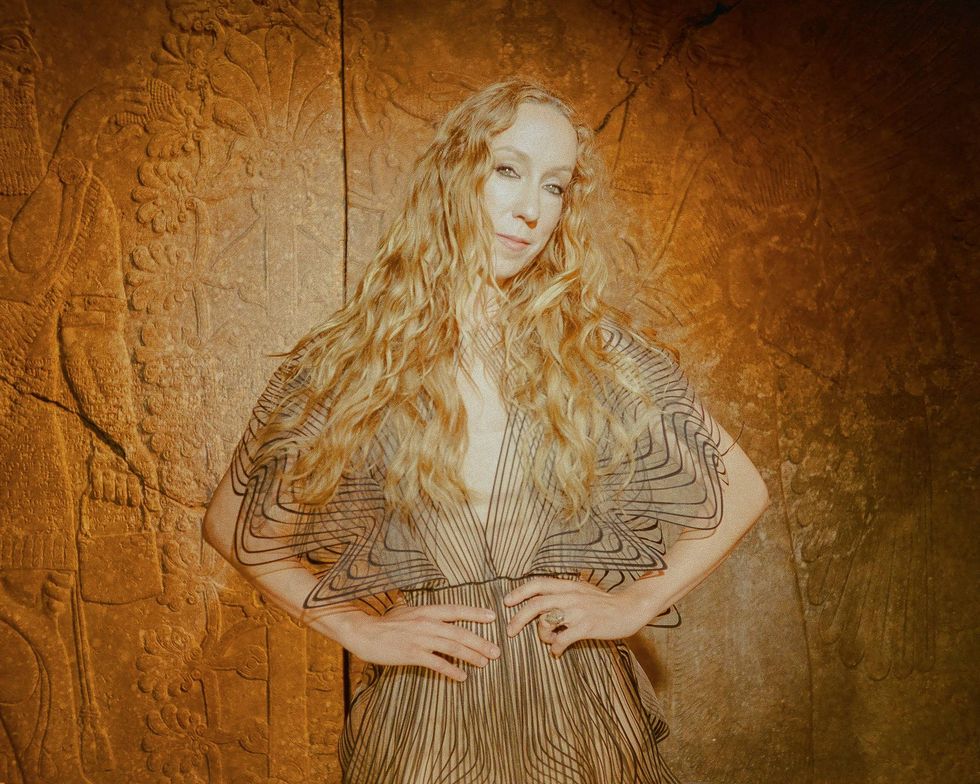
Are you more inspired by the spiritual or the scientific?
I feel they go hand in hand, and they are very equal to me. I think the spiritual side for me is this force of energy that is always going into my design process and the draping process. And it's a way of living, and it's a way of connecting to the world around me. I think one of the reasons that I'm doing what I'm doing is actually to create this deeper connection within, with nature, personally. But I also hope that people that are in touch with my work also see these new connections with nature.
I think we live in a time where a lot of this connection is lost. But I definitely believe we can reconnect. And it's really important for our mental health and our physical health because a lot of journalists write, of course, about the relationship between the health of the planet and our physical bodies, which is very obvious. We need clean air, we need clean water, we need safe temperatures. But I feel a healthy planet is equally important for our mental health as well. I think that's a spiritual connection that I'm trying to reestablish through my work on a personal level and hopefully for people that connect to my work. I feel that science is a tool to get there because with science I can innovate on my materials, and I can make my materials more sustainable and more circular. So science, I would say, is a tool to get to that more natural way of working with nature, because within fashion we're very used to distracting from nature.
I really believe we can go into a system where we can collaborate with nature, and we can give back to nature as much as we take from it, but it just requires a different way of thinking and also to slow down. And I think that's the essence of my work. I'm purely focused on haute couture. Often it's combined with ready-to-wear or a lot of fast fashion, but I entirely dedicate my work to slow fashion, and therefore we can take the time to really change that whole way of working.
There are two reasons for me to focus entirely on haute couture. The first one is the sustainability aspect. If I go into ready-to-wear, there's no way around it. I'll have to go into fast fashion and go into large productions, and therefore you become part of that whole system. And couture is much more pure in the sense that we can only create on demand. And the collections are very small, and there's no overproduction. Nothing goes into a landfill because they are really pieces of art. Either they are made for a client or they are made for a museum. So they are really created for longevity, hopefully for centuries to come still. And that is such a different approach than ready-to-wear.
The second reason is also to protect my creative freedom. Because I focus on haute couture, I am able to stay independent, and that is really important for me to stay really free in the choices that I make creatively. That is also really rare, I think, within the industry today.
It's important for me to show this example that it is possible also for other creators because I've seen many examples where people go within the investment system and then they are worn out or taken advantage of or lose their signature or identity throughout time. There are so many things that can happen.
Do you feel as if other designers try to use fashion as a distraction from nature?
That's a difficult one. Of course, I cannot look into the minds of other designers. I just think, in general, a lot of people are distracted from nature. I think technology is the best way to distract ourselves, and we have to be very critical towards the way we use it because all of it can be a great help to our lives, but we can also get lost in it, and all the media can just take over our time. So I'm protecting my online time to protect my creative growth, and I hope other people are doing the same.
When people lose that connection to nature, it's often because they are just distracted. And I hope people can make critical choices to stay healthy and inspired because also, as a creative, whether you are a writer or a musician or a designer, it's really important to not have too much input a day. We all know that the amount of information and images that we see today is equal to someone's lifetime a decade ago, right? So the amount of information that we get on a daily basis is so big, and I have experienced very directly that if I have too much information, I'm not as creative anymore. As a creative, you translate the information that you gain, whether it's looking at a beautiful tree or a bird outside or an article online, and you can only translate so much. It's something that I'm really aware of and that I'm trying to consciously guide throughout my life, to feel when you're full and to know when you have to stop, because then you're still able to translate that inspiration that you got. And I can only advise the same to others.
Photography: Diego Villagra Motta
Videography: Peter Demas
Fashion Direction: Angelina Cantú
Lighting Designer: Peter Demas
Styling Assistant: Ana K Mendoza
Photo Assistants: Diego Urbina & Xandra Hafferman
CREATIVE & EDITORIAL
Head of Creative: Brian Calle
Editor-in-Chief: Jordan Bradfield
Fashion Director: Angelina Cantú
Editorial Director: Mickey Boardman
Digital Director: César Alvarez
Digital Director, PAPER Español: Ricardo Diaz
Social Editor: Alaska Riley
Jr. Creative Director: Peter Demas
Editorial Manager: Tamara Amhaz
PRODUCTION
Chief Operation Officer: Erin Domash
Executive Producer: Aya Sloan
Jr. Producer: Melina Brown
Design Team: Composite Co.
Jr. Graphic Designer: Aviance Whitman
Jr. Graphic Designer: Gabe Walsh