
Their Future Is Inside Gaza. Their Government Is Somewhere Else.
“I experienced the war myself. I came out from under the rubble. I know exactly what people inside Gaza have endured.” The post Their Future Is Inside Gaza. Their Government Is Somewhere Else. appeared first on Moment Magazine.
 Black News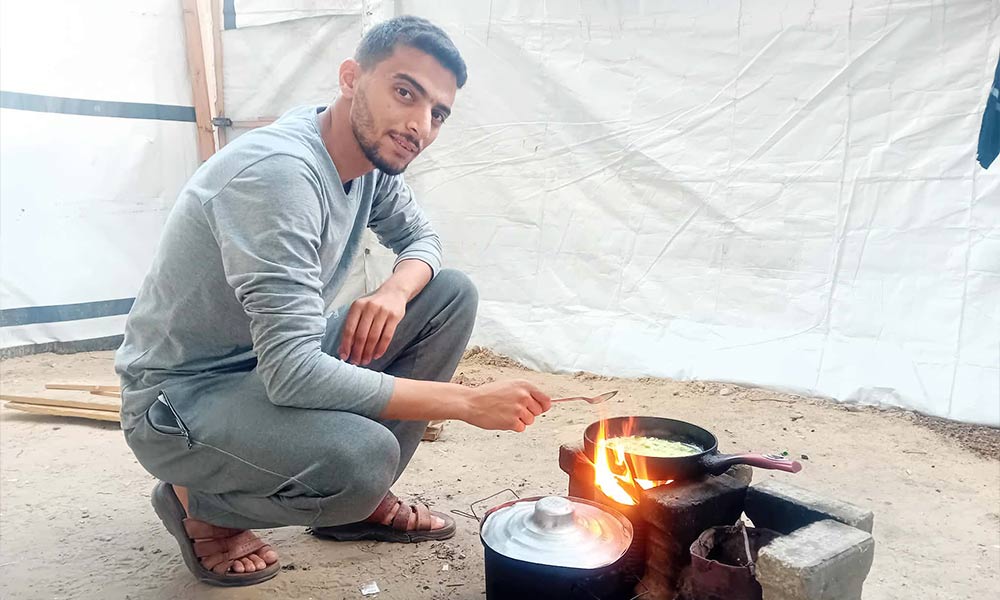
Basil Helles’s day starts before the bread disappears.
“My morning begins with buying bread because it is only available in the early hours,” he says.
Then he lights a fire for breakfast and tea and searches for water to wash clothes and dishes. When the tanker trucks arrive, he waits to fill his jerrycans, although the water is not safe to drink. In the afternoon, he carries a cooking pot to a distribution point to collect the day’s meal, “despite its poor quality, simply to feed my children.”
By evening, he is exhausted. Summer heat presses through the fabric of the family’s worn tent, making it unbearable during the day.
Helles is 32 and originally from Gaza City’s Shujayya neighborhood. During the war, he worked for UNRWA (the UN agency in charge of Palestinian refugees) in Deir al-Balah where he supervised a staff of temporary workers assigned to shelters for displaced Palestinians. Now almost every hour goes toward keeping his family alive.
He was 12 years old the last time Palestinians voted for their legislature, when Hamas defeated Palestinian Authority President Mahmoud Abbas’s Fatah party in 2006. Two weeks ago, on July 9, Abbas signed a decree setting November 28 for elections to form a new Palestinian Legislative Council, potentially giving Helles his first opportunity to vote in a legislative election.
The decree stipulates notable changes: The council would nearly double to 200 seats, the minimum age for candidates would drop to 23, and women would have to make up at least one-third of every electoral list. Abbas has also promised a presidential election in early 2027, without saying whether he will run. He has held office since 2005 and governed by decree for most of the two decades since.
The announcement presents a vote as the route back to Palestinian legitimacy. But it is only one of three projects now competing to decide who governs Gaza. Abbas is offering an election. Hamas is relinquishing parts of civilian administration while trying to preserve its political reach and armed police powers. And an international board is preparing to install a committee of Palestinian technocrats and direct reconstruction from outside the territory.
Israel controls many of the conditions under which any of the three could succeed.
Pulling Off an Election
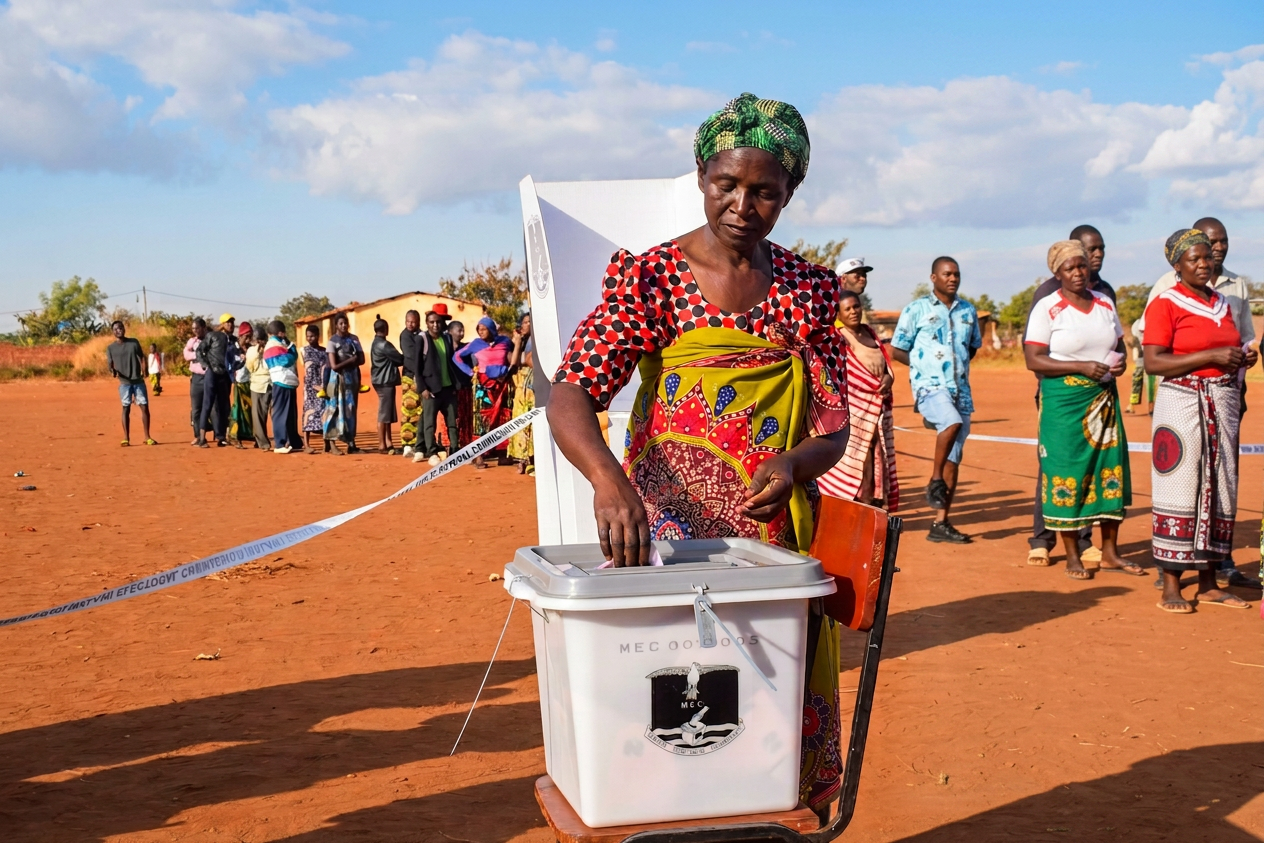
The first question is whether Gazans will actually be able to vote. The Palestinian Central Elections Commission says it is ready to administer the election and that, because the entire territory will count as one proportional-representation district, displaced people should be able to vote wherever they are. But Gaza’s voter rolls are outdated, election offices damaged, and many polling sites destroyed or converted into shelters.
No agreement has been announced on what the rules will be for campaigning, whether voters will be able to cross the Israeli-controlled Yellow Line to access polling places or whether Palestinians in East Jerusalem will be included in voting. Hamas has not committed to allowing a national election throughout the areas it controls. Israel has not said whether it will allow election workers, candidates and observers to move through Gaza. Nor has anyone explained what becomes of the election if voting takes place in the West Bank but not Gaza.
Abbas has promised elections before. A legislative vote scheduled for May 2021 was canceled weeks before it was due to take place. Abbas cited Israel’s refusal to guarantee Palestinian voting in East Jerusalem. Critics said divisions inside Fatah and the possibility of defeat also influenced him.
The 2006 election still shapes Palestinian life. Hamas’s victory led to an international boycott and conflict with Fatah, splitting Gaza and the West Bank between rival governments.
There is already a dispute over who would be allowed to compete for office this time. Under an election law Abbas signed a month before setting the November 28 date, every candidate must accept the Palestine Liberation Organization’s political program, including recognition of Israel and support for a two-state solution.
Hamas rejects that program, as do Islamic Jihad and four other factions. The election could therefore produce a legislature without formal Hamas representation while doing little, by itself, to dismantle the movement’s monopoly on armed power inside Gaza.
“I experienced the war myself. I came out from under the rubble. I know exactly what people inside Gaza have endured.”
Hamas spokesman Hazem Qassem accused Abbas of continuing the Palestinian Authority’s “logic of unilateralism and domination” and tailoring the electoral system “to suit the leadership governing the Authority.” Hamas and five allied factions are demanding a national dialogue and elections across Palestinian institutions rather than a single vote under rules written in Ramallah.
The Palestinian Civil Coalition for Elections has called voting “an inherent right…not a gift from any party or merely an administrative procedure.”
Hamas is likely to participate indirectly. Movement sources say it could support a list of technocrats and nominal independents. That would allow candidates to sign the required pledge without running under the Hamas name. An April municipal election in Deir al-Balah, in the center of the Gaza Strip, offered a small precedent: Hamas officially stood aside and allowed voting to proceed, while candidates regarded as close to the movement ran as independents.
The experiment also demonstrated the limits of such an arrangement. Only about 23 percent of Gazans who were registered to vote actually participated. A Fatah-backed list won six of the council’s 15 seats, while candidates regarded as close to Hamas won two. Other independent lists took the remaining seats.
A June survey by the Palestinian Center for Public Opinion found broad support for elections: 79.4 percent favored legislative and Palestinian National Council elections this year, and 71.3 percent said they intended to vote. The poll did not ask whether Palestinians would consider the result legitimate if Hamas were excluded or Gaza could not participate fully.
Protesting for Change
Before Abbas announced the election, some Gazans had already attempted a more immediate route to political change.
In early June, after another round of ceasefire negotiations failed to produce an agreement, Abdel Hamid Abdel Ati, a Palestinian journalist now based in Egypt, and others called for demonstrations across the territory.
“The call was a cry for help,” he says.
The organizers announced demonstrations at 18 locations, asking participants to remain peaceful, carry Palestinian flags and avoid attacking any faction. Their demands included ending the war, immediately evacuating the critically wounded and seriously ill for specialized treatment abroad and ending Hamas-imposed taxes.
“We wanted discussions about healthcare, education, treatment abroad and basic dignity,” Abdel Ati says. “Hamas instead portrayed the movement as a campaign directed against it.”
The organizers called it the June 26 Movement, but the demonstrations never materialized. Abdel Ati says Hamas deployed armed men and imposed an undeclared lockdown, while potential participants received threats. A clerics’ association issued a fatwa against the movement, accusing it of serving Israel, and tribal leaders and influential families were pressured to disown it.
Critics accused Abdel Ati of calling for protests from the safety of Cairo while asking people inside Gaza to risk their lives. For him, that accusation was especially painful because he had experienced the war firsthand.
In December 2023, an Israeli strike hit the area where his family was staying in Nuseirat.
“My mother, my brother, my sister, my brother’s wife and my niece were all killed,” he says. “My daughter and three of my nieces were wounded. I was pulled from beneath the rubble and buried my family by myself.”

Journalist Abdel Hamid Abdel Ati
“That is why it is unfair when people accuse me of living safely in Cairo while asking Gazans to protest,” he says. “I experienced the war myself. I came out from under the rubble. I know exactly what people inside Gaza have endured.”
Abdel Ati had hoped people would take to the streets, but he does not blame them for staying home.
“Many have already lost their homes, their land and their loved ones,” he says. “They were unwilling to take another risk without anyone capable of protecting them.”
Abdel Ati believes a silent majority in Gaza opposes Hamas but has been denied the opportunity to express its position openly. The threats and armed deployments surrounding the June 26 call, he argues, kept that discontent off the streets rather than proving it did not exist.
The movement made no visible dent in Hamas’s control. Yet silence in Gaza does not mean support. With opponents unable to organize openly, plans for a new government are taking shape abroad.
Hamas’s Strategy
On July 6, Gaza’s Hamas-run Government Emergency Committee dissolved itself in preparation for transferring civilian responsibilities to the National Committee for the Administration of Gaza, led by Ali Shaath, an engineer and former Palestinian Authority official.
The committee Hamas dissolved was an administrative one, not the movement or the security structures through which it retains power. It did not agree to surrender its weapons. Israel dismissed the announcement as insufficient, while the U.S.-led Board of Peace said it would judge Hamas by its actions.
This week, on July 20, Hamas named Khalil al-Hayya as its overall leader. Previously the movement’s exiled Gaza chief and principal negotiator, Al-Hayya, is regarded as more hard-line than his principal rival, Khaled Meshaal. His appointment suggests that Hamas is renewing its political leadership even as it has offered to surrender parts of civilian administration.
Nine months after the ceasefire, Shaath’s committee remains outside Gaza and the proposed international security force has not deployed.
For Reham Owda, a Palestinian political analyst based in Istanbul, the delay does not mean Hamas expects to govern all of Gaza again. It may be enough for the movement to retain authority in a smaller area and wait for international policy to change.
“At this stage, it believes it has little left to lose,” she says.
“The movement is also betting on its ability to preserve its security and governing structures in Gaza, even if it ultimately controls only 10 percent of the territory, hoping that a future U.S. administration may eventually engage with it in much the same way Washington later dealt with the Taliban in Afghanistan.”
What’s the Board of Peace Doing?
The operational ambitions of Donald Trump’s Board of Peace—established in January and endorsed by the UN Security Council—have meanwhile diminished. An initial blueprint for reconstruction across Gaza has narrowed to a pilot zone near Rafah intended to accommodate tens of thousands of displaced people under Shaath’s administration, supported by Palestinian police and a small international security contingent.
A few Moroccan and Kosovar officers have reportedly arrived in Israel as the nucleus of that force, and a logistical base is being prepared near the Kerem Shalom border crossing. But construction of the proposed zone has not begun, and it is not expected to operational before the end of the year.
Living in the zone would be voluntary, according to a Board official, but prospective residents would undergo screening. The official said property rights would be considered without explaining how residents would be selected or competing land claims resolved.
Israel holds the proposed area behind the Yellow Line and has tied further withdrawal to Hamas’s disarmament. The plan is intended to give Shaath’s committee its first territory to administer while drawing displaced people toward an area with housing and services.
Owda warns that Gazans cannot simply be moved onto land chosen by international planners.
“If the Board of Peace ignores property rights and builds public facilities or residential towers on privately owned land without the owners’ consent or compensation, this could trigger internal disputes and legal challenges,” she says.
Nor does she believe the reconstruction money is secure.
“No international donor, particularly any of the Gulf states, is likely to finance reconstruction before there is greater clarity and confidence that the war will not resume,” Owda says.
Israeli attacks have killed more than 1,150 Palestinians since the October ceasefire. Talks involving Hamas, Egypt, Qatar, Turkey and Board of Peace envoy Nickolay Mladenov have yet to forge an agreement on disarmament or further Israeli withdrawal.


The European Union coordinated approximately €900 million, or $1 billion, in recovery pledges at a July 13 meeting in Brussels. Shaath was at the table, although he remains unable to enter the territory he is meant to administer.
Saed Hamed Abu Aita, a Gaza city-based researcher in politics and history, has followed these competing plans while living through their consequences. He was displaced about 25 times and seriously wounded, and still needs surgery abroad. His two daughters and nine other relatives were killed beneath the rubble of his home.
For Abu Aita, the political debate cannot be separated from daily life. Who governs Gaza will determine whether people can return home, rebuild and regain access to healthcare, education and other basic services.
“Most Gazans believe their future is inside Gaza, not outside it,” he says. “They want the war to end, their communities preserved and reconstruction to begin under a government that can rebuild their lives.”
Waseem Abu Mahadi is a Palestinian journalist, writer and peace activist from Gaza, currently based in Cairo.
Top image: Displaced Palestinian Basil Helles cooks in his tent in Deir al-Balah in Gaza. With permission of Basil Helles.
The post Their Future Is Inside Gaza. Their Government Is Somewhere Else. appeared first on Moment Magazine.