The Ocean Is Not Fragmented. Power Is.
On 16-18 June in Mombasa, the Our Ocean Conference met on African soil for the first time, and over 100 governments, businesses and civil society organisations announced 320 new commitments valued at $6.4 billion to advance ocean conservation, sustainable fisheries, climate resilience and the blue economy. I have sat in enough such rooms to know the applause is not the test. Driving back along the coast afterwards, I kept turning over a thought that fits no panel agenda: the ocean is not fragmented: our power over it is. The sea moves as one system. Our institutions arrive carved into ministries, budgets, […] The post The Ocean Is Not Fragmented. Power Is. appeared first on African Arguments.
 Black News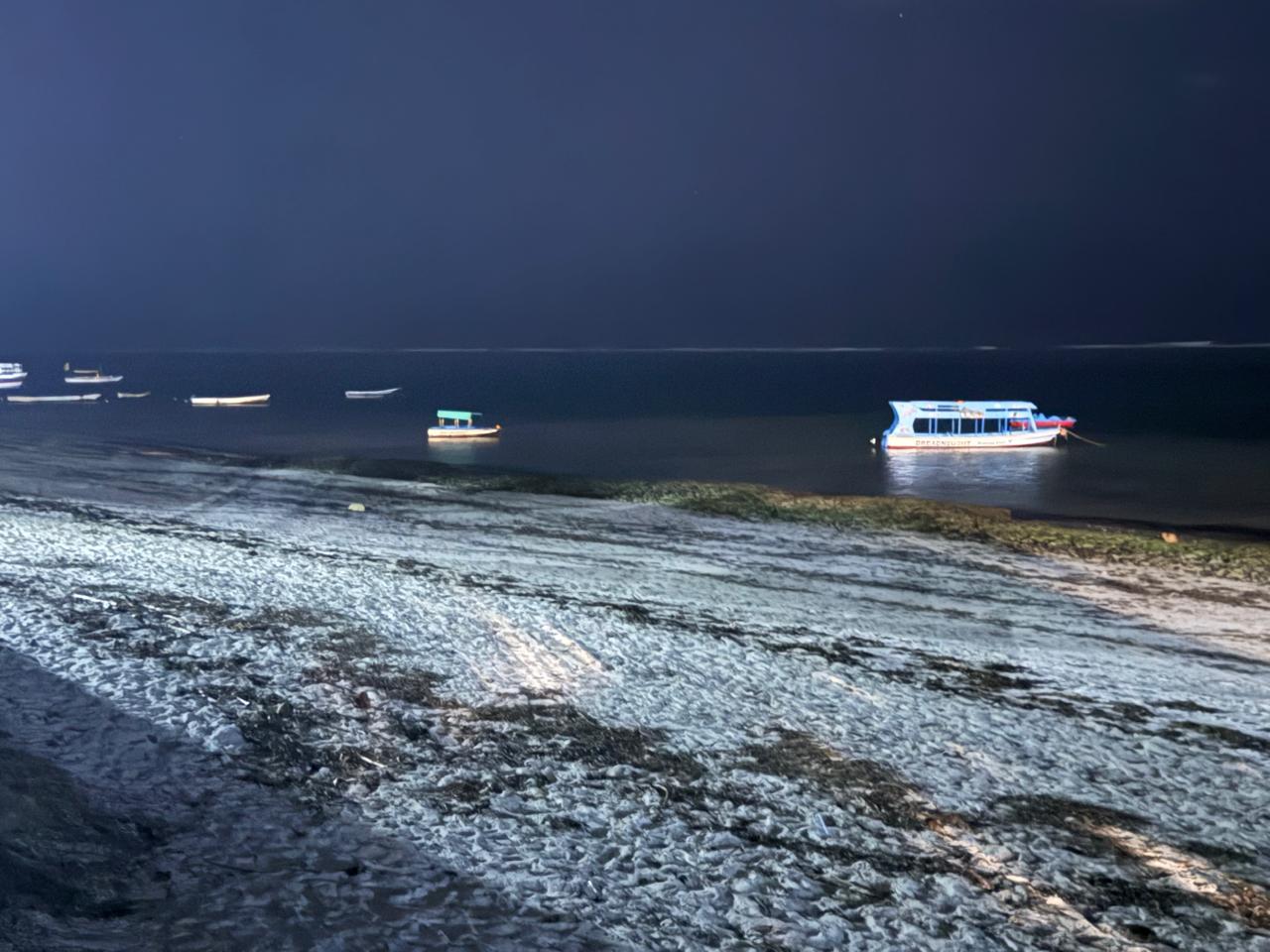
On 16-18 June in Mombasa, the Our Ocean Conference met on African soil for the first time, and over 100 governments, businesses and civil society organisations announced 320 new commitments valued at $6.4 billion to advance ocean conservation, sustainable fisheries, climate resilience and the blue economy. I have sat in enough such rooms to know the applause is not the test. Driving back along the coast afterwards, I kept turning over a thought that fits no panel agenda: the ocean is not fragmented: our power over it is. The sea moves as one system. Our institutions arrive carved into ministries, budgets, treaties and reporting templates, each holding a piece of the same living water and calling it the whole.
This is not abstract. Fragmentation never appears in the photographs, not like an oil spill or a beach of dead fish. It works quietly, through separate budgets, separate mandates, separate donor priorities, separate forms of institutional mandates and experts. And it decides everything that matters: whether money reaches a village, whether a mangrove is treated as carbon or habitat or livelihood, whether a country spends its scarce time solving problems or filling out another template, who is heard, who waits, and who is blamed when delivery fails.
Consider a single mangrove. To a climate negotiator it is blue carbon. To a biodiversity expert, habitat. To a fisheries officer, a nursery. To a disaster planner, a sea wall. To the family beside it, the mangrove is food, fuel, shade, memory and survival at once. All of these are true. But our institutions force one living system into separate administrative boxes: one project restores it for carbon, another studies its fish, a third funds “resilience”, a fourth consults the women who process the catch, and the boxes do not speak to each other. The coastline fills with activity and stays starved of change.
I have watched this happen. A community receives team after team, each asking a slightly different version of the same question: how is the climate affecting you, which species are vanishing, what do the women need, how is illegal fishing hurting catches? The same answers are given four times, written into four reports, photographed for four newsletters. Four visits, one community no better heard. This is how fragmentation turns listening into filing.
Fragmentation is political
It lets everyone claim responsibility while no one carries accountability. When mandates overlap, blame has nowhere to land. When finance is scattered, the powerful learn to move through the gaps. Even the headline figure invites the question: independent analysts in Mombasa noted that while the conference reported $6.4 billion “mobilized”, it was unclear how much of that sum was new committed funding. When data sits in four institutions, decisions are made on partial evidence. When communities are invited late, participation becomes theatre. Everyone can say they consulted. Few have to share power.
None of this is an argument against specialisation. A fisheries scientist and a climate negotiator should not do each other’s jobs, and a single integrated ocean authority would be easier to capture, not harder. The division of labour is how knowledge works. The problem is the division of accountability: we divide the ocean to understand it and then never reassemble it to govern it, so the specialised pieces answer to their own mandates and to no one on the coast. If this were merely a coordination failure, three decades of coordination frameworks would have solved it. It persists because the gaps are useful, and useful gaps are defended.
There is a longer history beneath this. Colonial administration governed by cutting living systems into objects it could measure, tax and control: land, labour, forests, fish, trade routes, people. What mattered was never the whole relationship between a community and its sea, only the part that could be extracted. Ocean governance has not escaped that grammar. We still separate fish from fishers, carbon from coastlines, conservation from livelihoods, finance from justice. We speak of “marine resources” where communities speak of food, work and identity. The vocabulary has been laundered: “natural capital”, “blue carbon”, “the blue economy”. But the operation is the same: divide the living whole into ownable units, and the units will find owners. This is why fragmentation is not only a coordination problem. It is an epistemic one. The question is whose way of knowing is allowed to organise the sea.
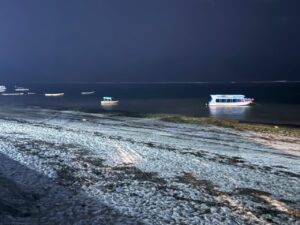
Fishing and passenger boats at anchor off the beach at Mombasa. Photo: Mohamed Barre, Mombasa, June 2026.
The people we forget to count
That question presses hardest on labour. The same fisher is catch-data to one ministry, a security concern to the navy, an informal worker to a third office, and invisible to all three at once. And these are not marginal numbers: the FAO’s landmarkIlluminating Hidden Harvests study found that small-scale fisheries provide at least 40% of the global fishing catch and touch the livelihoods of one person in every twelve on earth. Yet coastal work remains among the most dangerous and least protected on the planet, falling between the climate file, the fisheries file and the trade file and belonging fully to none. We measure fish stocks far more carefully than we measure the people who catch them. When a distant-water fleet negotiates access, it deals with one ministry; when the catch collapses, the fallout lands on another. Illegal, unreported and unregulated fishing alone is estimated to cost African economies between $11 billion and $13 billion every year, the profit and the loss filed in separate drawers, and the separation is not an accident.
For coastal states, the cumulative burden is crushing. A small technical department is expected to run fisheries management, climate reporting, conservation, donor coordination, maritime security, licensing, data systems and international negotiation at once. The global system instructs these countries to “integrate”, then sends each agenda its own formats, deadlines and indicators. We call the result a “capacity gap” and make it sound local. Some of it is manufactured abroad. A system that demands integrated action while funding fragmented reporting rewards those who already have strong institutions and punishes those still building them.
The language of the blue economy can sound generous and modern. But the question is never whether Africa should pursue it: of course it should. The question is whose blue economy, governed by whom, financed on what terms, accountable to which people. Ports, conservation areas, carbon markets and access agreements all create benefits; they can also displace people, fence off the shore, and concentrate profit upwards. A blue economy that does not strengthen coastal communities is not transformation. It is extraction with better branding.
The test no conference passes
The world is not short of ocean ambition. The High Seas Treaty entered into force on 17 January 2026, the first legally binding framework for waters beyond national jurisdiction. Governments have committed to protect 30% of land and sea by 2030 and to climate action under the Paris Agreement. The Our Ocean process alone has generated more than 3,200 commitments worth some $176 billion since 2014, and the secretariat reports that around 78% of African commitments are complete or in progress. These are real achievements. But a pledge is not implementation; a declaration is not enforcement; a finance announcement is not money on the coast. The real test is unglamorous. Are commitments tracked? Are communities in the room before the design is fixed, not after? Do fisheries authorities have the tools to enforce a rule? Are small-scale fishers treated as rights-holders, not beneficiaries, as the FAO’s own Small-Scale Fisheries Guidelinesinsist? Are the women in the value chain named? Is the data built for public decisions or for donor reports?
None of this requires more institutions; the world has platforms and working groups to spare. It requires that finance reward a mangrove for everything it actually is, that fisheries governance be understood as climate governance, that participation shape decisions rather than ratify them, and that reporting be aligned instead of multiplied. Above all it requires that we judge commitments by what changes at sea, whether an ecosystem recovers, a worker is safer, an institution is stronger after the project ends, and not by the size of the press release.
The tide keeps no files. It does not recognise the ministry, the treaty, or the budget line. We built those divisions, and we built them, often, so that someone could move through the gaps while the coast waited. Until we name that power and confront it, ocean sustainability will remain a beautiful promise, carried, as ever, by the very people it keeps waiting.
The post The Ocean Is Not Fragmented. Power Is. appeared first on African Arguments.