Sepia splashed memories of Britain’s ’90s squatting and free party scene
Bygones — Moving into a Hackney squat at the age of 19, Tom Hunter spent years living on London’s edges, while documenting the vibrant, creative community and culture that it enabled. Huck’s art director Sam White chats to him about the freedom that existed, the collectivism and what’s been lost over the decades since.
 Black News
Bygones — Moving into a Hackney squat at the age of 19, Tom Hunter spent years living on London’s edges, while documenting the vibrant, creative community and culture that it enabled. Huck’s art director Sam White chats to him about the freedom that existed, the collectivism and what’s been lost over the decades since.
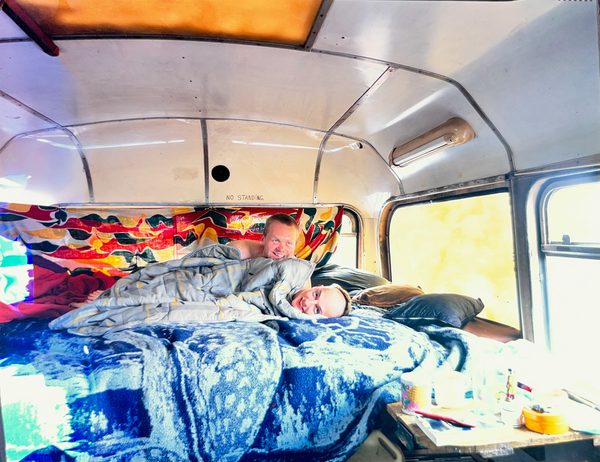
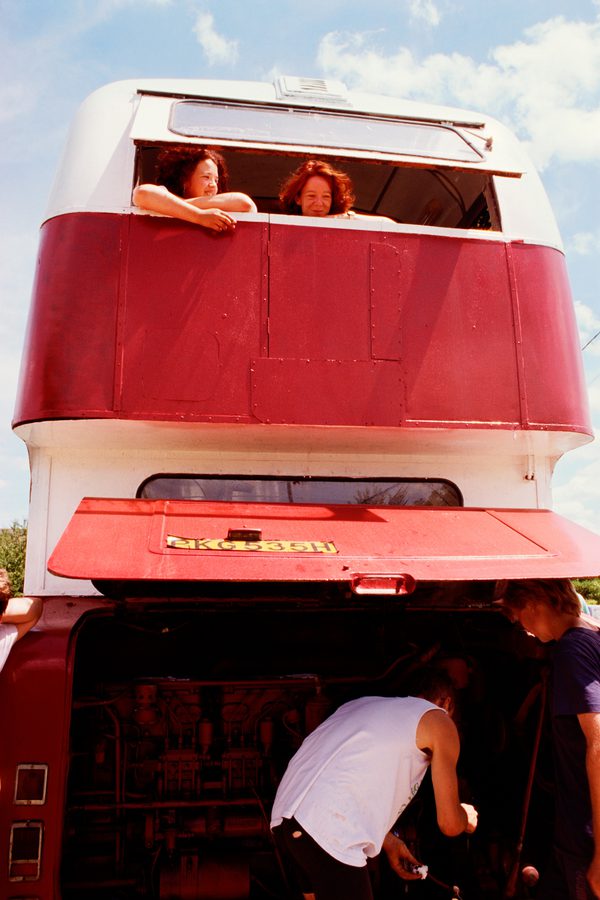
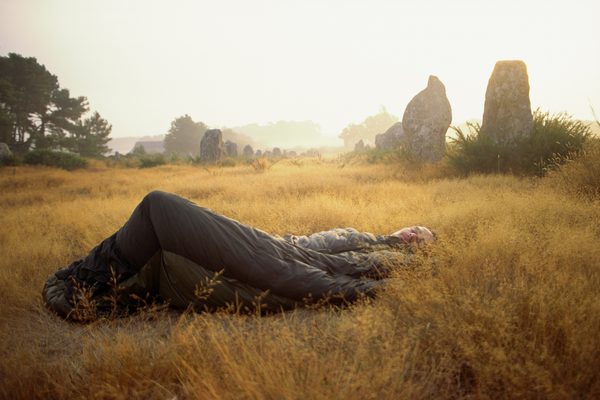
I had one of those full-circle moments meeting Tom Hunter. I hadn’t realised his work was what first introduced me to the squat housing and free-party communities of the ’80s and ’90s. About eight years ago, my old boss Ben Weaver at Here Press handed me Le Crowbar (2013), and as a wide-eyed 22-year-old I was mesmerised by photographs of Tom and his friends travelling by bus through Europe’s otherworldly, impossibly liberated free-party scene. Photographs of dilapidated ravers, sleeping under golden rays of sunset that flooded through bus windows, stayed with me ever since, and for years I’d been trying to remember who had taken those images. It wasn’t until Tom showed me the book again after our interview that I realised they were his all along.
Tom’s following has somewhat blown up over the past year, with posts of previously unseen archival images accompanied by extended, deeply personal anecdotes and context from the time. Why have these images resonated so much now? They’re astoundingly beautiful, drenched in the amber light of nostalgia, depicting scenes of community, liberation and adventure so many wish they could experience in 2026. You really wish you were there.
Tom’s photography documents squat communities and free parties of the ’80s and ’90s – a way of living that’s impossible for young people to achieve now unless maybe if daddy is paying. With rising living costs, obscene rents, political instability and precarious work, many would do anything for the freedom to completely re-think their lives and travel the world, meet diverse groups of people, relax everyday, party every week, be creative, do hobbies, have fun, fall in love – but are instead stuck grinding away at demanding jobs just to scrape rent/survive with little energy left after.
Sadly, a timeline of increasingly restrictive laws, which saw squatting in residential properties become criminalised in 2012, as well as raves in 1994, means that these pictures capture an era, culture and community that firmly exists now only in memory. The squats of the ’80-’90s enabled a more affordable way of living that more than often allowed for the holy grail that is free time. There was more time to invest and prioritise in one's self, making them true incubators for culture, creativity and happiness which still influences today.
I met Tom at his house in Hackney, an area he has lived in for 40 years, although this time, predictably, no longer a squat, to learn more about these photographs, his very different life at the time, why it mattered, and what people can do now.
You say that you didn’t think too much of your archival work until someone you know said recently “these are great”. But at the time, were you thinking that these would be great to look back on one day?
I suppose I did. Because I grew up in Dorset, I didn’t come to London until I was 19. Coming from a small village, moving into Hackney, moving into a big house which is a squat with lots of people and you’ve got hundreds of friends squatting all around – I did think, “Fuck, this is wild.” Big parties every Saturday night, big houses, loads of people from all over the world, all sorts of amazing things happening. When I was in Dorset I’d read NME and Sounds, and read about Patti Smith and [legendary New York club] CBGB and the punk scene in London. I was just that little bit too young. I saw all the bands but in ’79 rather than ’77. So you’d hear about all this amazing culture. And then suddenly I felt like, “Wow, this is amazing culture.” People moving into old buildings, doing them up, putting on parties, having festivals, travelling. So I thought it’d be great to take pictures of this.
Can you explain in more detail what life was like for you in the – I assume mostly – 1990s, living in squats and attending or running free parties?
I've been here for over 40 years now just in this little area, just off Richmond Road. I came here as a tree surgeon, moved in with my girlfriend to a rented place, and it was expensive, crap and the landlord was normal – a wanker. Same story I’ve become very familiar with. This was what everyone was going through, then my girlfriend at the time was at the London College of Furniture Making and saw this notice up for a room in a squat, and I said “let’s have a look”. So we went there and met this guy in a big house – four floors, six bedrooms, big garden. He said, “Yeah, you can have the top floor,” which had three bedrooms and then we’d share another floor. We moved in. Then suddenly there were six or seven squats just on that little part of Richmond Road. Straight away I was meeting these brothers from the Scottish Highlands. I was meeting these girls from the south of France. People from Spain, Germany, Holland – art students, all people doing such amazing things. I was like, “Wow, bloody hell, none of us are paying rent.” And suddenly I thought, “Maybe I don’t need to actually climb a tree with a chain saw every single day and chop branches off.” So it changed everything.
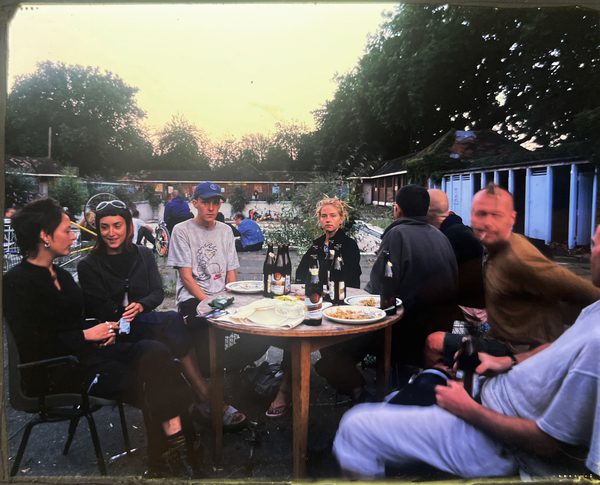
Every weekend we’d go to a pub called the Samuel Pepys, and there would always be a squat party because there was always someone being evicted. So you’d go to a house like those big houses over there. One of them went for £10 million two years ago. Back then we were going to the same house where someone had been evicted. There’d be no furniture in there. There’d be a soundsystem in the basement, a soundsystem on the ground floor. There’d be chill out bars in different rooms. There’d be a bunch of punks and hippies playing acoustic guitars and flutes doing a sort of hippie punk thing. In the garden there’d be a massive fire with hippies playing folk music. A punk band in the basement. A dub soundsystem in another room, then a rave in another room. So it's all going on, punks, hippies, ravers.
Any noise complaints?
No, we never had noise complaints, we had massive parties in our house. We’d tell the neighbours that we were having a party and they’d go, “Oh yeah, ok.” We never had any complaints. People just weren’t complaining, you know. The West Indian community were doing big parties with big sound systems.
I suppose if you were living in this area at that time you’d have to expect that.
Yeah. There would always be bass coming out from dancehall or reggae parties going on – it was amazing and you suddenly became part of this community where people were doing really interesting things all the time, from art to music, to filmmaking and photography.
Do you think that the squats helped people to pursue the things they really wanted to do? The things they didn’t know they could do?
Yeah, I was like, “Wow you’re at art college, how the hell did you do that?” I left school at 15. There was a massive culture of people doing despatch riding, then squatting, then going off for a year travelling and then coming back. There’s all this incubation and cross fertilisation between people from different cities, different cultures all going on. “Oh wow, you’re playing music? I’ve always wanted to play music. Oh, you’re painting? I’ve always wanted to paint. Oh, you’re writing? You’re doing poetry... Really?” It seemed like you could do anything you wanted, it was incredibly inspiring. I just always thought I’d be working, doing a manual job. I worked on farms before building sites. Then suddenly it’s like “Oh, maybe I could do something different.” I got a camera. I did a course at a local community arts centre called Chats Palace once a week. You didn’t have to have a job just to scrape rent, which is how it feels for everyone at the moment.
Read next: Throwback portraits of the UK’s first punks
“We were all making our own economy by providing food, drinks, looking after each other, and providing music.”
Do you think there was a stronger sense of community at the time, particularly around squats and free parties?
Yeah, we were all looking out for each other. Also when you’re squatting, you don’t squat by yourself. You really need to have someone in the house the whole time and the houses were bigger. So quite often you’ll be sharing with between four and six people, sometimes more. That teaches you about sharing spaces. Then you’re looking out for each other as the threat of eviction is constant. No one had any money, so you help by cooking food. Every Sunday we’ll be going to the Holloway Road, to a Sainsbury’s, or to Stratford, skip diving for food and bringing it all back. Then there’ll be people saying, “Oh, we’re doing a community cafe.” Which means someone who has a squat on a would do a big hippy slop food for loads of people on a Sunday. You could turn up there for a 50p donation and get a bowl of food with people making cakes. So we were all making our own economy by providing food, drinks, looking after each other, and providing music. When I started squatting in the mid-’80s it was very punky or very hippy. Then when the rave thing came in that changed it a bit. That was really interesting, the transformation between the punk to the rave scene and that music – the rave actually brought everyone together. That was also fed by what was happening in the festival scene at the time.
I used to go to Stonehenge Free Festival. When I first started going there, it was hippies, Hawkwind were playing, loads of acid and loads of bikers. Then the punks started coming and that created a bit of friction. Then the whole traveller movement got caught up with the rave scene as well. But there was a bit of friction to begin with – they hated the bang, bang, bang techno sound. But it did happen quite quickly. The people on the road could make their money or keep their lifestyle going by selling food, drinks, drugs, whatever to keep the whole festival going on. Then they realised there’s a whole new crowd that wanted to be involved when the rave thing happened. They could buy a few speakers, get someone to play and there’d be loads more people involved that really boosted that thing. So the squatting and the travellers were very intertwined. Lots of the streets around here – Bruffham Road and the terrace of squats on the other side of London Fields, for example – filled with buses, lorries, trucks, ambulances, vans with people living in them. So the people in the squats would be providing electricity, providing baths, and they’d be coming up and saying, “We’ve got this party going on. We’re doing a rave in a field, all come up.” So all this was a big interchange between cultures, the music, and what was happening.
How do you come about photographing squats and free parties? When did that start?
Well, I started with a night class at Chats Palace because I was doing some work there. I was helping on the door, doing decorations, hanging posters up and doing frame work. Then I started the course. I bought myself a cheap Pentax SLR camera and started taking pictures of the squat then. But mainly, I was working on Brick Lane market doing a fly pitch so I was taking pictures of that. After doing that I did an A-level evening course. It was a two year course, but I just turned up and said, “Could I just do it in one year?” Just so I could use the darkrooms. I thought I’d just get that and gain some more skills, then I’d make myself a photography studio in my basement in a squat and then do portraits. That was my plan. But after the tutor said to me, “You've got some great pictures here of the market. Why don’t you apply to do a degree course?" I said, “Well, I can’t. I’ve got no qualifications, I left school at 15, I’m dyslexic, that’s never going to happen.” They said, “No, no. You’re a mature student (because I was 24-25), you can just apply from your portfolio.” So I applied and then I did a degree at the London College of Printing. So that's when I really started taking pictures of the squats.
What was your most memorable moment from shooting the squats and free parties?
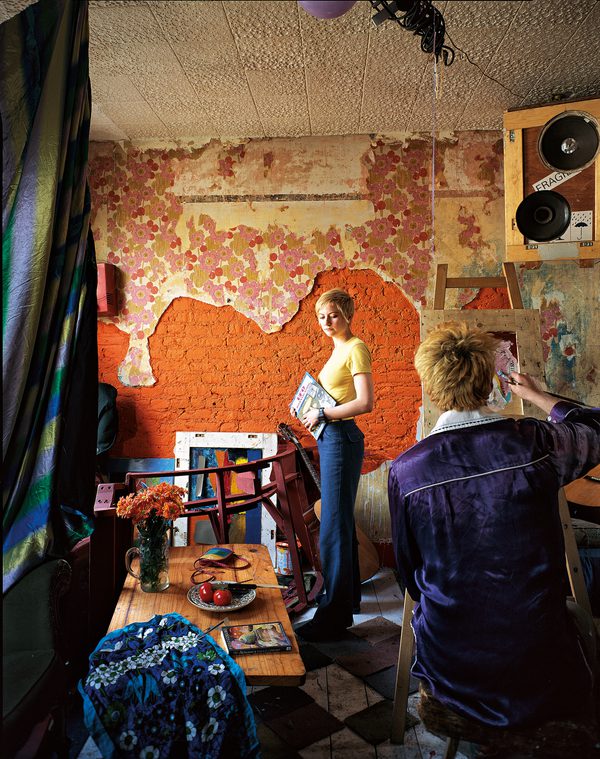
There were lots of memorable moments. Some really good. I mean taking the portraits on Ellingfort Road and London Lane, where I was. There were about 120 of us squatting there on three streets. I was squatting on Richmond Road and we got evicted and we took a squat on Ellingfort Road with me and my friend Josh, one of the Scottish brothers from the Highlands. When I moved in I started meeting all these amazing people. Literally I’d just be down the street knocking on doors and every day I’d be invited to someone’s room, set up my large format camera, with a tripod, great big camera, shooting on film and I just got to spend two or three hours with lovely people I’d never met before. They’re telling me about their lives, what they’re doing. So, it was a really great way of connecting with a new community. Even though I was only one street away. Then I’d moved into the next street and I got to know a whole new lot of people.
So that was an amazing way of meeting people. They thought I was doing something useful and they’d like the attention – everyone loves that. One memory came back last night because I was at the new V&A East Museum, where we used to do squat parties in Hackney Wick. We were taking over warehouses and doing parties for three or four days at a time. We did this party on Carpenter’s Road where the V&A is now. I went there last night and I was looking at the V&A from across the canal, and that’s where we had the big rave parties. I was helping put it all on and then on the Sunday morning I went across the canal with my large format camera to take a picture of all the people outside the rave, but the people couldn’t see who I was and they said, “Look there’s a fucking pig, there’s a copper over there!” And they started lobbing stone bricks at me from across the canal. I wasn’t gonna shout out “Hey it’s me.” As I thought that was quite amusing.
Do you think there are any movements, collectives or scenes today that embody the same spirit that was happening then? So what do you think people can do now to experience a similar lifestyle? Or is it impossible?
Lots of people ask me that now. The boating community on the canals around Hackney. They seem to have quite a lot of freedom which I really like. You can buy a boat for an affordable amount of money, as you keep it moving within so many weeks. It’s a hard life though, especially in winter, it’s not like moving into a house and having heating. But it does seem incredibly social from what I’ve witnessed. You have to look after each other as you can’t really lock up your boats properly, but your boats are next to each other so even though they’re separate, they are together as community. Then in the summer they’re all out on Hackney Marshes cooking up, having barbecues, playing music – people are sharing, coming and going, so that's really nice. I do a lot of running around Hackney Marshes and every Sunday morning there used to be little raves in Hackney Woods which I thought was quite funny.
So there are things still going on. I think it’s a little bit harder, obviously it wasn’t illegal when we were doing it. But also, at the same time there were some statistics, there were 100,000 empty houses in London when we were squatting here. You could literally walk down any street in Hackney and there’d be at least two or three empty houses. So we would wander around and go, “Oh, that’s a nice house. I bet that’s got a big garden. How bad is it?”
You’d go in there and you could find a squat within a day normally. Some of them had their toilets smashed out by the council, stairs smashed out. You could put new toilets in and do the wiring or the plumbing. There wasn’t the pressure, it was all about white flight, dead cities, about people being too scared to live in Hackney. You told the taxi driver you wanted a lift back there late at night they’d go, “No way, not going to Hackney.” You’d tell people in the West End you live in Hackney and they go, “Really? Fuck that, that’s so dangerous, it’s horrible.”
You couldn’t believe that now. What was the wider social perception of squatting and the free party communities at the time? Do you think that the squatting scene has definitely shifted since then given today’s housing pressures and the lack of support for vulnerable people?
It was very much accepted as part of the fabric. When you moved into a squat in my experience, the neighbours said, “Oh, how great,” and they were very happy that the house wasn’t going to be used as a crack den or left to fall apart. The windows were being mended and the holes were being mended so the damp doesn’t affect their house. We were very much accepted, especially in Hackney, Camden, Brixton and the suburbs, all these places. 50% of housing in London in the ’70s was social housing.
Some people had bought their homes, some people were renting from the council, some were housing associations, some were squatters. So there’s a big wide range of people and they didn’t even ask you sometimes when you’d moved in. You didn’t have to say you were squatting, it was totally acceptable and it worked really well. The main difference now is that property is all about speculation. It’s all about buying as a commodity rather than for homes. Huge amounts of rich people from foreign countries want to buy property to be part of their portfolio. Housing isn’t really considered, it’s just as an investment for making money, so it’s such a different thing.
“It feels as if we’re just training people who don’t come from wealthy backgrounds to become slaves to capitalism. Preparing them for jobs that don’t require thought, just producing a product without any creativity.”
What were the downsides?
Looking back now I look through rose-tinted glasses – they’re beautiful, they’re colourful with beautiful young people. It looks so lovely and I’ve got wonderful memories of those people in those times. But at the same time I do remember moving into a squat, it was freezing cold, it had broken windows and the first night in your squat you’It feels as if we’re just training people who don’t come from wealthy backgrounds to become slaves to capitalism. Preparing them for jobs that don’t require thought, just producing a product without any creativity. re up most of the night. You’d think someone is going to come down, kick down the door, beat you up with a baseball bat and throw your stuff out on the street. I have been evicted from lots of squats and people can be pretty horrible.
We knew what we were doing so we never squatted private property – it was already a squat or council houses that had been left. What you’ve got to remember is that when Margaret Thatcher came in, she starved all the money from the local authorities and they had to sell their houses. The only money that they could spend on housing was for big housing estates. As soon as the tenant moved out, the place became derelict and the council wouldn’t re-house people in them and they sold them. But the trouble was the council had to sell them, but then the money didn’t go back to the council who built them, they had to go to the central government. So all of the councils were pissed off and they weren’t even bothered about selling them, they sold them in job lots auctions. We knew that places wouldn’t be up for auction for a year or two years so there was no conflict. We never squatted in someone’s place.
If anything you were doing them a favour, because you were keeping these buildings from getting into a complete state of disrepair.
Exactly.
Without squatting, I think a lot of these lovely buildings, these Victorian and Edwardian houses wouldn’t exist.
We saved streets, we squatted Sutton House, a National Trust house in Hackney. That would have probably been knocked down if it wasn’t squatted. There’s so many wonderful places we’ve saved from squatting. Mostly when the council came, they came with bailiffs. It was always an immense hassle with them, and it’s a horrible feeling being evicted when you have absolutely no idea where you’re going next. The major downside to that life is that you never feel as though you have a permanent, safe place to live. It would have been so nice if the council had just said, “We’ve got this short-life property, so here is a proper tenancy and you can stay there permanently.”
Did you ever remain in the squat and eventually gain a legal tenancy? Or would you know anyone who did?
On our street, there were three houses that had been squatted for longer than 12 years [the length of time needed for adverse possession] and across the two squatted streets as a whole, people actually managed to keep their homes. In the very last house we occupied, the council came to evict us, but they got the paperwork wrong, as they pretty much did all the time, and the bailiffs never even turned up. Because of that mistake, the council essentially told us we might as well stay, granting us a license that allowed us to remain until they wanted us gone again. While that technically made us license holders once, it was actually no different in reality, and I never personally managed to own a property in those 12 years.
Despite that, we ultimately won the battle to save the whole neighbourhood, keeping two full streets and about 25 houses that successfully turned into a housing cooperative. That cooperative on Ellingfort Road and London Lane, right by London Fields, is where all my friends and their children still live today, completely secure with affordable rents. Today, they have proper tenancies where they can’t be evicted, because we managed to buy all the houses through a housing association and then paid back the borrowed money entirely through the residents’ rents. They’re like 100-year mortgages, which has worked out incredibly well for keeping our community intact. If we hadn’t done it, we would have faced the same fate as all the other squats and communities nearby where everyone was evicted. The houses were turned into flats, and the people were forced to move out of London entirely.
Do you think the rent crisis is affecting the culture and the arts? And could it be argued that fewer young people from diverse backgrounds are moving to the city due to the rental costs? And do you see this having a knock-on effect?
I am worried for the future of the arts in general, especially now that the arts are being devalued in the school curriculum. As a result, fewer people are able to pursue the arts, and those who do are from families that can afford to send them to private schools. While those independent schools can still provide exceptional specialists in music, arts, and sports, those three subjects are being deprioritised in comprehensive state schooling now. This means that the only people given a real chance to pursue these are going to be those from better-off, wealthy backgrounds.
It feels as if we’re just training people who don’t come from wealthy backgrounds to become slaves to capitalism. Preparing them for jobs that don’t require thought, just producing a product without any creativity.
This dynamic hasn’t come about organically either. There’s no incubator for this community and culture; nothing to allow people to be able to invest in their interests. This then cuts off the natural culture that derives from that freedom.
Ultimately, you need diversity and a true mixture of people from different colors, cultures, and sexualities, because without that rich blend, a community just becomes incredibly flat, boring, and dull. You see the best versions of that in places like New York with its incredible mixture of people, or in Paris during its own eras of crazy cultural blending. It’s just like what happened in Vienna when 1.5 million Jewish people were evicted from Russia and Eastern Europe by the pogroms; they moved to the city, and it suddenly sparked an amazing, unprecedented outpouring of culture, diversity, and ingenuity. And truly, that is exactly what we had right here, a vibrant community built by people coming from absolutely everywhere.
They came from all over Europe, all over the world. It wasn’t about money, it wasn’t about class, it was about people mixing and trying new things, and just trying to have a nice life. I’m not worried about the money or about the gallery system. We didn’t even know what galleries were, we didn’t care about being successful, or being in bands. We were just trying to explore, have fun, and create. That’s when it was really exciting. I think we’re entering quite a boring time now.
Read next: In photos: The boys of the Bibby Stockholm
I feel like maybe it’s only those who come from wealthy backgrounds that are able to really invest in the things they want to do, without having a job. Have the time to buy the time, almost.
I think those people will stagnate as well when they aren’t mixing with people from different cultures. I mean, take my visit to V&A East last night to see the exhibition on Black British music. Look at the culture from the Windrush generation and all the people who arrived, especially in places like Hackney – we were absolutely surrounded by it. The rave culture didn’t just come out of nowhere. It came out of the Four Aces, it came out of the dance halls, it came out of reggae, and it came out of all the Black guys with their soundsystems throwing parties in basements.
They were throwing parties in places they weren’t officially allowed to use. We would go to the festivals and free parties in the Downs, they’d set up their sound systems, and people would just dance. The police would come along and say, “Go, fuck off.” And we’d respond, ‘No, you fuck off. We’re doing what we’re gonna do.” The rave culture came directly from that. You don’t wait for a license, and you don’t wait for the council to say you can do it. We learned everything from that community. That raw interaction and diversity is so important. If your mindset is just, “Well, if daddy says we can do this…” then culture just becomes predictable, boring, and repetitive.
Do you have many more crates of archival images yet to rediscover? Is there more to see?
I’ve still got boxes of material. I haven’t really gone through my 35mm stuff yet, though I’ve just started to have a quick look through it, and I will try to really start on that soon. I was quite manic about taking pictures at that time, and film was cheap. There were so many things going on at the time; I was simply in the perfect place at the perfect time. The ’90s were an amazing era. It felt quite euphoric with the festivals, the music, and all the different cultures coming together.
People were going out to Amsterdam, Berlin, Barcelona, and Italy, and they were constantly coming back bringing new drugs, new music, new people, new lovers, and new food. It was such a great time to be sharing everything, and I think that sort of culture is exactly what allowed everything to really explode.
See more of Tom Hunter’s photography at his official website.
Sam White is Huck’s art director. Follow him on Instagram.
Buy your copy of Huck 83 here.
Enjoyed this article? Follow Huck on Instagram and sign up to our newsletter for more from the cutting edge of sport, music and counterculture.
Support stories like this by becoming a member of Club Huck.