

A melancholic portrait of youth, rebellion and womanhood in Iran
And They Laughed At Me — Newsha Tavakolian has worked as a photographer all her adult life, as Iran underwent change, upheaval and conflict. Her new photobook explores the formative years of her eye and art amid generational strife, hope and disappointment.
 Black News
And They Laughed At Me — Newsha Tavakolian has worked as a photographer all her adult life, as Iran underwent change, upheaval and conflict. Her new photobook explores the formative years of her eye and art amid generational strife, hope and disappointment.
Born in Tehran in 1981, Newsha Tavakolian came of age as the Iranian Revolution gave way to the Iran-Iraq War. Her uncle, who served on the front, lovingly dubbed her “Katusha,” after the Russian rocket, “Newsha Katusha,” a prescient nickname for the groundbreaking photojournalist.
A member of Magnum Photos since 2017, Tavakolian got her start back at the tender age of 16 working for Zan, the first daily women’s newspaper in Iran. “I still remember the first time one of my photographs appeared on the front page of a newspaper,” she says. “I bought five copies and went to the park next to my home. I lay on the grass, looking at the sky and the clouds for more than an hour. I felt like the happiest person in the world. It was such a personal moment that I didn't want to share that feeling with anyone.”
Channelling the fervent idealism of youth into her work with the fearless determination of her comrades, Tavakolian chronicled the July 1999 student protests that began after the government forced Salam, a progressive newspaper, to stop the presses once and for all. Following a peaceful demonstration, student dormitories were raided, with one student killed and 300 wounded, sparking what would become the most violent uprising since the early years of the Iranian Revolution.
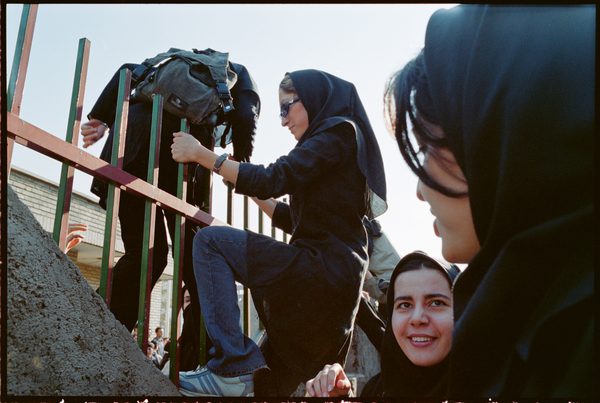
With Western journalists confined to their hotels, the story could only be told by insiders like Tavakolian. A year earlier, she had photographed teen girls climbing a fence, clad in a hijab, sunglasses, and Adidas trainers on their way to a protest and understood the lengths she had to go. She scaled trees and pounded the streets, creating an epic portrait of solidarity in the face of state sanctioned violence. The Western media quickly took notice, propelling Tavakolian on the global stage with representation by Polaris Images, a New York photo agency, while continuing to live and work in Iran.
Over the next two decades, Tavakolian built a singular career covering conflicts across the Middle East. But after her father died prematurely in 2019, she stopped making photographs for nearly two years and returned to her archive in search of where it all began. It is here, in her new monograph And They Laughed at Me (Kehrer Verlag), that Tavakolian maps her path with the hard-won wisdom of one who has lived to tell the tale.
“For many years, I was curious to understand why I have such a melancholic eye, why I see the world the way I do, and why I am often drawn to stories that are complex and have no clear answers,” Tavakolian says. “Going back to the contact sheets helped me understand this. Looking at them frame by frame, I could follow the path my eye was taking as a teenager. What surprised me most was how consistent that gaze was. Even before I knew what kind of photographer I wanted to become, I was already drawn to moments of vulnerability, uncertainty, and quiet emotion. I realised that I was not looking for answers. I was looking for questions.”
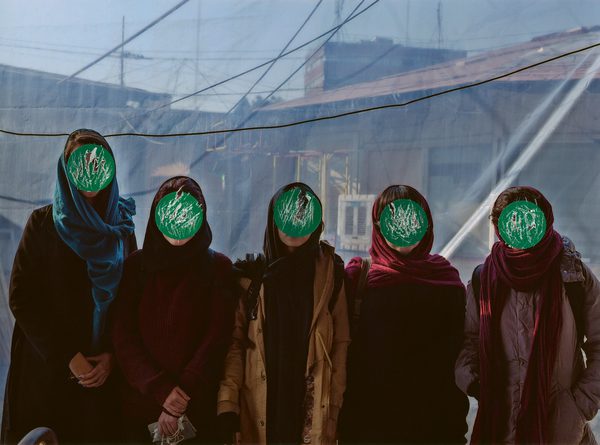
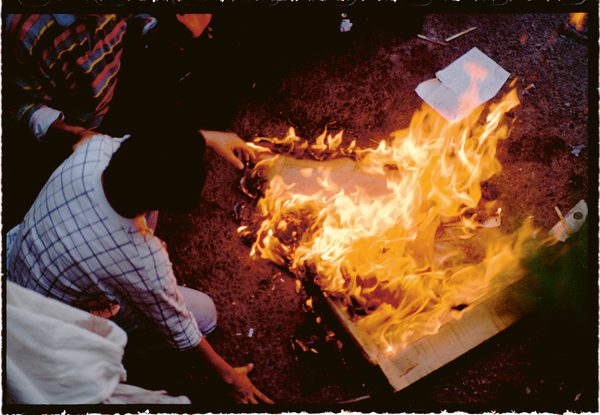
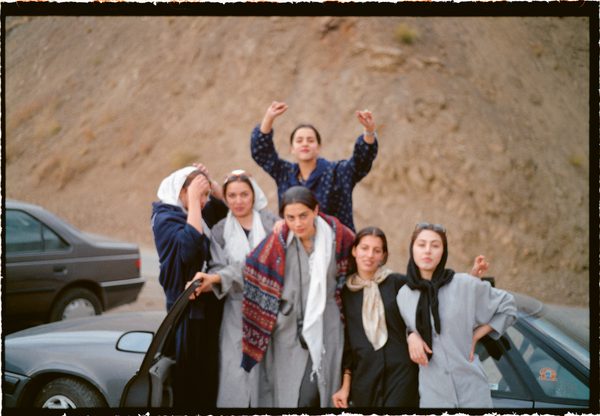
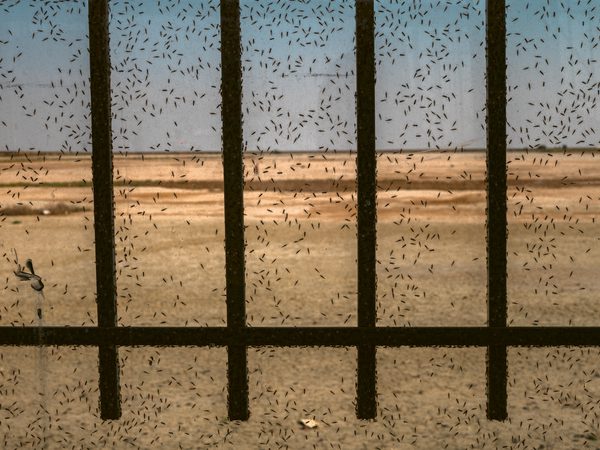
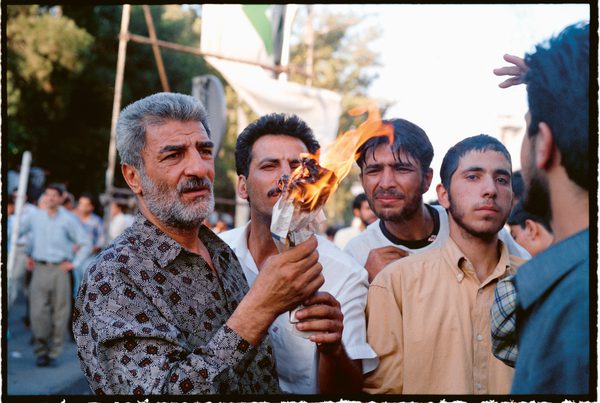
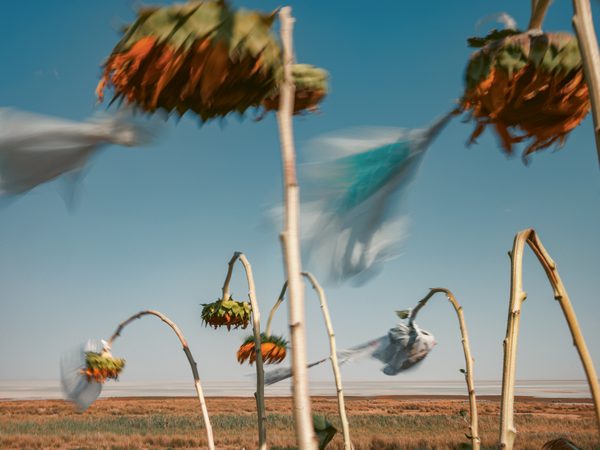
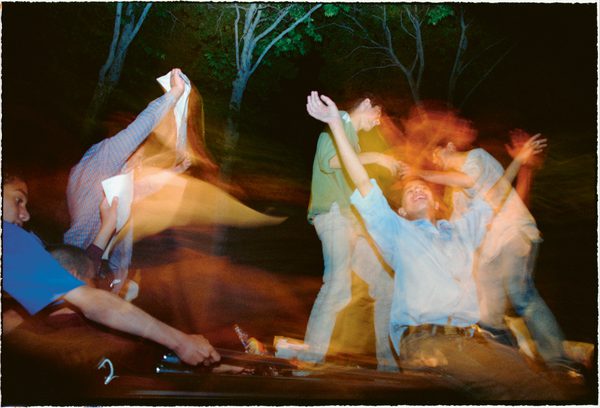
Among the questions Tavakolian raises is the sanctity of the image, in both concept and form. She sought out “failed” images that could better convey the emotional truth of the moment because of the very damage itself. Whether out of focus, poorly framed, scratched, or over/under exposed, these raw and unvarnished photographs take on the provenance of artefacts. “For me, those imperfections became part of the story,” Tavakolian says. “They reflect the fragility of memory and the uncertainty of the times.”
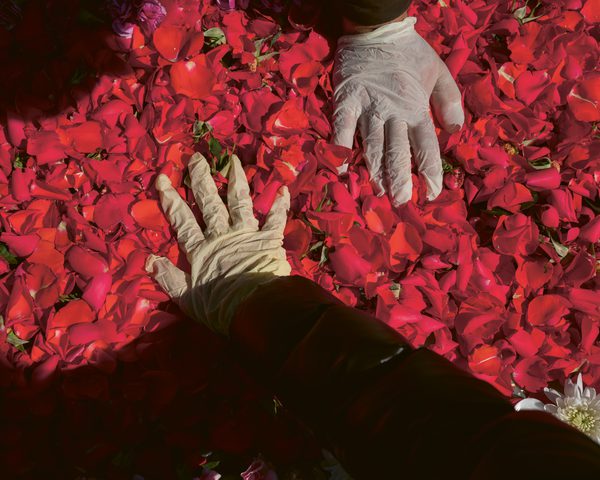
Conversely, her iconic image of hope and innocence that was embodied in a 2001 photograph of a girl smelling a rose during a political rally, incited Tavakolian’s wrath. “I wanted to kill that image,” she writes in the book. “I wanted to kill it because we had been lied to in such a blatant manner, and I was upset over just how naive my generation had been.”
Tavakolian printed the negative, ripped the print apart, and locked the remains away in a drawer only to return to them after her father’s death. She glued the print back together, placed it in developing chemicals, and watched the colour emulsify, the damage now an integral part of the story.
“For a long time, I was angry with myself because I felt I had never really been a teenager. I started working very young and was often carrying responsibilities that felt bigger than my age,” Tavakolian says. “Going back to the archive changed that. As I spent years looking through the contact sheets and editing the work, I began to reconnect with that younger version of myself. I could see her curiosity, sensitivity, confusion, and desire to understand the world. By the end of the process, I felt at peace with my past. I could not be the person I am today without those experiences.”
And They Laughed At Me by Newsha Tavakolian is published by Kehrer Verlag.
Miss Rosen is a freelance arts and photography writer, follow her on X.
Buy your copy of Huck 83 here.
Enjoyed this article? Follow Huck on Instagram for more from the cutting edge of sport, music and counterculture.
Support stories like this by becoming a member of Club Huck.