Open Letter To ExxonMobil: Guyana Is A Nation—Not Merely An Oilfield
By Albert Baldeo Photos: Facebook|Wikimedia Commons The following open letter was written to ExxonMobil President Alistair Routledge by former Guyanese judge and prosecutor Albert Baldeo. Dear Mr. Routledge: Your reported declaration that “it’s not our job” to help build Guyana because Guyanese “didn’t vote for us” and ExxonMobil officials “are not representatives of the people” was inhumane, insensitive, ungrateful and beneath the standard expected from the head of a corporation extracting extraordinary wealth from a developing country. Guyana is an exceptionally profitable asset on ExxonMobil’s balance sheet, but, more so, it is our homeland, our mother. Your home country, the great USA, cannot, and does not, come close to such largesse and hospitality. After all, our oil belongs to the Guyanese people, and our national territory, institutions, workers and sovereign protections made, and continue to make, ExxonMobil’s success, and all those connected thereto, like yourself, and others, possible. Whereas, you may be correct in one narrow respect, that the primary constitutional duty to govern and build Guyana belongs to its elected government, political representatives and people, and cannot be delegated to ExxonMobil, your perverse attempt to detach ExxonMobil’s enormous profits from any meaningful commitment to the Guyanese people that make your success possible, is morally indefensible. ExxonMobil repeatedly describes itself as Guyana’s “partner.” Partnership cannot mean that Guyana supplies the petroleum, territory, legal protection and generous fiscal concessions while ExxonMobil takes the dominant benefits and disclaims responsibility for the country’s development. If ExxonMobil does not consider itself a partner in Guyana’s progress, you should candidly describe yourself as an extractor and profit-taker operating under an extraordinarily favourable contract. You reported approximately US$4.67 billion in profit from Guyana during 2025 alone, and reportedly recovered approximately US$55 billion in development investment two years earlier than expected, while projecting that your Guyana free cash flow could double by 2030 compared with 2025. Those staggering gains did not materialize in a vacuum. They came from resources belonging to our country where our developing nation is trying, concurrently, to rise above poverty, blackouts, inadequate infrastructure, unemployment, high living costs and unequal access to quality healthcare, education, housing and clean water. Against that background, your words did not sound like a technical explanation of corporate and governmental responsibilities, but more like contempt for the people whose patrimony is substantially enriching your company. ExxonMobil’s privileged position rests substantially upon the deeply unequal 2016 Production Sharing Agreement, including its two-percent royalty, provision allowing up to 75 percent of production for cost recovery, extensive tax concessions and Article 32 stability provisions. Article 32 purports to prevent Guyana from altering the agreement without the contractors’ consent and seeks to protect the consortium against additional fiscal burdens, which constitute exceptional restraints created by that provision. But “sanctity of contract” must not be transformed into an unlawful doctrine of corporate supremacy. No private agreement should be treated as though it stands above Guyana’s Constitution, Parliament, environmental laws, public policy, sovereign regulatory authority or the fundamental rights and welfare of the Guyanese people. Contractual stability is not perpetual immunity from transparency, accountability, lawful regulation or mutually negotiated reform. A decent partner would voluntarily return to the negotiating table when it becomes undeniable that an agreement produces an unconscionably imbalanced result, as here. Your company should not bask in the false glow of permanent immunity from political pressure, financial demands, lawful taxation, regulatory enforcement, renegotiation or national sovereign action. ExxonMobil’s own history in Venezuela demonstrates that neither contracts nor corporate size can eliminate geopolitical and sovereign risk. We reserve arbitrary nationalization, confiscation or unlawful financial punishment, and advocate lawful, peaceful and good-faith renegotiation so that Guyana receives a fairer share of its patrimony, for now. Even President Donald Trump-hardly an opponent of the petroleum industry-publicly rebuked ExxonMobil and Chevron in August 2026 for making “too much money” and demanded relief for consumers. Earlier, after ExxonMobil CEO Darren Woods described Venezuela as “uninvestable,” President Trump called the company’s position “too cute” and said he was inclined to exclude ExxonMobil from future Venezuelan opportunities. The lesson is plain: corporations do not vote, but governments and citizens retain the authority to d
 Black News
By Albert Baldeo
Photos: Facebook|Wikimedia Commons
The following open letter was written to ExxonMobil President Alistair Routledge by former Guyanese judge and prosecutor Albert Baldeo.
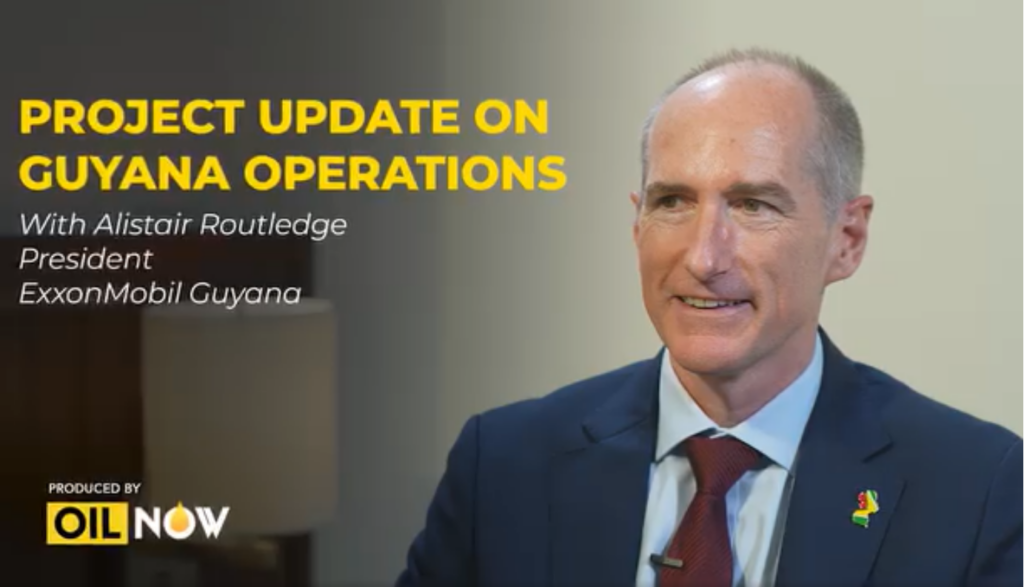
Dear Mr. Routledge:
Your reported declaration that “it’s not our job” to help build Guyana because Guyanese “didn’t vote for us” and ExxonMobil officials “are not representatives of the people” was inhumane, insensitive, ungrateful and beneath the standard expected from the head of a corporation extracting extraordinary wealth from a developing country.
Guyana is an exceptionally profitable asset on ExxonMobil’s balance sheet, but, more so, it is our homeland, our mother. Your home country, the great USA, cannot, and does not, come close to such largesse and hospitality. After all, our oil belongs to the Guyanese people, and our national territory, institutions, workers and sovereign protections made, and continue to make, ExxonMobil’s success, and all those connected thereto, like yourself, and others, possible.
Whereas, you may be correct in one narrow respect, that the primary constitutional duty to govern and build Guyana belongs to its elected government, political representatives and people, and cannot be delegated to ExxonMobil, your perverse attempt to detach ExxonMobil’s enormous profits from any meaningful commitment to the Guyanese people that make your success possible, is morally indefensible.
ExxonMobil repeatedly describes itself as Guyana’s “partner.” Partnership cannot mean that Guyana supplies the petroleum, territory, legal protection and generous fiscal concessions while ExxonMobil takes the dominant benefits and disclaims responsibility for the country’s development.
If ExxonMobil does not consider itself a partner in Guyana’s progress, you should candidly describe yourself as an extractor and profit-taker operating under an extraordinarily favourable contract. You reported approximately US$4.67 billion in profit from Guyana during 2025 alone, and reportedly recovered approximately US$55 billion in development investment two years earlier than expected, while projecting that your Guyana free cash flow could double by 2030 compared with 2025.
Those staggering gains did not materialize in a vacuum. They came from resources belonging to our country where our developing nation is trying, concurrently, to rise above poverty, blackouts, inadequate infrastructure, unemployment, high living costs and unequal access to quality healthcare, education, housing and clean water.
Against that background, your words did not sound like a technical explanation of corporate and governmental responsibilities, but more like contempt for the people whose patrimony is substantially enriching your company.
ExxonMobil’s privileged position rests substantially upon the deeply unequal 2016 Production Sharing Agreement, including its two-percent royalty, provision allowing up to 75 percent of production for cost recovery, extensive tax concessions and Article 32 stability provisions.
Article 32 purports to prevent Guyana from altering the agreement without the contractors’ consent and seeks to protect the consortium against additional fiscal burdens, which constitute exceptional restraints created by that provision.
But “sanctity of contract” must not be transformed into an unlawful doctrine of corporate supremacy. No private agreement should be treated as though it stands above Guyana’s Constitution, Parliament, environmental laws, public policy, sovereign regulatory authority or the fundamental rights and welfare of the Guyanese people. Contractual stability is not perpetual immunity from transparency, accountability, lawful regulation or mutually negotiated reform. A decent partner would voluntarily return to the negotiating table when it becomes undeniable that an agreement produces an unconscionably imbalanced result, as here.
Your company should not bask in the false glow of permanent immunity from political pressure, financial demands, lawful taxation, regulatory enforcement, renegotiation or national sovereign action. ExxonMobil’s own history in Venezuela demonstrates that neither contracts nor corporate size can eliminate geopolitical and sovereign risk.
We reserve arbitrary nationalization, confiscation or unlawful financial punishment, and advocate lawful, peaceful and good-faith renegotiation so that Guyana receives a fairer share of its patrimony, for now. Even President Donald Trump-hardly an opponent of the petroleum industry-publicly rebuked ExxonMobil and Chevron in August 2026 for making “too much money” and demanded relief for consumers.
Earlier, after ExxonMobil CEO Darren Woods described Venezuela as “uninvestable,” President Trump called the company’s position “too cute” and said he was inclined to exclude ExxonMobil from future Venezuelan opportunities.
The lesson is plain: corporations do not vote, but governments and citizens retain the authority to demand responsibility, fairness and respect. No oil company is more sovereign than the country whose resources it extracts.
Your observation that Guyanese did not vote for ExxonMobil is moot, and we did not invite ExxonMobil to behave as though the company’s only obligations are to its shareholders. Corporate responsibility does not arise from an election. It arises from law, contract, social license, environmental duty, moral responsibility and the immense benefits a corporation receives from its host country.
ExxonMobil uses Guyana’s natural resources, benefits from its laws and institutions, depends upon its security and political stability, and earns billions from assets belonging to its people. Those benefits carry reciprocal responsibilities.
A genuine partner should:
- Support a voluntary and transparent review of the 2016 agreement to achieve a fairer sharing of future benefits;
- Publish comprehensive production, cost-recovery, audit, insurance and environmental-liability information;
- Increase investment in Guyanese education, healthcare, technical training, infrastructure and community development;
- Expand genuine local ownership, procurement, employment and management opportunities-not merely statistical local-content compliance;
- Provide enforceable protection against oil spills and environmental destruction;
- Respect workers, fishermen, Indigenous communities and citizens affected by petroleum operations;
- Refrain from exploiting political division or governmental weakness; and
- Speak about Guyana and Guyanese people with humility, gratitude and respect.
These measures would not make ExxonMobil the elected government, but a more responsible corporate citizen. Every foreign investor operating in Guyana must understand that our country is not merely a market, concession, mineral deposit, timber reserve or oilfield. Guyanese are human beings entitled to dignity, justice and a fair share of the wealth extracted from their homeland. Investors are welcome, profits are expected, but exploitation is not.
We call upon ExxonMobil, Chevron, CNOOC and every overseas investor to treat Guyanese more fairly, humanely and compassionately, to respect our sovereignty, to contribute meaningfully to national development, and to recognize that corporate prosperity cannot be sustainably built upon public deprivation.
“Partnership” is more than a public-relations slogan. Return to the negotiating table, share more fairly, disclose more fully, invest more deeply in the people and communities whose resources have enriched your corporation, Mr. Routledge.
Anyone extracting billions from Guyana has no moral right to wash his hands of Guyana’s future. Overseas investors were not elected to govern us, but were permitted to operate among us, which must never be mistaken for ownership of our sovereignty, permanent immunity from accountability or freedom from the human duty to give back.
Respectfully,
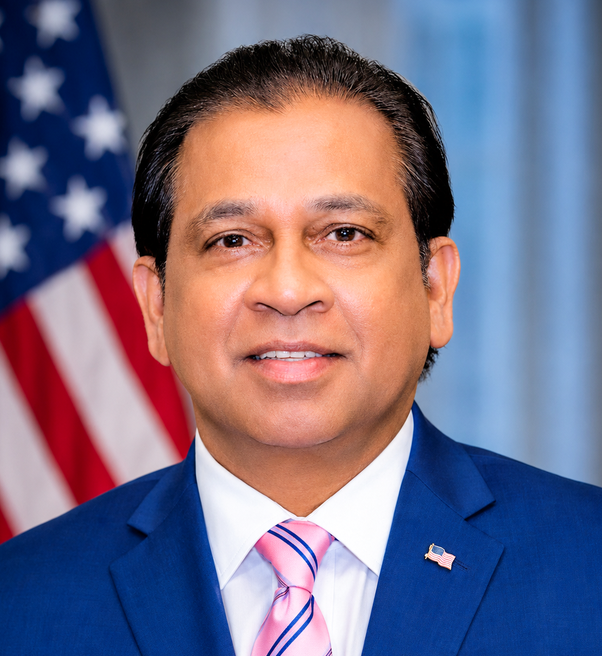
Hon. Albert Baldeo
Former Magistrate, Senior State Counsel and State Prosecutor of Guyana
President, Guyana Beyond Borders