New York County Lawyers Association: New USPS Voting Rules On Mail-In Ballots Will Disrupt Upcoming Elections
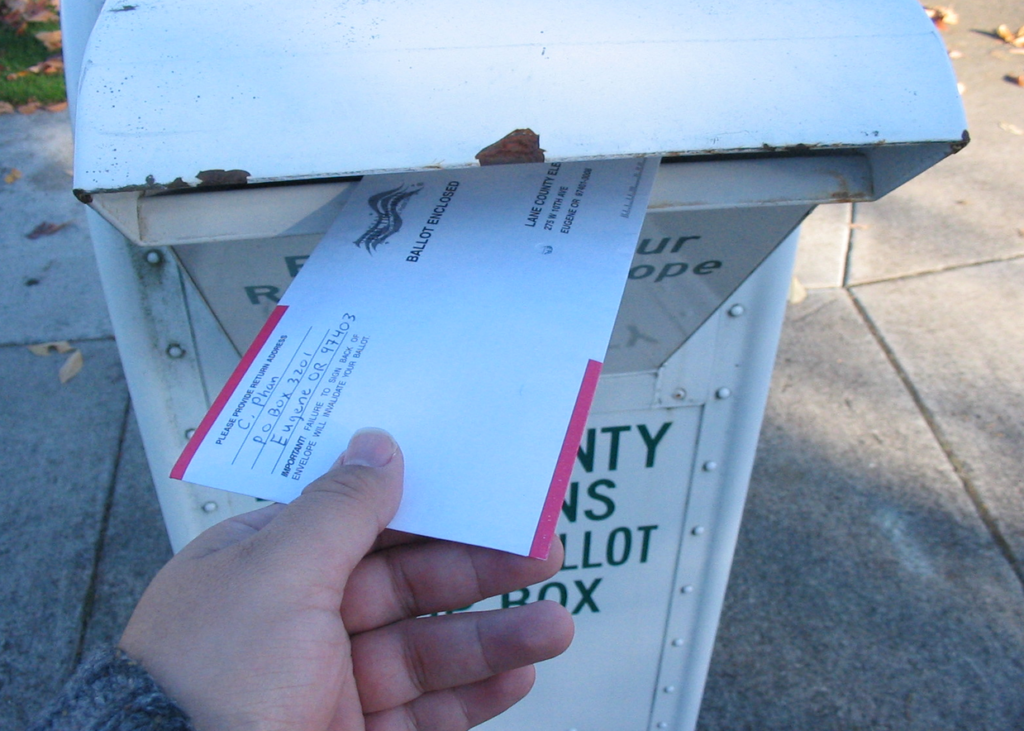
Photos: Wikimedia Commons The New York County Lawyers Association’s President, Ronald C. Minkoff, today issued this statement urging that the United States Postal Service (“USPS”) refrain from implementing the mandatory mail-in ballot rules issued on August 26, 2026 (“USPS Voting Rules”). Those rules create unnecessary and burdensome hurdles for voters, are impractical to implement, and would disrupt the upcoming election season. The USPS Voting Rules would require that the USPS refuse to deliver mail-in ballots to individuals, or to deliver mail-in ballots completed by those individuals to election officials if (1) the voters’ names and addresses do not match those on a list of voters eligible to vote by mail that USPS would generate from lists state and local election officials would load into a USPS portal, or (2) the USPS had not approved the design of the ballot envelopes which have to include bar codes. The USPS Voting Rules do not advance our rule of law or constitutional democracy, and instead, are disenfranchising. Indeed, it is unclear to us why they are being implemented. Is the aim to discourage making mail-in balloting available by making it too costly to conduct? Or, is it to discourage voters from voting by mail by increasing the risk mail ballots will not be processed through no fault of the voter, but because the USPS fails to enter or process voter data correctly? On September 4, 2026, the USPS Office of the Inspector General reported that from February through May 2026, the Postal Service processed election and political mail with on-time processing scores ranging from 97.75 to 98.99 percent, and suggested ways to improve these percentages. Following these suggestions would seem to be a better way for the USPS to improve mail-in balloting than adopting new, arcane rules aimed at preventing voter fraud, the confirmed frequency of which appears to be either negligible or non-material. Judge Indira Talwani, a federal judge who enjoined these rules, recognized a fundamental principle in our constitutional democracy of broadening the franchise. In particular, Judge Talwani concluded in her memorandum and preliminary injunction that the balance of equities, a traditional element of determining an entitlement to an injunction, favored the plaintiffs, citing one of the early decisions favoring one person, one vote, Wesberry v. Sanders, 376 U.S. 1, 17 (1964). Judge Talwani referenced this eminently ‘”precious’” right, and found that the USPS Voting Rules would “threaten[] disenfranchisement of millions of United States citizens who seek to vote by mail,” but “the [court] record includes no evidence relating to fraudulent mail voting to support the rushed implementation of the [USPS Voting Rules].” Memorandum And Order Granting Plaintiffs’ Motions For A Preliminary Injunction, League of Women Voters of Massachusetts v. Trump, 1:26-cv-11549, (D. Mass.)ECF 285 at 45-46. Judge Talwani also found a substantial threat of disenfranchisement because, among other factors, the USPS Voting Rules would require 10,000 different state and local election jurisdictions, not merely the fifty states, to conform to new ballot design requirements. These requirements would force many jurisdictions to re-design their ballots (which in many cases have been printed and may not easily include bar codes), have a wave of new designs undergo USPS review, print new designs from their vendors (typically ranging from four to sixteen weeks in lead time), and then, contingent on technological capabilities, collate and submit voter information to a portal that does not yet exist and has not been proven to work. The USPS Voting Rules are particularly dangerous because we are on the eve of the midterm elections which will begin much earlier than on election day of November 3, 2026. See generally Dates for 2026 Early In-Person and Mail Voting, The Center for Election Innovation & Research (June 2026). Mail-in voting began in North Carolina on September 4, and will begin on September 17 in Wisconsin, and on September 18 in Idaho, Minnesota, New York, and Virginia. It seems prudent in this case that appellate courts use the equitable principle first set forth in Purcell v. Gonzalez, 549 U.S. 1 (2006) (per curiam), that election rules should not be altered on the eve of an election, as a basis to affirm Judge Talwani’s injunction. Notably, in a more recent case, Justice Brett Kavanaugh (joined by Justice Samuel Alito) articulated the rationale underlying this principle: [T]he Purcell principle reflects a bedrock tenet of election law: When an election is close at hand, the rules of the road must be clear and settled. Late judicial tinkering with election laws can lead to disruption and to unanticipated and unfair consequences for candidates, political parties, and voters, among others. It is one thing for a State on its own to toy with its election laws close to a State’s elections. But it
 Black News
Photos: Wikimedia Commons
The New York County Lawyers Association’s President, Ronald C. Minkoff, today issued this statement urging that the United States Postal Service (“USPS”) refrain from implementing the mandatory mail-in ballot rules issued on August 26, 2026 (“USPS Voting Rules”). Those rules create unnecessary and burdensome hurdles for voters, are impractical to implement, and would disrupt the upcoming election season.
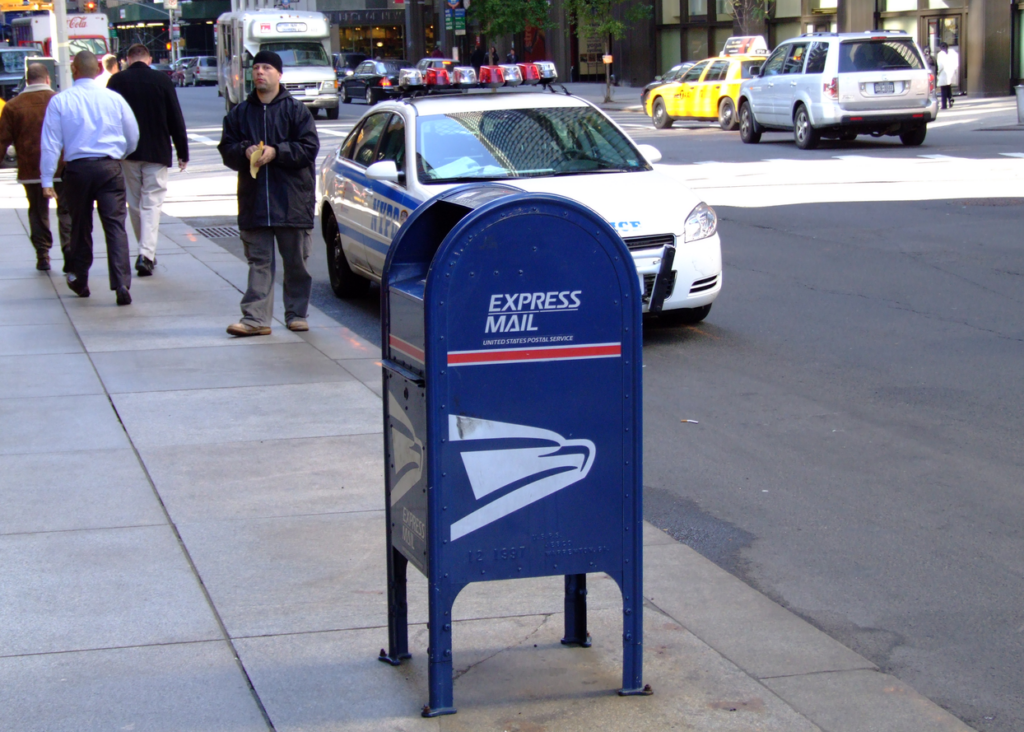
The USPS Voting Rules would require that the USPS refuse to deliver mail-in ballots to individuals, or to deliver mail-in ballots completed by those individuals to election officials if (1) the voters’ names and addresses do not match those on a list of voters eligible to vote by mail that USPS would generate from lists state and local election officials would load into a USPS portal, or (2) the USPS had not approved the design of the ballot envelopes which have to include bar codes.
The USPS Voting Rules do not advance our rule of law or constitutional democracy, and instead, are disenfranchising. Indeed, it is unclear to us why they are being implemented.
Is the aim to discourage making mail-in balloting available by making it too costly to conduct? Or, is it to discourage voters from voting by mail by increasing the risk mail ballots will not be processed through no fault of the voter, but because the USPS fails to enter or process voter data correctly?
On September 4, 2026, the USPS Office of the Inspector General reported that from February through May 2026, the Postal Service processed election and political mail with on-time processing scores ranging from 97.75 to 98.99 percent, and suggested ways to improve these percentages. Following these suggestions would seem to be a better way for the USPS to improve mail-in balloting than adopting new, arcane rules aimed at preventing voter fraud, the confirmed frequency of which appears to be either negligible or non-material.
Judge Indira Talwani, a federal judge who enjoined these rules, recognized a fundamental principle in our constitutional democracy of broadening the franchise. In particular, Judge Talwani concluded in her memorandum and preliminary injunction that the balance of equities, a traditional element of determining an entitlement to an injunction, favored the plaintiffs, citing one of the early decisions favoring one person, one vote, Wesberry v. Sanders, 376 U.S. 1, 17 (1964). Judge Talwani referenced this eminently ‘”precious’” right, and found that the USPS Voting Rules would “threaten[] disenfranchisement of millions of United States citizens who seek to vote by mail,” but “the [court] record includes no evidence relating to fraudulent mail voting to support the rushed implementation of the [USPS Voting Rules].” Memorandum And Order Granting Plaintiffs’ Motions For A Preliminary Injunction, League of Women Voters of Massachusetts v. Trump, 1:26-cv-11549, (D. Mass.)ECF 285 at 45-46.
Judge Talwani also found a substantial threat of disenfranchisement because, among other factors, the USPS Voting Rules would require 10,000 different state and local election jurisdictions, not merely the fifty states, to conform to new ballot design requirements. These requirements would force many jurisdictions to re-design their ballots (which in many cases have been printed and may not easily include bar codes), have a wave of new designs undergo USPS review, print new designs from their vendors (typically ranging from four to sixteen weeks in lead time), and then, contingent on technological capabilities, collate and submit voter information to a portal that does not yet exist and has not been proven to work.
The USPS Voting Rules are particularly dangerous because we are on the eve of the midterm elections which will begin much earlier than on election day of November 3, 2026. See generally Dates for 2026 Early In-Person and Mail Voting, The Center for Election Innovation & Research (June 2026). Mail-in voting began in North Carolina on September 4, and will begin on September 17 in Wisconsin, and on September 18 in Idaho, Minnesota, New York, and Virginia.
It seems prudent in this case that appellate courts use the equitable principle first set forth in Purcell v. Gonzalez, 549 U.S. 1 (2006) (per curiam), that election rules should not be altered on the eve of an election, as a basis to affirm Judge Talwani’s injunction.
Notably, in a more recent case, Justice Brett Kavanaugh (joined by Justice Samuel Alito) articulated the rationale underlying this principle:
[T]he Purcell principle reflects a bedrock tenet of election law: When an election is close at hand, the rules of the road must be clear and settled. Late judicial tinkering with election laws can lead to disruption and to unanticipated and unfair consequences for candidates, political parties, and voters, among others. It is one thing for a State on its own to toy with its election laws close to a State’s elections. But it is quite another thing for a federal court to swoop in and re-do a State’s election laws in the period close to an election.
Merrill v. Milligan, 142 S. Ct. 879, 880-81 (2022) (Kavanaugh, J., concurring).
Judge Talwani’s injunction recognizes the balance of equities and furthers the purpose of the Purcell rule and the purported purpose of the USPS Voting Rules, namely to promote election integrity by avoiding unnecessary chaos in the upcoming midterm elections for both voters and election officials throughout our constitutional democracy.